/pic7336167.png)





























Gold West Deep Dive
What the Community Thinks About Gold West
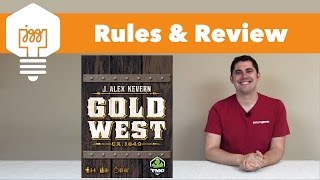
Gold West stands out as a beautifully crafted board game that has earned genuine respect from the gaming community. Reviewers consistently praise the game's elegant design, innovative resource management system, and the surprising depth hidden beneath a deceptively simple turn structure. While opinions vary on whether the game's strategic weight suits individual preferences, the consensus is clear: Gold West represents thoughtful euro game design with fresh mechanics that differentiate it from the typical resource management fare.
Core Mechanics That Define Gold West
The Mancala Supply Track
The game's most celebrated feature is its unique resource management mechanism inspired by mancala. Players place resources into different slots on their supply track, choosing how far back to position them for future turns. When you activate your supply track at the start of your turn, you pick up all resources from one slot and then redistribute them one by one into each subsequent slot as you pass through, with the remainder spilling into your usage area. This creates meaningful forward planning decisions: placing resources further back grants more victory points but delays access, while committing them to immediate slots limits your future flexibility. The mechanic forces careful timing as you balance short-term needs with long-term positioning.
Multiple Scoring Paths Through Versatile Actions
After activating your supply track, you spend accumulated metals through three main channels: purchasing public investment cards for immediate points, placing influence tokens in the Boomtown offices to claim end-game scoring conditions, or advancing stage coaches along shipping tracks to collect bonus tiles and accumulate points. This trio of options creates a genuinely multi-directional strategic puzzle. You constantly weigh investing in immediate gains against setting up long-term scoring engines, and the randomized Boomtown tiles that change each game subtly shift which strategy feels most attractive. The game rewards planning across these intersecting paths while punishing over-commitment to any single track.
The Gold West Experience
High-Stakes Turn Planning and Analysis
Despite its simple turn structure, Gold West demands genuine tactical and strategic depth. Reviewers note that players find themselves analyzing many options even though individual turns appear straightforward. You must constantly assess the board state, anticipate opponent moves, track which tiles might flip when you build, and mentally calculate which victory point combinations will be available by game end. The game can slow down late in play as opportunities dwindle and each remaining decision carries heavy weight. Some players experience analysis paralysis, particularly those prone to calculating multiple turns ahead. The game reads lighter than it plays, and observers have commented that the quiet, concentrated atmosphere at the table reflects the mental energy required to navigate competing strategic objectives.
The Harsh Beauty of Tile Flipping and Resource Scarcity
Gold West incorporates two sources of unpredictability that keep it from becoming purely math-heavy. When you place a camp or settlement on the board, you flip all adjacent tiles, and these flips can either create the resources you desperately need or reveal unhelpful combinations. Additionally, the game frequently puts players in situations where they cannot execute their carefully laid plans. You might spend a turn looking for a specific tile combination that simply does not exist, or an opponent might claim the one board location essential to your strategy just before your turn. This creates moments of genuine frustration when plans collapse, though reviewers note these moments are part of the game's texture rather than design flaws. The punishing scarcity of building materials (wood and stone) means that players forced into the loot action lose victory points and fail to place settlements, sometimes ending games with camps scattered inefficiently across the board.
What Makes Gold West Stand Out
Elegant Design with Surprising Complexity
The game's greatest achievement is bundling substantial decision-making into a framework that takes roughly an hour to play. The three-phase turn (activate supply track, use metals, build or loot) is simple enough to teach quickly, yet the interactions between these phases create hundreds of viable strategic paths. Reviewers specifically appreciate that the design does not overcomplicate itself with fiddly rules or excessive components. The game achieves its depth through interconnected core mechanics rather than baroque subsystems. Production quality is excellent, with wooden pieces and colorful cardboard that looks lovely on the table. The resource management track particularly impresses with its visual elegance and mechanical clarity, even if the shipping tracks become cramped in four-player games with many tokens stacked together.
High Replayability Through Variable Scoring
The randomized Boomtown offices dramatically increase replayability by changing the payoffs for different strategies. One game might reward settlement clustering and water adjacency, while the next rewards edge presence or total building count. These tiles shuffle your priorities without altering the fundamental game skeleton. The influence track majorities for different terrain types similarly shift which geographical areas matter most. Reviewers note that this variability keeps the game fresh across multiple plays without requiring special modules or expansions. The game never feels like you are executing an identical playthrough even when you understand the mechanics completely.
Potential Drawbacks
Point Salad Ambiguity and Directional Uncertainty
The greatest weakness Gold West presents is the fundamental difficulty of knowing which strategy to pursue. With victory points available through investments, shipping, Boomtown tiles, influence majorities, contiguous building groups, and multiple other channels, the game can feel directionless. Reviewers report that even experienced players often resort to intuitive decisions rather than confident optimization. The game provides no clear guidance on whether to focus on one scoring axis or spread investment across multiple paths. Some players find this ambiguity liberating, while others find themselves choosing actions because they "feel interesting enough" rather than because they represent clearly optimal plays. The abundance of mild, mathy trade-offs can create decision fatigue rather than exciting moments of strategic clarity.
The Silent, Isolated Gaming Experience
The sheer analytical weight creates an unintended social cost. Most players spend the entire game staring at the board, their boards, and their opponent's boards, crunching numbers and planning combinations. There is limited table talk or banter. Interaction exists primarily through indirect blocking, where claiming a tile or advancing a track cuts off opponent options, but this feels more like silent maneuvering than dynamic confrontation. For players seeking mean games with direct negotiation or social games with laughter and conversation, Gold West delivers neither. The game is more like puzzle solving around a shared board than like gathering with friends. Reviewers sometimes describe it as feeling uncomfortably close to work, particularly for players analyzing multiple turns ahead to optimize final positions.
If You Enjoy Gold West
Gold West appeals most strongly to players who love tight economic puzzles and resource optimization. Fans of games like Cyclades, where players must balance multiple competing currencies and advancement tracks, will find similar satisfaction. Players drawn to games with indirect player interaction and silent strategic tension will appreciate Gold West's ebb and flow. Those who prefer medium to heavy-weight euro games with elegant core mechanics will likely celebrate the mancala supply track's innovation. The two-player experience is solid and tight, though the three-player count offers better balance by providing more board space and less pressure from concentrated opposition. Four-player games risk extending into territory where late-round analysis paralysis becomes problematic. If you appreciate games that deliver strategic richness in roughly an hour without complex rules or excessive downtime for other players, Gold West represents a textbook example of modern euro design.
What Reviewers Are Saying
"I love how the Mancala track makes all that work. You get to think about short-term things like putting it in the farthest forward slot and using it next turn, or putting it all the way at the end and saying I'm going to do something big several turns from now."
— John Gets Games
"The game plays well and it flows very well, but that being said since I don't have a stock brain, I found myself kind of randomly just figuring what to do on my turn, like there are many turns where I'm just sitting there not sure what to do to help me out."
— Junkets Games
"This is a medium lightweight euro game resource management game where you're trying to mine a bunch of tiles, collect ore from those tiles, and trade it in to get points in different ways. I love the simple three-phase system in this game and I particularly love the resource management mechanism which I think is a very novel concept."
— Chairman of the Board