
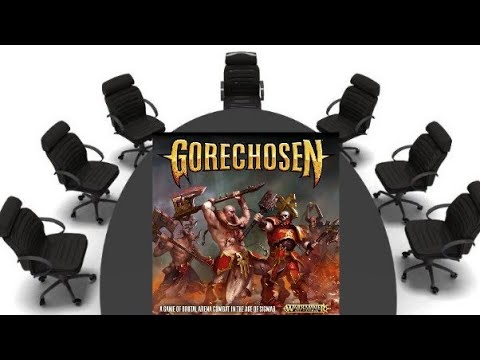


Gorechosen Deep Dive
What the Community Thinks About Gorechosen
Gorechosen, Games Workshop's 2016 arena combat game for four players, draws a mixed reaction from the reviewers who have covered it. Dan Honeyball of Chairman of the Board finds plenty to admire in the ideas but says the play experience falls short of them, and they end up calling the game something they can take or leave. Both their praise and their frustration center on the fights themselves and on how long those fights last.
The miniatures are where reviewers agree most. Chairman of the Board describes the four plastic Citadel fighters as a standout, noting that the models match their rules, so the warrior with the huge axe reaches further than the one with two hand weapons. Rolling Dice & Taking Names places Gorechosen within Games Workshop's recent move into board games that reuse the company's miniature lines, a trend that gives buyers strong components straight out of the box.
Core Mechanics That Define Gorechosen
Initiative Cards and the Catch-Up Rule
Turn order is driven by a deck of initiative cards. Each player receives a set of these cards, they are shuffled together, and the top card reveals whose symbol comes up, which determines which fighters act. Chairman of the Board explains that this can let one player take several turns in a row or force another to wait until the deck runs out, and they credit that unpredictability with keeping the game lively. The description adds that Wrath influences the order as well, since angrier fighters are more likely to act first. The catch-up element works through the same cards: players who are being ganged up on or absorbing heavy damage receive more initiative cards, while players who deal out damage without taking any lose cards, making their next turns less powerful.
Wounds, Kill Zones, and Combat Actions
Combat is the other core system. Each fighter has a Kill Zone that dictates what they can strike and how hard, and players choose from 24 action cards that offer painful attacks and gambits. The Shove, a gambit the publisher highlights, is far more dangerous near a fire pit. Injury cards then describe the gruesome results of each exchange. Chairman of the Board likes that wounds hinder a fighter in concrete ways, such as limiting damage output or shrinking attack range, so a champion visibly weakens as the bout goes on. Wrath, built up from being wounded, is spent to pay for actions, which means damage taken fuels the fighter's options even as it reduces them.
The Gorechosen Experience
Brutal Arena Spectacle
When a fight swings in the right direction, the arena feels alive. Chairman of the Board enjoys the domino effects: a fighter can be pushed into a pit and die instantly, an opponent can be decapitated, and an eliminated champion can roll on a dice card to rise and take a cheap shot at the fighter who killed them, while the crowd throws debris to help. Reviewers describe a thematic brutality here, and the wounding and pit-shoving make the bloodshed feel central to the game rather than decorative.
Frustration in Static Positioning
The flip side is the feeling of being stuck. Chairman of the Board's biggest complaint is that fighters move in a rigid, static way. A player can end up facing the wrong direction for no reason while every opponent keeps them in sight, and turning requires a card in hand. They call the result frustrating and counterproductive for a lone fighter in a crowd. Pacing adds to the sense of drag. A bout can run up to an hour, and they argue that a game built on luck and chance should take a fraction of that time.
What Makes Gorechosen Stand Out
The Miniatures
The models are the feature reviewers return to most often. Chairman of the Board opens their review on them and closes by calling them the most redeeming part of the package, praising their detail and their value to Warhammer hobbyists who want to add them to a larger army. Watch It Played, which covers a wide range of Games Workshop releases, shows that new Gorechosen characters arrive with cards that let owners bring a separate miniature into the game. That approach ties the box to the wider Warhammer line.
Unpredictable Initiative
The reviewers' favorite design choice is the initiative system. Because a player can act several times in a row or wait until the deck is exhausted, the table never knows exactly who will act next. The catch-up layer complements that uncertainty. Chairman of the Board appreciates that the designers anticipated a runaway leader or a ganged-up player and built a response into the turn order, even though they feel that response does not go far enough.
Potential Drawbacks
Rigid Movement and the One-Target Rule
Beyond the static facing already discussed, Chairman of the Board objects that each fighter has an attack arc, and when several enemies sit inside it, only one of them can be struck. They call this counterproductive in a free-for-all, arguing that a fighter who has positioned well should be rewarded with a choice of targets. They understand the reasoning, since defending yourself would otherwise mean discarding too many cards, but they do not think the trade-off is right.
Length Against Luck
The second complaint is pacing. Chairman of the Board finds it excessive that a game driven largely by whether attacks land runs as long as an hour. They acknowledge the hand management involved, but they see the outcome of most exchanges as a matter of luck. They also regret that the wounding system stops at a single wound. Building on that idea, with a gradual decline as each injury accumulates, would make players more invested in the journey of their champion, and they believe the core concept needs only a few tweaks to become much stronger.
If You Enjoy Gorechosen
Players who enjoy Gorechosen's miniature-led arena fights will find a related experience in Blood Bowl, which Rolling Dice & Taking Names lists among the same wave of Games Workshop board games set in the Warhammer universes. Both put a Warhammer-style contest on the table in a single box. Players who want the collectible figures to matter beyond one title can look at Warhammer Quest: Silver Tower, which Watch It Played shows gaining a card that brings a figure from its box into that game. Assassin and Execution Force, also named by Rolling Dice & Taking Names, round out the lineup for anyone who likes the publisher's approach of pairing its miniatures with a complete, ready-to-play box. The reviews do not compare Gorechosen mechanically with these titles, so these picks rest on shared publisher, universe, and miniature style rather than on identical rules.
What Reviewers Are Saying
"I also think that Gorechosen actually goes on for far too long for a game that is essentially dice rolling or see there's a bit of hand management and etc that goes into this but it is essentially a game of luck and chance if you're going to be hitting your opponent or not and this could take the fact that it can take up to an hour is just insane to me. It should really be looking at taking a quarter of that in my opinion."
— Dan Honeyball, Chairman of the Board
"Games Workshop is going back to its roots by publishing board games. Everything you need to play is in one box without the need to buy any additional models, but one thing they do is leverage their existing miniature line, and some of these games include the exact same miniatures as those in the miniature wargames."
— Rolling Dice & Taking Names
"Here's how you use that figure that's attached here in that particular game along with some other new Gore chosen characters. So again, you go and buy the miniature and then this is a card that will allow you to play it in this particular game."
— Watch It Played