



Grendel: The Game of Crime and Mayhem Deep Dive
What the Community Thinks About Grendel: The Game of Crime and Mayhem
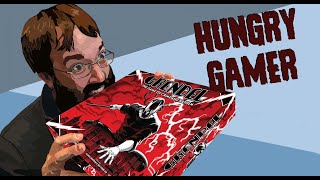
Grendel: The Game of Crime and Mayhem has generated enthusiastic praise from the board game community. Hungry Gamer finds the game to be "tight" and "clean," with standout asymmetric faction design and striking card artwork that elevates the entire experience. One Stop Co-op Shop appreciates the "frenetic and fast-paced" area control gameplay and the innovative tower-collapse mechanic, though they note the factions sometimes interact in unexpected ways. The Dice Tower praises the game's visual presentation and is particularly excited about the towers themselves, calling them "such a good gimmick." Across these perspectives, a clear consensus emerges: Grendel succeeds at delivering something fresh and mechanically distinct, even if mastering four different faction rules demands a commitment from new players.
Core Mechanics That Define Grendel: The Game of Crime and Mayhem
Area Majority
The game plays across three neighborhoods of New York City, where players compete within shared regions. At scoring intervals, the player with the most presence earns the largest reward, while those with the second- and sometimes third-most presence receive diminishing rewards. What makes Grendel's area majority system distinct is how the asymmetric factions score differently. For example, Grendel himself scores simply by having his fear tokens in a region, while the Mob must have two unique pieces present to score. Off the Page Games designed this so that the same board state can reward different players depending on which faction they control, creating perpetual tension and unpredictable swings in power.
The Towers and Mayhem Escalation
The defining mechanic of Grendel is the tower system. Players place aggression tokens into three buildings representing different boroughs, and these tokens vary in value: one, two, or three aggression points. The critical twist is that lower-value tokens are physically heavier, meaning they trigger a tower collapse (and the resulting mayhem phase) sooner. This creates an elegant tactical dilemma. You can invest heavily now with high-value tokens and influence the board more during the mayhem phase, or you can place lower-value tokens and cede some immediate control while forcing an earlier engagement. Hungry Gamer calls this design "masterful," noting that it rewards clever token management while keeping games tight and fast. Once a tower collapses, all factions activate their accumulated aggression and score the region simultaneously, but each faction's scoring rules differ dramatically, preserving the asymmetry even during the most frenetic moments.
The Grendel: The Game of Crime and Mayhem Experience
Frenetic, Fast-Paced Area Control
Reviewers consistently describe Grendel as a game that moves quickly and punishes hesitation. One Stop Co-op Shop calls the area control gameplay "frenetic and fast-paced," capturing how every decision feels urgent. Plays clock in at roughly 30 minutes per player for experienced groups, and Hungry Gamer appreciates that "nothing feels wasted in the game." Every token placement, every action card played, and every region control attempt drives toward the endgame. The flow keeps pressure on all players simultaneously, creating a sense of urgency that elevates tension.
Escalating Mayhem and Uncertainty
The second hallmark experience is the rising chaos of the mayhem phases themselves. Hungry Gamer notes with approval that "there is this vibe that there is an escalation of mayhem going on... the very first person took the next turn, the tower tripped, we did the mayhem phase, the very next turn the person took the tower tripped." This escalation, where towers can collapse in rapid succession, creates unpredictability and forces players to abandon their strategic plans mid-turn. The uncertainty of when towers will fall is deliberate and powerful, transforming the game from a measured optimization puzzle into something more volatile and exciting.
What Makes Grendel: The Game of Crime and Mayhem Stand Out
Fully Asymmetric Factions That Play Completely Differently
Grendel's factions are not merely cosmetic variants; each one operates under entirely different rules. The Mob rolls dice and picks three of four results to unlock actions. Argent draws cards and manages skull accumulation (bust at four or more skulls) to determine what actions they can take. The Police move two cars around a rondelle track and deploy wagons. Grendel draws tokens directly from a bag and combines them to activate abilities. Hungry Gamer emphasizes this point: "Each of the factions is completely asymmetric... each of them plays really differently. You can play this game four times and it'll be four times before you start to feel like you're playing the same game twice." This asymmetry means that a player's mastery of one faction teaches nothing about playing the others, rewarding learning and sustained engagement.
Striking Component Design and Artwork
The physical presentation of Grendel elevates it beyond the mechanics. Hungry Gamer praises the "aesthetic of the game...the board is decently sparse...it makes it really easy to know what is happening where." More importantly, the cards deliver: "The artwork on those cards is just fantastic. It's really, really good and I really, really like it." The tower system itself, three physical structures that visibly accumulate tokens until they collapse, serves both mechanical and aesthetic purposes. The Dice Tower calls the towers themselves "such a good gimmick," and their visual presence on the table constantly reminds players of the impending mayhem. This is board game craft in the truest sense: components and art that communicate the game state while reinforcing its theme of escalating criminal violence and urban chaos.
Potential Drawbacks
Teaching the Game Feels Long Due to Four Distinct Rule Sets
The very asymmetry that makes Grendel exciting also makes teaching it difficult. Hungry Gamer notes that "the teaching of the game can feel a bit belabored and long because you have these four completely different games that are going on." Introducing new players requires explaining how each faction works before anyone can play meaningfully. Hungry Gamer's solution, teaching players as you go around the table, works well for experienced gamers but may frustrate casual players unfamiliar with complex rules.
Solo Mode Is Limited; Mayhem Phases Can Feel Underwhelming Without Investment
Grendel offers a solo AI mode, but only for the Mob faction. Hungry Gamer explicitly wishes for more: "I want to be able to AI the other three and I get it, that's a lot of work. But if you're going to have the option to do something...I want to be able to play solo with all the factions." Additionally, during mayhem phases, it's possible for a player to have no tokens invested in the current tower, leaving them with nothing to do during that round's most exciting moments. Hungry Gamer observes this directly: "when you start hitting the mayhem phases, it is possible to just feel like you're doing nothing. And that is your own fault because you didn't put a lot of aggression in the towers. But it is possible...he just had nothing in there. So he didn't really get to do anything." One Stop Co-op Shop also notes that the factions occasionally have "weird interactions with each other," suggesting that faction balance remains a concern with extended play.
If You Enjoy Grendel: The Game of Crime and Mayhem
Players drawn to Grendel's asymmetric faction gameplay and area control mechanics should explore Root, a game that pioneered the "each player follows different rules" approach and inspired many designers in this space. Harrow County, another Off the Page Games title, shares the same commitment to asymmetry and unique faction experiences. Both games reward players who embrace learning multiple distinct systems and who enjoy the chaos of negotiating shared spaces with completely different player powers. If you're seeking games where every player's turn genuinely feels like a different game, these titles offer rich, rewarding experiences alongside Grendel.
What Reviewers Are Saying
"The very first thing is the aesthetic of the game is really good. The board is decently sparse. However, that what that does is it makes it really easy to know what is happening where, where things are. It's very easy to read the board. But to counterbalance that, the cards are great. The artwork on those cards is just fantastic. It's really, really good and I really, really like it."
— Hungry Gamer
"The factions are quite different. The area control gameplay is pretty frenetic and fast-paced. The whole mechanic where you're trying to see when these buildings will collapse to determine when you fight over the city is cool. It was pretty good, but the factions kind of have weird interactions with each other sometimes, and I do think it'll be a better game with more players in any case."
— One Stop Co-op Shop
"The other one here that Off the Page is shown off is Grendel, which has this great area control kind of thing to it. Asymmetric player powers and everything boiling on the cards and the boards, which look really nice, and of course the little towers. The towers are such a good gimmick, and I'm excited for this one to come out."
— The Dice Tower