/pic4143114.jpg)
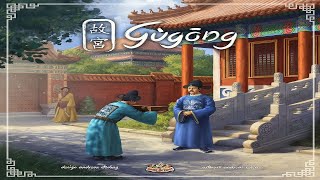
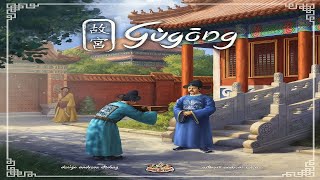
China, 1570. China is under the reign of the Longqing Emperor, of the Ming Dynasty. He inherited a country in disarray after years of mismanagement and corruption. He resided in the Forbidden city, which was the seat of many emperors under the Ming Dynasty. Constructed from 1406 to 1420, the complex consists of 980 buildings and covers 72 ha (over 180 acres). It is also under the Ming Dynasty that the Great Wall of China was rebuilt, fortified, and expanded. Around this period, China was under heavy attack from the Mongols, so maintaining the Great Wall was essential. Most of what we now have left of the Great Wall, we owe to the Ming dynasty.
The country was already famous for its very intricate bureaucracy, but this also led to a lot of corruption. Even though the penalties for corruption were very high, the highest Officials of the Forbidden City would pretend to uphold the ban on corruption, by accepting gifts of petitioners, and returning one of seemingly lower value.
Gùgōng uses this extraordinary custom as its basis. Players take on the role of powerful Chinese families trying to gain influence and power by exchanging gifts with Officials. The gift cards you offer as a player have to be of a higher value than the one you receive, forcing you to make strategic choices regarding which actions you want to take each turn. You will travel around China, sail down the Grand Canal, purchase precious jade, help construct the Great Wall, secure advantages through decrees, influence the game through intrigue, and ultimately, receive an audience with the emperor. If only 1 player succeeds in doing so, he wins. If several players succeed, the player with the most VPs among those players wins the game.
—description from the publisher


- Interesting historical theme and backstory.
- Strategic depth in action and card play.
- Engaging player interaction, especially with 'swapping' and racing for objectives.
- Can feel like a race for points.
- Some mechanics might be complex or have unintuitive scoring.
- The theme of corruption and gift-giving can be interpreted in different ways.
- Can be punishing if players mismanage their resources (people).
- Imperial Chinese court, corruption, and gift exchange
- China, 1570
Mechanics (from transcript analysis)
- action selection — Players choose actions from available cards or locations on the board.
- Area Majority — There are scoring elements related to having the most people in certain areas or contributing to the Great Wall.
- Card Drafting — Players seem to draw and play cards that offer actions or benefits.
- Set Collection — Collecting sets of cards or specific items like jade seems to be a way to score points.
- Worker Placement — Players use 'people' (workers) to take actions, move influence, and build.
Video topics + discussion points
Quotes (from this video)
- The exchange of gifts if a petitioner visited an official to present a request they would also present a gift and naturally the official would return the honor by presenting a gift in return.
- I don't want ads because I'm not a peasant.
- I hate you.
- It's appealing... and it's appealing.
- Wow, I think I [ __ ] the bed.
- Suck a chode.
- Man, stupid bonsai tree, am I right? Why would you want a bonsai tree? You could have had anything else.
- This is all your fault.
References (from this video)
- Excellent deluxe edition presentation and component quality.
- Simple yet deep card play with good player interaction.
- Tight decision-making and worker management.
- Multiple avenues for victory and clear end-game scoring.
- Rewarding strategic depth with learnable outcomes.
- Modular expansion options.
- Limited number of actions per round can feel restrictive (though this also adds to the 'juiciness').
- One expansion module only adds extra cards.
- Tricarion
- Yedo
- BattleCON
Mechanics (from transcript analysis)
- action selection — Players choose from a limited set of actions each round, often influenced by card play.
- Card Play — Players play cards that have a number and location, influencing available actions and player interaction based on card values.
- Hand Management — Managing the cards in hand is crucial for actions and future plays.
- Set Collection — Collecting sets of cards or specific items like Jade contributes to scoring.
- Tiebreaker Track — A track that players advance on, which serves as a tiebreaker for scoring.
- Worker Placement — Players use workers for actions at different locations, but workers also function as a resource that can be spent for boosts or to mitigate opponent's plays.
Video topics + discussion points
Quotes (from this video)
- this is probably the best deluxe edition
- it's just so sexy it is fancy as hell
- sheer quality of of components
- it's a weird worker placement game because you also have your workers that really you're you're paying as like a payment sometimes to boost your actions
- there's so many avenues to victory
- i have to give it a 10 out of 10 for that box
- i will give it a 8 and a half eight point five eight and a half for the game itself but i will literally give it a ten out of ten for presentation
References (from this video)

- Gaining coins by placing numbers greater than previous ones.
- Can gain stars and pumpkins through specific placements.
- Requires low numbers to be effective.
- Resetting can be costly if not managed well.
Mechanics (from transcript analysis)
- Resource Management — Players gain coins, pumpkins, hearts, and stars through various actions.
- Roll and Write — You write numbers in realms, and certain conditions grant rewards. For example, writing a one in GooGong because it is greater than the previous number grants a coin.
Video topics + discussion points
Quotes (from this video)
- Smitten can give you a lot of resources early on, but it gets very puzzly and difficult and a little bit luck driven later on.
- Planet Unknown seems out of reach, so I'm not even going to look at that yet.
- So I'll put the one right here and because it is and I gain a coin as a result because it's uh greater than the previous number which was nothing.
- In GooGong I want low numbers.
- That might be the best I've ever done in Smitten. Not too bad.
- Mark says it would be awesome if each realm had an easy level and an advanced level. That that would be that would be interesting, Mark.
References (from this video)

- Innovative worker placement
- Beautiful production
- Strategic decision making
- Modular board setup
- Engaging campaign
- Requires emissary track advancement to score
- Can be complex to learn
- Building a dynasty and influencing the court
- Imperial China
- DO
Mechanics (from transcript analysis)
- Area Control — Building on ancient sites on a modular board.
- Hand Management — Players manage a hand of cards that represent their workers.
- Set Collection — Collecting jade tokens for endgame scoring.
- Track Advancement — Advancing on various machine tracks based on adjacent terrain when building factories.
- Variable player powers — Each tribe has different starting abilities.
- Worker Placement — Uses cards as workers, replacing cards at action spots with higher values to take the action.
Video topics + discussion points
Quotes (from this video)
- it's not much of a looker.
- this is a two-player deduction game where you have two demi gods that you draw from a deck
- Orléans, you know, was one you showed me a long time ago.
- this was my really kind of my first bag builder experience
- This game is not intuitive in any way.
- this game has theme.
- this game feels really really video game like.
- have your family be a glor glorious and famous family is kind of what you're working towards.
- if you like perfect information 1v one fighting games, then BattleCon is probably the best
References (from this video)

Mechanics (from transcript analysis)
Video topics + discussion points
Quotes (from this video)
- Players play the role of influential families in Ming Dynasty China attempting to gain the most influence across four rounds of play.
- any player who fails to reach the top of it by the end of the game automatically loses
- this really is the essence of this game
- servants are tight and particularly early in the game it may have taken you one or two actions to gain those servants in the first place
- the key to the game is about getting the right actions done at the right times rather than simply trying to focus on one of these areas
- your discard pile becomes your hand for the next round
- the player with the highest score wins and in the event of a tie the player who is furthest up the intrigue track wins the game
References (from this video)
- Players can gain victory points in a variety of ways.
- The Deluxe Edition offers upgraded components.
- The game includes a solo mode (though not covered in this video).
- Failing to reach the top of the Temple of Heavenly Purity results in automatic loss.
- Spending too much time on the Temple of Heavenly Purity early in the game may not pay off.
- The cost of decrees increases as more players take them.
- Ships in the canal can be lost at sea if they don't claim their benefit in time.
- Advanced travel tiles are not recommended for the first game.
- Influential families attempting to gain the most influence
- Ming Dynasty China
Mechanics (from transcript analysis)
- Action Drafting — Players choose cards to play from their hand, which dictates the actions they can take, either from the card itself or the location on the board where it's played.
- Area Majority — The Great Wall action involves placing servants, and scoring is triggered when a row meets a certain number, with the player having the most servants on the wall breaking ties.
- Hand Management — Players exchange cards from their hand with cards on the board, and the discard pile becomes the hand for the next round. Strategic choices involve not just immediate actions but also setting up future hands.
- Set Collection — Acquiring Jade tokens and collecting them contributes to end-game victory points, with escalating point values based on the amount collected.
- Tie-breaking — The intrigue track is explicitly mentioned as the tiebreaker for several game elements, including Great Wall scoring.
- Track Advancement — Players move their markers up the Temple of Heavenly Purity track, which is a critical objective to avoid losing the game and contributes to end-game scoring.
- Worker Placement — Players commit servants (workers) to various locations on the board to perform actions. Some actions are free, while others require spending servants.
Video topics + discussion points
Quotes (from this video)
- Players play the role of influential families in Ming Dynasty China attempting to gain the most influence across four rounds of play.
- any player who fails to reach the top of it by the end of the game automatically loses
- this really is the essence of this game
- servants are tight and particularly early in the game it may have taken you one or two actions to gain those servants in the first place
- the key to the game is about getting the right actions done at the right times rather than simply trying to focus on one of these areas
- your discard pile becomes your hand for the next round
- the player with the highest score wins and in the event of a tie the player who is furthest up the intrigue track wins the game
References (from this video)

- High scoring potential
- Flexible planning with wedge strategy
- Dice luck variability can impact outcomes
- Stumble
Mechanics (from transcript analysis)
- Dice Placement — Roll dice and place them into numbered wedges to gain coins and resources.
- dice placement in wedges — Roll dice and place them into numbered wedges to gain coins and resources.
- resource generation via wedge placement — Higher numbers and strategic wedge choices yield different rewards (coins, hearts, etc.).
Video topics + discussion points
Quotes (from this video)
- We'll do it live.
- Wow. Completed crusaders early for all six stars.
- I would not recommend the show, but the book is one of my all-time favorites. The show really did not do the book justice, unfortunately.
- This pen is dying on camera in real time.
- Stumble. All right.
- Game 90. Great job, Mark, choosing these realms.