/pic3563904.jpg)
















Heaven & Ale Deep Dive
What the Community Thinks About Heaven & Ale
Heaven & Ale occupies a unique space in the modern board game landscape, a 2017 euro that combines classic design sensibilities with genuinely innovative mechanics. Despite its understated presentation, this Michael Kiesling and Andreas Schmidt creation has earned passionate advocacy from channels like The Board Game Garden and The Board Gaming Doctor, who recognize its depth beneath the austere aesthetics. The rondel-based progression creates a tension rarely seen in contemporary design, forcing players to confront meaningful decisions about when to act and when to wait.
Core Mechanics That Define Heaven & Ale
The Rondel: Forward Motion and Irreversible Choices
At Heaven & Ale's heart lies its signature rondel mechanism. Players move their pawn around a circular track and must commit to stopping at any point, but they can never move backward. This creates a profound tension between greed and caution. Do you push further to reach the tile you truly want, or settle for what is available now and let opponents potentially grab your target? The rondel forces players to think several moves ahead, weighing opportunity cost against future positioning. Each decision to stop ripples through the game, as you leave certain opportunities for opponents or deny them by occupying spaces yourself.
Tile Placement and the Dual Board Strategy
The tiles you collect from the rondel feed into a personal monastery board split into light and shadowed sides. This duality creates a resource puzzle that operates independently from the rondel itself. Placing a tile on the light side costs less but provides smaller gains, while the shadowed side demands more payment but generates ingredient track advancement. This asymmetry forces constant recalibration of your economic strategy and rewards long-term positioning over short-term optimization. The ingredient tracks become the true measure of success, as your final score depends heavily on your weakest resource, multiplied by a variable position on the scoring track.
The Heaven & Ale Experience
The Tension of Timing and Brewery Simulation
Heaven & Ale thematically evokes the medieval practice of brewing in monastery breweries, and this theme becomes mechanically relevant through its timing structure. The rondel's forward-only movement mirrors the inexorable passage of time in fermentation. Brewers must decide when their product is ready, but premature decisions waste opportunity, while hesitation might see someone else claim the best ingredients. This integration between mechanism and flavor creates a sense of authenticity that elevates the game beyond mere point-chasing. Players are not just manipulating systems; they are simulating the careful, patience-demanding work of medieval brewers.
The Satisfying Arc of Resource Balancing
Every game of Heaven & Ale follows a distinctive emotional arc. Early rounds feel exploratory as players experiment with tile placements and track advancement. Mid-game intensifies as resource shortages create genuine scarcity and the gaps between players widen. The endgame becomes tense as players recognize which of their ingredient tracks are lagging and scramble to shore up their weakest resource before scoring. This multiplier mechanism, where your lowest track helps determine final victory points, creates a constant gravitational pull toward balanced development. Players who maintain equilibrium across their ingredient tracks experience a satisfying payoff, while those who specialize too narrowly see their engines undone by a single weak link.
What Makes Heaven & Ale Stand Out
Irreversibility as Core Design Principle
Most modern euro games offer ample opportunities to modify or optimize prior decisions. Heaven & Ale refuses this comfort. Once you move past a space on the rondel, it is gone. This irreversibility creates a singular kind of tension, one that cannot be engineered through artificial time pressure or catch-up mechanics. Instead, it emerges naturally from the fundamental structure of circular movement. The rondel, simple on paper, generates complex decision trees because players must evaluate not just the immediate value of their position but the opportunity cost of leaving tiles for opponents and the long-term implications of where they land.
Low-Luck, High-Interaction Design
Heaven & Ale contains essentially no randomness in its tile availability and action options. Components are visible and knowable, creating a near information-symmetric experience where skill, reading opponents, and long-term planning matter most. Yet despite this determinism, the game generates surprising interaction. Players can deny opponents key tiles by positioning themselves strategically, but this requires predicting what rivals want and how they will respond. The game rewards players who combine solid personal planning with effective positional play.
Potential Drawbacks
Aesthetic Presentation and Accessibility
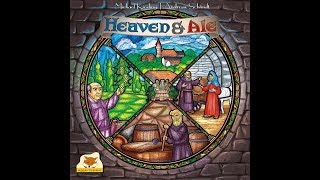
The game's art style, while thematically appropriate, leans into classic eurogame aesthetics that some modern players find austere or dated. This presentation can obscure the game's mechanical elegance and make it a harder sell to players accustomed to flashier packaging. The ruleset itself is straightforward, but the strategic depth can overwhelm newcomers who struggle to evaluate the long-term implications of rondel positioning, creating a gulf between casual play and competitive depth that requires experience to bridge.
Limited Availability and Out-of-Print Status
Heaven & Ale has drifted toward scarcity in the secondary market, with copies becoming harder to locate at reasonable prices. The game has not received the sustained reprints that other classics enjoy, leaving it accessible primarily to dedicated seekers willing to hunt used markets or wait for a potential republication. This scarcity paradoxically increases its reputation among enthusiasts while making it inaccessible to players who might discover it through modern recommendation channels.
If You Enjoy Heaven & Ale
Players drawn to Heaven & Ale typically appreciate games where positioning and forward planning matter more than luck. Glenmore II: Chronicles shares the rondel and tile-placement foundation, adding campaign elements and modularity. Viticulture Essential Edition offers similar agricultural theming with worker placement and long-term resource development, rewarding players who think about optimal timing. Clans of Caledonia features a comparable emphasis on resource balancing and dynamic markets, though it trades the rondel for a more economic, market-driven system. For those seeking a purer rondel experience, Navegador provides the classic form of the mechanism with its own economic twist.
What Reviewers Are Saying
"Heaven and Ale is a fantastic game, and after we played it, I couldn't stop thinking about it and I am really looking forward to playing that one again."
— The Board Game Garden
"This is a tile laying game where there is also the mechanism on the main board where you can go forward as far as you want to gain a tile, but you can never go back. Heaven and Ale is a fantastic game and I would love to see a reprinting of this one. It's very strategic and satisfying and I really liked it."
— The Board Game Garden
"I think it is an interesting rondel game where the timing of brewing beer makes the difference, the timing aspect of brewing beer and making sure that it has had enough time to ferment."
— The Board Gaming Doctor