



Heroes of Terrinoth Deep Dive
What the Community Thinks About Heroes of Terrinoth
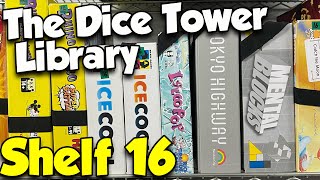
Reviewers who return to Heroes of Terrinoth speak about it with real fondness, even while being candid about its age. Colin, whose channel is Meet Me at the Table, treats it as the second iteration of a formula that Warhammer Quest Adventure Card Game already established, and points out that the game has no expansions and effectively ended after its core set. Colin still owns both games and says the Heroes of Terrinoth enjoyment has not faded. Paul of Gaming Rules! came to the game late one night after a long weekend of play, found that most of the rules had slipped from memory, and still judged the rulebook to be good enough that the group relearned the game without much trouble. Tom Vassel of The Dice Tower mentions the game only briefly while walking through a library shelf, calling it a pretty solid little game from Fantasy Flight. That reads as a respected but modest reputation rather than a headline title.
Reviewers agree that the game is a cooperative fantasy adventure with a strong sense of tension and a rulebook that supports learning. They diverge on format. Colin prefers the campaign structure of Warhammer Quest for a longer arc, while valuing that Heroes of Terrinoth quests stand alone and can be played in any order. Paul sees the two games as nearly identical, with the Heroes of Terrinoth tweaks being the reason to prefer it. Colin also acknowledges that the game can be brutal in a way that some groups will find frustrating, and that this difficulty is a large part of its pull.
Core Mechanics That Define Heroes of Terrinoth
Activation cards that exhaust and ready
Each hero works through four actions on a turn: attack, explore, aid, and rest. Heroes that share a color use the same action cards, while each color set has its own unique cards and each individual hero gets unique abilities. Colin explains that a card is exhausted when it is used and cannot be used again until it is readied. The rest cards are usually the way to ready the others, which Colin finds more logical than the reading mechanic in Warhammer Quest. Upgrades add another layer. Each hero chooses one of two upgrade tracks during the scenario, and choosing one path makes the other unavailable.
Dice pools that grow with the threat
Combat is resolved with dice whose pool expands as enemies gather around a hero. Colin describes adding one black die for each enemy engaged with a hero, up to three, so that crowded fights also mean more dice to roll. White dice produce successes, bursts count as successes and let the roller keep rolling, and shields block damage. Success tokens are capped at five, can be kept on a character card rather than an action card, and can be spent on up to two actions at once. A lucky burst can clear a board in one roll, while a poor roll can leave a hero exposed during the enemy phase.
The Heroes of Terrinoth Experience
A tense siege that refuses to let up
Colin describes a scenario in which a dragon named Valandra keeps returning to the table. Enemies pushed back into the shadows reappear, a peril track advances each round, and the nemesis effects keep dealing damage. The account is full of swings between panic and relief, such as a set of bursts that clears the board or a heal that restores six damage in one turn. The dread builds from accumulated damage rather than a single blow, and that slow build makes a defeat feel earned rather than arbitrary.
Table talk and a focused fantasy session
The other experience reviewers describe is social. Colin plays with four heroes, saying that the game works best at that count, and the shared decisions about which enemies to engage turn the table into a planning session. Colin also admits that controlling four heroes makes it easy to miss something, which is the one awkward part of the format. Paul wanted a game that was not too long and that the group would enjoy, and found that Heroes of Terrinoth met most of those needs. The feeling is less about grinding through a long campaign and more about a contained session where everyone makes decisions together.
What Makes Heroes of Terrinoth Stand Out
Upgrades that arrive during the quest
Colin points out that Heroes of Terrinoth handles upgrades differently from Warhammer Quest. In Warhammer Quest, upgrades come between scenarios, while in Heroes of Terrinoth they happen during the scenario, which Colin finds cool. The upgrades are triggered by the peril phase, so the story's escalation becomes a source of power for the heroes rather than only a threat.
Stand-alone quests and a sharper rulebook
Colin values that each quest is a one-off that can be played at any time, which is a clear advantage for groups who want a complete session without committing to a campaign. Paul praises the rulebook as really good and describes the small changes to the system as the reason Heroes of Terrinoth is preferred over its predecessor. Together these points suggest that the game's identity rests on accessibility and a tighter core loop rather than on sheer scale.
Potential Drawbacks
Limited support after the core set
The most consistent criticism is that the game has not grown. Colin notes that there are no expansions and that the game died after the core set. Colin believes the design offers many opportunities that have never been built out, and hopes that someone will eventually support the system with more enemies, quests, and heroes. Paul also notes that the game has been out of print for years, which makes it harder for players who might enjoy it to find a copy.
Punishing difficulty and demanding play
Colin does not treat the difficulty as a flaw so much as a hazard. Colin chose the Silvered Mirror quest for its difficulty, and the session ended with the heroes destroyed, which Colin says lived up to its name. Even so, the stacking damage, the mid-game correction to how exhausted cards are handled, and the need to track many enemies at once make the game demanding for newer players. Colin also prefers the campaign of Warhammer Quest for players who want a longer arc with progression.
If You Enjoy Heroes of Terrinoth
Reviewers consistently tie Heroes of Terrinoth to Warhammer Quest Adventure Card Game. Paul calls it almost the same game with small tweaks that are an improvement, and Colin owns both and recommends choosing based on what the session should deliver. If you want a campaign with leveling and items that carry between scenarios, Colin points to Warhammer Quest as the stronger choice. If you want a tighter, self-contained experience with one-off quests and mid-scenario upgrades, Heroes of Terrinoth is the better fit. Both share the same cooperative card play, so fans of one are likely to find the other familiar.
What Reviewers Are Saying
"Unfortunately, just like Warhammer, there's no expansions out for this game. It died after the core set, but I still really enjoy it."
— Colin
"And you know what? I love it. I love when games are hard. All that makes me want to do is play it again."
— Colin
"It's almost the same game, but I actually prefer the Heroes of Terran. The small tweaks to the system that they made with Heroes of Terino. I prefer that to the Warhammer Quest adventure card game."
— Gaming Rules!