


Hiroba Deep Dive
What the Community Thinks About Hiroba
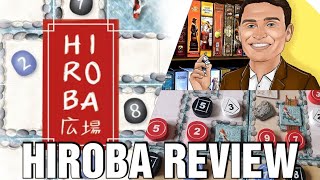
Hiroba is a two to four player area control game with a Sudoku core, published by Funnyfox, and reviewers consistently describe it as an underrated pleasant surprise. Its takes share a common thread: the game looks modest on the table but rewards close attention. In a full review, Chairman of the Board called it one of the year's pleasant surprises and a breath of fresh air, noting that the reviewer does not usually care for pure abstract games yet found plenty to appreciate here. A preliminary top ten of 2022 from the same channel placed it eighth, describing it as a game that "came out of nowhere" and a quirky little title that slotted well into the collection. A 2023 roundup of recent plays framed it as a game that had flown under the radar, and that roundup also reported a group of first-time players who were hesitant at the start but fully sold on it by the end. A later video from the same channel, covering a 27-game challenge day, called it underrated and noted that it is one of the reviewer's girlfriend's favorite games, while the reviewer admitted to collecting plenty of koi but too few regions to win. Across these takes, the consistent message is that Hiroba's simplicity is deceptive and its decisions run deep.
Core Mechanics That Define Hiroba
Sudoku-Style Placement Restrictions
Each turn, a player deploys one numbered token onto the modular 3x3 grid of garden tiles. Tokens carry values from one to nine, and each token has a lower value printed on its reverse side. The Sudoku inspiration shapes every decision. A new token must share a row or column with an existing piece, and the same number cannot appear twice within a row, a column, or a single garden. Reviewers single out these restrictions as the place where the game truly comes alive. Chairman of the Board observed that the restrictions are "where the game really does come to life," because a player can use them to block an opponent. For example, a player worried about a rival stealing a garden can place a three there, knowing the opponent has no other three left to contest it. The rule set is small enough that, as one reviewer put it, a single explanation gives you everything the game has to offer.
Area Majority Scoring With Koi Multipliers
Gardens score for the player with the highest total of tokens inside them, and the garden's points equal its number of squares. Second place earns nothing, a rule reviewers praised because it makes every placement count. The koi ponds add a second layer. At the end of the game, the player with the lowest total value touching each koi pond claims that koi, then deploys it into a garden where they hold the majority, doubling that garden's value. A tie for the lowest total gives both players a koi. Any koi that cannot be placed scores one point at game end. Chairman of the Board framed the central tension as a trade-off: high tokens win gardens, while low tokens win the koi, and because each token's reverse side offers the opposite strength, claiming one benefit usually means giving up the other. Reviewers see this push and pull as the engine that keeps the scoring from feeling mechanical.
The Hiroba Experience
A Bidding-Like Squeeze Over Every Garden
Reviewers repeatedly describe a constant tug of war over each region. Chairman of the Board described the familiar moment when an opponent slips a higher token into a garden you were winning, and the question becomes whether to commit another token or cut your losses. Because each player has only a limited supply of tokens, the decision to keep fighting must be weighed against the next region that needs attention. The reviewer also noted that players scan the board even on other people's turns, planning where a future token would earn a strong return and hoping that spot stays open. That sense of quiet calculation gives the game its engaging, bidding-like feel.
Clean Focus on the Decisions
Beneath the tactics, reviewers say the game is easy to digest. The rules get out of the way of the decision space, with no stalling points and no rules disputes to resolve mid-game. Players can concentrate on where to place, when to block, and when to switch a high token to its low side. As the map tightens, the board squeezes around players, and reviewers describe the satisfaction of trapping an opponent so they cannot reach the regions they want. The game's runtime of around 25 minutes keeps that focus tight, which reviewers found a remarkable return on the time invested.
What Makes Hiroba Stand Out
Elegant Simplicity With Tactical Depth
The most frequently praised feature is the way a very small rulebook produces many meaningful choices. Chairman of the Board described the game as bare-bones, with only a couple of mechanisms: take a token, choose its side, and place it in a garden while respecting the restrictions. Yet the restrictions and the koi interaction generate real depth. In one video, the reviewer noted that the game "has a surprising amount of depth" for its short length. Reviewers also highlight the conflict between high and low values, where a player who chooses one benefit must give up the other, which keeps nearly every turn meaningful even though each player places only a handful of tokens.
Quality Components in a Compact, Variable Package
Reviewers praise the production as well suited to the game's understated style. The wooden pieces are screen printed on both sides, which reviewers describe as tactile and satisfying. The tiles are a comfortable size, and the whole game packs into a small box. The modular board is a standout feature because the tiles can be arranged differently each time, and some tiles stay out of each game, so the map changes from session to session. The player boards and scoring book are also described as well judged additions. One reviewer summed up the overall quality as neither overproduced nor underproduced, offering real value for an affordable price.
Potential Drawbacks
Early Blockage in Certain Regions
Because every token must share a row or column with an existing piece, a player can be shut out of certain regions in the opening turns. Chairman of the Board pointed out that early blockage is a real consideration, and that a player may need to deliberately place a token in a spot that opens access to two large adjacent gardens later on. The reviewer frames it as part of the planning challenge rather than a flaw, but it does mean that less experienced players may find their options narrow early in the game. Thinking ahead about access to open regions is central to doing well.
Area Majority Games Reward Larger Tables
The game supports two to four players, and one reviewer felt it works best at three or four. Chairman of the Board observed that area majority games are generally more interesting with more variables and more people competing for the same regions. The reviewer added that a simple adjustment makes the game workable with fewer players: flip some of the tiles over and keep the map tight. The game plays well at smaller counts, but the contest for each garden feels sharpest as more players join the fight.
If You Enjoy Hiroba
Hiroba suits players who enjoy compact abstract puzzles where a few well-chosen placements determine who controls the board. Reviewers tie the game to Sudoku, so readers who appreciate that logic-driven constraint, along with area control scoring where only the majority player gains points, will likely find the same satisfaction here. The game is a good fit for players who like to block opponents, plan several turns ahead, and weigh the tension between claiming a region and conserving a valuable token. It also appeals to those who want a game that teaches in one explanation and finishes within a single short session, which is why reviewers describe it as easy to bring back to the table.
What Reviewers Are Saying
"The whole game you are only placing nine tokens on the board. Yet, every single placement feels vital to your strategy and your tactical play."
— Chairman of the Board
"This is a game that has a surprising amount of depth going on here for a game that takes maybe 10-15 minutes to play."
— Chairman of the Board
"Another game that gets tighter as you go, and you can use that to block players from trying to trump you into taking control of these different regions."
— Chairman of the Board