
Hitler's Reich: WW2 in Europe Deep Dive
What the Community Thinks About Hitler's Reich: WW2 in Europe
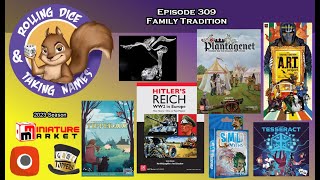
Reviewers agree that Hitler's Reich: WW2 in Europe, from GMT Games, is a streamlined, card-driven take on the European campaign, but they disagree sharply about whether the learning curve is worth the payoff. The hosts of Rolling Dice & Taking Names came away enthusiastic after a first table session. They described it as an area control contest with a Euro flavor, noting that it has "more of a Euro feel" than the hex-and-chit wargames GMT is known for, and they liked that it moves quickly once everyone understands the basics.
A second Rolling Dice & Taking Names episode presents a rougher first impression. Its reviewer called the early session "a slog," and the group played for three and a half hours without feeling they had accomplished much. The reviewer placed much of the blame on the first edition rulebook, which held finer rules that the board never reminds players about. Even so, the reviewer conceded that the core actions are simple, and a future son-in-law at the table asked to play again, which suggested the ideas land once the text stops getting in the way.
The Discriminating Gamer, in The Discriminating Gamer, takes the harshest view. The host ranks Hitler's Reich second on a list of their biggest game disappointments of all time. After a first attempt with a friend left them unable to connect the cards to the rest of the board, a GMT enthusiast who had studied the rules helped make the game coherent. Even then, the verdict was that "it wasn't that interesting. It was very weak."
Core Mechanics That Define Hitler's Reich: WW2 in Europe
War-Style Card and Dice Conflict
The central engine is a conflict system that GMT Games describes as the classic card game War with dice added, and a Rolling Dice host confirmed that comparison in play. Each side plays a card face down from hand, and each card carries a value. The attacker starts with three dice and can earn more from controlled territory around the target, from fleets at sea, or from the effect of an event card. The highest total wins, and the winner can add or remove tokens and adjust hand size. The hosts appreciated that a fight is not about wiping out an opponent's forces. It is about holding an area without committing large stacks to a battle. The Discriminating Gamer, by contrast, found the relationship between cards and actions the hardest part to parse.
Event Decks and the Year Clock
Three event decks supply the history: one for the Allies, one for the Axis, and a shared neutral deck. Events are not grabbed at random. A player looks through the deck, chooses one, and must then win the conflict to keep it. If the conflict is lost, the event goes away, and some events leave the game altogether. Using cards also advances each side's year marker. When both sides reach the same year, a year-end resolution returns cards to play and adds new events that represent that year's developments. Operations such as Barbarossa and the D-Day landings enter the game this way, and the Rolling Dice hosts pointed to them as the moments where the historical setting shows up in play.
The Hitler's Reich: WW2 in Europe Experience
Tension in Every Gamble
Each conflict is a small wager. A player commits a card to the fight, rolls the dice, and hopes the result holds. The Rolling Dice hosts summarized the central question of the game as how to manage areas and keep control of them so that a player can win. The hand-size race adds pressure, because a large gap between the Allied and Axis hand sizes can trigger a victory condition, and gaining control of production fields raises your own hand size. Players must weigh whether to press an advantage or hold steady before the other side closes the gap.
Frustration Before Understanding
Reviewers who struggled describe a different emotion: the feeling of being stuck inside the text. The Discriminating Gamer set the game aside after rereading the rulebook, playing a session that produced the same result, and rereading again, only to find the same problem. The second Rolling Dice reviewer had a similar experience, concluding that "it's not that the gameplay took long, it was understanding all the text." The frustration came from the rules, not from the turns, and it was strong enough to make a first session feel like a loss even for players who wanted to like the game.
What Makes Hitler's Reich: WW2 in Europe Stand Out
Setup Measured in Minutes
The box promises a short setup, and the Rolling Dice hosts confirmed it. The game uses no stacks of armies and no hex maps, and the hosts were glad they did not need to trace supply lines. Once the basics are understood, a full game can be played in about two hours, which the hosts found plausible. The Euro-style card play and the lack of chits were the features they credited for keeping the game light on the table.
Solo Play That Reviewers Want to Test
Solo play is a major draw. A Rolling Dice host pointed to the GMT solo rating of nine printed on the back of the box, which they jokingly called the "dreaded" score, since it was what made them buy the game. The rating indicates a solo-driven design that also plays well with two people. The same host said they planned to try solo play before judging the game further, so this praise rests on the publisher's rating and the reviewer's expectations rather than on a long solo session.
Potential Drawbacks
A Rulebook That Works Against New Players
The sharpest criticism concerns the rulebook. The Discriminating Gamer called it "one of the worst rule books I'd ever read," describing text that sent readers to one part of the rules and then gave a different answer than the one they needed. The reviewer spent more time in the rulebook during play than with almost any other game, and a second friend who studied the rules still found "a lot of things that were unclear." The second Rolling Dice reviewer ran into the same problem with a first edition book, and found finer rules hidden from the board, including a rule that closes the window for invading Russia if the Axis has not used an operation to do so by the end of 1941. That reviewer noted that the second edition rulebook includes changes that would help. The Discriminating Gamer had heard of a revised rule set that might improve the game, but had not checked it.
Event Text and a Thin Payoff
The second concern is that the game asks players to absorb a large amount of text and then delivers less than they hoped. The Rolling Dice reviewer compared the event system to Twilight Struggle, noting that players must know a deck of 30 cards and the effects of generals such as Patton and Montgomery before they can plan well. The Discriminating Gamer was blunter: after finally understanding the rules, the game did not reward the effort, and the reviewer said, "If I got to work that hard to learn how to play a game already, you've lost me." Reviewers who enjoyed the game treat the reading as the price of admission. Those who did not treat it as the main reason to walk away.
If You Enjoy Hitler's Reich: WW2 in Europe
- Twilight Struggle: The reference point the Rolling Dice reviewer used for the event system. It is another card-driven game where the event cards carry the historical weight and mastering the deck is the path to strong play.
- Plantagenet: A GMT campaign game about the Wars of the Roses that the Rolling Dice hosts played in the same episode. The host described it as the easier entry in its series to learn, and it relies on the same mix of resource management and logistics planning that makes the publisher's card-driven designs appealing to these reviewers.
What Reviewers Are Saying
"The rule book is one of the worst rule books I'd ever read because as I'm reading through the rule book, it is saying, 'Okay, you need to figure this out. Go to this location.'"
— The Discriminating Gamer
"I like it because it doesn't have the chits. I like it because it is quick playing once everybody understands the basic rules."
— Rolling Dice & Taking Names
"The game is very streamlined. Okay, okay, it's real, it's real simple, real simple actions, real simple results, things are done."
— Rolling Dice & Taking Names