/pic7208802.jpg)
In the six months following the defeat of HADES in Horizon Zero Dawn, Aloy has been searching fruitlessly for a working backup of GAIA to restore the planet's rapidly degrading biosphere. After she discovers that her former associate Sylens did not destroy but stole HADES, he contacts Aloy and asks her to continue her search in the region known as the Forbidden West.
The player controls Aloy, a hunter in a world populated by dangerous, animalistic machines. In an open world, she explores the mysterious frontier known as the Forbidden West, a post-apocalyptic version of the Western United States, specifically the states of California, Nevada, and Utah. The map is larger than in the previous game. Exploration is improved with new underwater discoveries, and improvements to combat using the Valor Surge system, freeform climbing, and tools such as the Shieldwing, Focus Scanner, Diving Mask, and Pullcaster. The mission structure for quests better supports variety in objectives with compelling reward systems.
Microbadge:

- Really beautiful looking
- Love big open world games
Mechanics (from transcript analysis)
Video topics + discussion points
Quotes (from this video)
- Nintendo fans, here it is. My number two favorite system of all time is the Nintendo Gamecube.
- Oh my god. God, the Gamecube is so good.
- Eternal Darkness, the best Lovecraftian horror game ever made.
- Zelda, Legend of Zelda: Wind Waker. By far my favorite Zelda game.
- Metroid Prime, my favorite Metroid game. So good. love that game. The atmosphere is great.
- I love the Gamecube. I wish Nintendo would have followed down that path, but I have a feeling if they would have, they probably wouldn't be around anymore.
- And finally, my number one system of all time, and that is the original Sony PlayStation.
- And uh that game reignited my passion for or that console reignited my passion for video games. And it's been ignited ever since.
- And the best thing about the Sony PlayStation 1 era was like this was a time before we had so much news coverage online about video games.
- And so I could go to a video game store and we had quite a few where I was from in Fresno, California, a local kind of chain called BR and then we had Software etc.
- you could go into a video game store and just look at the shelves and the shelves of the stores were huge and they had so many shelves and there were so many games for the PS1 and you could stumble upon games that you had no idea what they were because they weren't getting covered.
- These totally bizarre almost non games.
- They had refund and exchange policies at their store, so you could go in and buy a game with a full guarantee that you would like it.
- And it just it gave us the chance to try things out at home and, you know, decide whether or not we like the game.
- And so that, you know, kind of gave me the freedom to experiment with a whole bunch of different kinds of games.
- And I think that's a I think that's a huge uh miss. I think not allowing gamers to exchange games and not allowing for, you know, that's why I like Steam so much because you can buy a game, you can play it for a couple hours, and if you don't like it, you can refund it.
References (from this video)
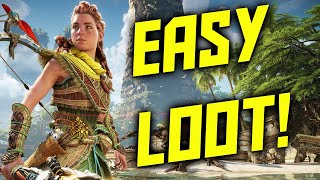
- Saves time on loot collection by enabling automatic drops
- Enhances accessibility for players who dislike tedious looting tasks
- Broadens the game's QoL options, appealing to a wider audience
- May reduce sense of reward for looting in hardcore play
- Could dampen tension if players rely too heavily on automatic drops
- Survival, exploration, and conflict with mechanical adversaries in a frontier setting
- Open-world post-apocalyptic Earth, focused on a future United States with machine enemies
- Quest-driven, cinematic storytelling with player-driven choices
Mechanics (from transcript analysis)
- Card Crafting — Gathers resources from loots and environments to upgrade equipment and gear.
- Combat variety — Use of ranged and melee options, with strategy against varied machine and human foes.
- Crafting and upgrading — Gathers resources from loots and environments to upgrade equipment and gear.
- Loot and drop system — Defeated enemies can drop loot; the video discusses modifying this via accessibility settings.
- Open-world exploration — Large, interconnected world with optional tasks and side quests encouraging curiosity and discovery.
Video topics + discussion points
Quotes (from this video)
- What it does is this: this allows all available parts from an enemy to drop when it's defeated.
- This option on can save a ton of time.
- Horizon accessibility features it's always good to see more accessibility options present in modern day games.
References (from this video)

- The approach to travel is thoughtfully integrated, allowing players to reduce travel friction through a purposeful sequence of base and camp connections that feel earned rather than handed to the player.
- The progression system and base-building mechanics reinforce a satisfying loop: explore, unlock, and return with greater capability, which makes traversal feel meaningful rather than a mere convenience.
- The world design and environmental storytelling provide a vivid stage for strategic planning, whether you’re hunting machines, hunting for loot, or optimizing your route to maximize efficiency.
- The unlimited fast travel technique depends on reaching an early base unlock, which may not be accessible to players who skip early progression or opt for a more linear experience.
- Some players may perceive the travel optimization as adding a slightly longer detour in practice, especially if they are accustomed to straightforward fast travel menus.
- The technique introduces an additional step in travel planning, roughly ten seconds longer than a direct route in certain scenarios, which may impact impression of speed for achievement-focused players.
- Survival and adaptation in a world overrun by robotic fauna; the tension between ancient human cultures and cutting-edge machine ecosystems is central. The narrative emphasizes reconciliation with nature, the value of knowledge and discovery, and the continual balance between threat and wonder. The core thematic throughline centers on rebuilding, reclaiming territory, and expanding agency through technology, exploration, and strategic decision-making.
- A post-apocalyptic Earth reimagined in the western United States, where lush environments sit alongside ruined megastructures and machine wildlife. The world is characterized by dense biomes, towering machines, tribal factions, and settlements that have reformed around scavenging, survival, and story-driven quests. The setting supports a mix of exploration, resource collection, and human/pseudo-societal dynamics that drive both atmosphere and gameplay goals.
- Instructional/guide-like with embedded world-building flavor. The storytelling leans toward practical guidance—how to approach combat, traversal, and progression—while weaving in lore and environmental storytelling. The tone supports a viewer-led tutorial vibe, where players are invited to experiment, optimize routes, and reflect on how small gameplay choices can cascade into broader strategic outcomes.
Mechanics (from transcript analysis)
- Base and camp unlocks — Bases and camps act as hubs that enable fast travel, supply replenishment, and region-specific perks. Unlocking these points often requires completing early-game milestones, guiding players to explore and establish infrastructure. This system creates a networked map where movement efficiency improves as more hubs become available.
- Combat: Damage Based — Combat is built around a broad arsenal including bows, traps, traps that leverage depth, and melee options. Each weapon type has distinct advantages against different machine classes and human enemies, encouraging tactical planning, material collection for upgrades, and skill usage that complements a player’s preferred playstyle. Combat flow emphasizes timing, counterplay, and exploiting machine weaknesses revealed through scanning and observation.
- Open-world exploration — Horizon Forbidden West presents a vast, visually rich open world with diverse biomes, landmarks, and optional side quests. Exploration is rewarded with loot, resources, and world-building notes that deepen immersion. Players decide when to engage enemies, when to approach crafting stations, and when to traverse the map via traversal tools, all of which influence pacing and resource management.
- Progression and skill trees — Character progression unlocks abilities that enhance combat, stealth, resource gathering, and traversal. Skill trees encourage players to specialize in certain playstyles while still allowing cross-pollination between roles. Equipment customization and cosmetic options further personalize gameplay and provide non-functional rewards that reinforce player agency.
- Resource gathering and crafting — Players collect components from environment, enemies, and salvaged tech to craft ammunition, traps, and gear upgrades. Crafting systems tie into progression, with upgraded equipment improving stats and abilities. The loop incentivizes exploration and careful resource management, nudging players toward efficient routes and purposeful hunting of machines for rare mats.
- Tech Trees — Character progression unlocks abilities that enhance combat, stealth, resource gathering, and traversal. Skill trees encourage players to specialize in certain playstyles while still allowing cross-pollination between roles. Equipment customization and cosmetic options further personalize gameplay and provide non-functional rewards that reinforce player agency.
- Track Advancement — Traversal is enabled by climbing, grappling, and gliding mechanics, along with scanning to reveal climbable surfaces and path options. Players navigate vertical spaces, plan routes around hazards, and leverage environmental features to reach distant objectives. This mechanic integrates with combat and exploration, making movement a core skill rather than a passive backdrop.
- Traversal and traversal tools — Traversal is enabled by climbing, grappling, and gliding mechanics, along with scanning to reveal climbable surfaces and path options. Players navigate vertical spaces, plan routes around hazards, and leverage environmental features to reach distant objectives. This mechanic integrates with combat and exploration, making movement a core skill rather than a passive backdrop.
- Weapon variety and combat — Combat is built around a broad arsenal including bows, traps, traps that leverage depth, and melee options. Each weapon type has distinct advantages against different machine classes and human enemies, encouraging tactical planning, material collection for upgrades, and skill usage that complements a player’s preferred playstyle. Combat flow emphasizes timing, counterplay, and exploiting machine weaknesses revealed through scanning and observation.
Video topics + discussion points
Quotes (from this video)
- show you how to do unlimited fast travel
- this unlocks in the early game
- this method might take an extra 10 seconds or so
- leave a like and comment on what you think of horizon forbidden west
- you've been watching jedi supreme