



Hour of Need Deep Dive
What the Community Thinks About Hour of Need
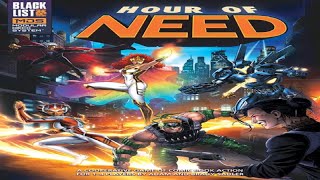
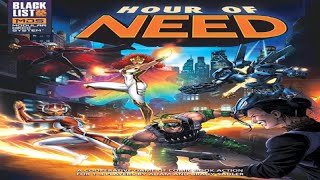
Reviewers on Board Games UnLocked land in a mixed place on Hour of Need, the 2021 cooperative superhero game from Blacklist Games. The consensus is that the game works as a game. Reviewers repeatedly call the core system functional and playable, and they praise the modular deck system as the reason the box is worth owning. Where they disagree is on everything wrapped around that system. The rulebook, the components, the theme, and the way the game feels in the hand all draw sharp criticism, and reviewers do not treat those problems as minor.
The strongest negative voice in the coverage comes from the video that ranks Hour of Need as the second most disappointing game of 2022. That reviewer describes the design as stale when set against other games from the Sadler Brothers, and argues that the company behind it appears to be in disarray, with one of the brothers gone and Blacklist Games possibly absorbed by another company. Another reviewer, in a more measured review, concludes that the deck system works well and calls the game a perfectly functional experience, while still faulting the superhero theme as generic and non-IP.
What unites the critics is a sense that the game promises more than it delivers in tension and heroism. Reviewers do not dismiss the design. They describe a game that is competent, a little dull to handle, and far less exciting than its comic book framing suggests.
Core Mechanics That Define Hour of Need
The Modular Deck System
The modular deck system, usually abbreviated MDS, is the mechanism that reviewers return to most often. Hour of Need uses it to build each session from separate hero, villain, and scenario decks, so the same box can produce different games depending on which pieces are mixed together. The Sadler Brothers are the designers behind this system across several titles, and reviewers treat MDS as the thread that connects their work. One reviewer notes that the system is now dated compared with the Sadler Brothers' other games, and that the design has not kept pace with what those later titles do.
The same reviewers still give the system credit where it counts. A reviewer who is otherwise critical of Hour of Need says that the mechanism alone gives the game high replayability, because a new combination of decks changes the problems the players must solve. The system also carries the standalone expansions, which some reviewers see as a benefit because each expansion can be played on its own without rebuilding the whole collection.
Hero Actions, Focus, and Burst Results
Heroes act through a short list of actions, and the choice between them shapes almost every turn. Reviewers describe a rhythm in which players spend effort on solving problems, attacking villain threats, or switching the focus state of a hero, and they note that focus tokens and burst results add a layer of resource management on top. Board Games UnLocked describes the card play and resource management as real strategic depth, and it is the part of the game that gives experienced players something to plan around.
The same mechanic is also where reviewers see friction. Movement across the map can be slow unless a hero holds a specific card that allows a teleport-like effect, and the combat step is described as a slog when the villain is pressing. When those frictions stack up, a turn that should feel decisive can turn into a series of small obstacles that each need their own attention.
The Hour of Need Experience
Escalating Pressure and Losing Focus
Reviewers describe Hour of Need as a game where threats rise quickly, and that rise is where the tension comes from. The difficulty is a recurring theme. One reviewer notes that a session can be lost outright, and another points out that a single bad turn can leave the team facing overwhelming damage. In the best moments the pressure forces hard choices. In the worse moments, reviewers say the team loses sight of its objective because each new threat demands an immediate response.
The villain's scheme phase drew particular complaints. A reviewer on Board Games UnLocked explains that the boss can block damage during the scheme phase, which slows the rhythm of the fight and makes the heroes feel as though they are working against the board rather than against the villain.
Heroism That Does Not Quite Land
The game is built around the fantasy of a team of superheroes stopping a villain, and reviewers agree that the fantasy is the part that struggles most. One reviewer says the comic book styling is attempted but does not integrate well with the map layout. Another finds that the heroes are generic and that the game lacks the feeling of being a badass. Reviewers who enjoy the game still describe a satisfying moment of stopping a threat, but they tend to say that moment arrives in spite of the presentation rather than because of it.
What Makes Hour of Need Stand Out
A Working Modular Deck System
Reviewers consistently praise the modular deck system as the feature that most distinguishes Hour of Need. Even critics who call the game stale say the mechanism works, and the reviewer who ranks the game low for 2022 still recognizes it as the way the Sadler Brothers build their designs. Because the decks can be mixed in many ways, the game gives players a reason to return to the box after the first few sessions.
Token-Heavy Play That Feels Less Cluttered Than Expected
Some reviewers say the game handles its token load better than many comparable titles. One reviewer argues that Hour of Need is better than Sentinels of the Multiverse when it comes to managing a token-heavy board, even though the expansions can add a lot of tokens to the table. For players who want a superhero game where tokens are part of the rhythm, that point matters, and it is one of the few areas where reviewers frame the design as a clear improvement on a well-known rival.
Potential Drawbacks
A Rulebook That Leaves Too Much Open
The rulebook is the most consistent complaint. Board Games UnLocked calls it atrociously bad and explains that many things are never clarified. The reviewer argues that the game's modular design makes the problem worse, because the game avoids overloading players with rules but leaves so much room for interpretation that players are left asking what a card means in a given situation. For a game that depends on combining cards from several decks, that vagueness has a direct cost to play.
Components, Pacing, and Clutter
Reviewers are also unimpressed with the board and components. Board Games UnLocked describes them as unimpressive, and the token load grows once standalone expansions are added to the table. Movement is slow, and reviewers say that the amount of effort needed to move heroes around the map interrupts the flow of the game. Taken together, these points make the physical experience feel less polished than the design underneath it.
If You Enjoy Hour of Need
Players who enjoy Hour of Need's modular deck system will find the closest match in Street Masters, which one reviewer describes as the best fit for the MDS design. The comparison works because Street Masters uses the same kind of mixed decks, and a reviewer who liked the mechanism in Hour of Need would likely appreciate how the other game uses it.
Players who want a superhero game where tokens and card play are central should also look at Sentinels of the Multiverse, which reviewers often name as the point of comparison. Hour of Need is described as the better choice for a token-heavy table, so it may suit players who find that rival's bookkeeping too much.
What Reviewers Are Saying
"In a game like this where it's so modular it's almost like they want to have their cake and eat it too they don't want to overload you with rules but because they don't overload you with rules you have a lot of vagueness surrounding the game"
— Board Games UnLocked
"It just it just didn't come together. I didn't find the heroes to be super fun to play. I didn't find the card system to be super fun to play."
— Board Games UnLocked
"I still love the modular deck system. I think just that mechanism alone makes it have high high replayability."
— Board Games UnLocked