


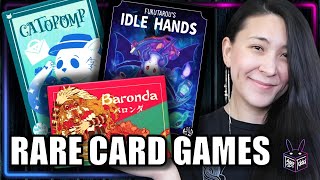
Idle Hands Deep Dive
What the Community Thinks About Idle Hands
Reviewers see Idle Hands as a distinctive trick-taking game for three to four players, published by New Mill Industries and released in 2024. Its short playtime and light rules make it easy to bring to a table, but the reviewers who tried it agree that its scoring and card choices reward careful thought. The sentiment across the videos is positive and curious. Players who lose often still want another game, and the most enthusiastic reviewers describe it as a standout within a crowded genre.
Board Gaming Ramblings, the channel hosted by Sonal and Johannes, placed Idle Hands in the keep pile during its Keep or Cull series. Sonal described the first play as a game that was "very interesting and very unique," even though the loss was a bad one. In a later monthly roundup, the same channel listed Idle Hands among the trick-taking titles it played that month, and the host's comment that "trick takers are Idle Hands for me" signaled that the game was one of the group's favorites from the batch.
Tabletop Tokki, the channel behind the July 2025 mini reviews, offered a more measured but still favorable verdict. The reviewer had wanted to try the game for a long time, and after a first play described it as "really inventive." That reviewer also raised a concern about how trick-taking games can feel limiting at certain player counts, a point that shapes how Idle Hands is recommended in the sections below.
Core Mechanics That Define Idle Hands
Trick-Taking
At its foundation, Idle Hands is a trick-taking game. Each round, players play cards to a trick, and the highest card of the led suit wins the trick. Board Gaming Ramblings noted that players must play a card in the suit that was led if they can, which keeps the core rule familiar to anyone who has played a traditional trick-taking game. Tabletop Tokki described the game as "trick-taking" from the start, emphasizing that the familiar framework is what makes the twist easy to pick up.
What separates Idle Hands from other trick-takers is what a trick is worth. Winning a trick does not simply collect points. Each trick's cards and the mission cards involved determine whether the winner gains or loses points, and the penalty cards can turn a trick into a liability. Reviewers consistently framed the game around this tension, where a player might want to win some tricks and avoid others depending on what is in the middle of the table.
The Mission Card Lead Suit Twist
The distinctive mechanic reviewers highlight is the set of face-up mission cards laid out in front of each player. Board Gaming Ramblings explained that a player has four cards in front of them at a three- or four-player table, and on their turn they choose one of these face-up cards and place it in the middle of the table. That chosen card sets the lead suit for the trick, so the mission choice matters before any card is played from hand.
Tabletop Tokki added the second half of the mechanic. Mission cards go to whoever wins the trick, which means the number of tricks each player takes in a round is variable and depends on how the trick-winning played out. Because of that rule, a player who wins a trick may gain a mission that helps them later, but they may also be stuck with a card they did not want. Publisher New Mill Industries built this interplay into a short game, and reviewers said it gives the game a layer of planning that many card games of similar length do not offer.
The Idle Hands Experience
A Tense Push to Avoid the Penalty Cards
The strongest feeling reviewers describe is tension created by the scoring. Board Gaming Ramblings singled out the fours and eights as the cards to avoid, since the fours carry negative four points and the eights carry negative eight points. Those penalties give every trick a sense of stakes, and players spend the round trying to dodge the cards that will hurt them most. The reviewer who tried the game also admitted to losing badly, which reinforced how sharp the penalties can feel on a first play.
That tension is what keeps reviewers coming back. Even after a rough first game, the Board Gaming Ramblings host said the game was "very interesting and very unique" and wanted to play it more. The feeling is less about winning the most tricks and more about managing which tricks to take, which makes each hand feel like a small puzzle.
Quick to Learn, Harder to Master
Reviewers describe the rules as accessible, but the decisions as richer than the setup suggests. Tabletop Tokki called the game an enjoyable first play and noted that the reviewer never felt stuck during the session, even while acknowledging that trick-taking games can lock players into a position at the wrong player count. That combination of an easy entry point and a layered decision space is what reviewers say keeps a short game interesting.
The tradeoff is that the first game may feel confusing until the scoring clicks. Reviewers expect to need more plays before they fully understand which mission cards are worth fighting for, and that expectation is part of why they are eager to return to the table.
What Makes Idle Hands Stand Out
Mission Choice Creates Real Decisions
Reviewers praise the choice of mission card as the most engaging part of Idle Hands. Because the chosen card sets the lead suit, each turn becomes a decision about which trick to start and what the table will be forced to play into. Tabletop Tokki called the approach "really inventive" and said it stood out from other trick-taking games in a way that made the game memorable after a single session.
A Trick-Taking Game With a Twist on Winning
The second standout is the way winning a trick can be both good and bad. In most trick-taking games, taking tricks is the goal. In Idle Hands, the trick winner collects a mission card, but the cards in the trick and the missions involved can make that win costly. Reviewers described this as the feature that makes the game feel fresh, because it rewards players who think about what they are taking as much as how many tricks they take.
Potential Drawbacks
Harsh Penalties on the Negative Cards
The most common criticism is the sting of the negative cards. Board Gaming Ramblings noted that the fours and eights cost players heavily, and the host admitted to losing horribly on the first play. A new player who does not yet recognize the dangerous cards can fall far behind quickly, which may frustrate people who are not used to trick-taking penalties. Reviewers still enjoyed the game, but the steep early losses are a real barrier for players who want a gentler introduction.
Player Count Can Limit the Experience
Tabletop Tokki raised a concern that trick-taking games can feel limiting at certain player counts, and the reviewer was unsure how the game balances across the three-player and four-player versions. The reviewer played at four players and said they never felt truly stuck, but they wanted to try the game at three players to see whether the balance holds over repeated plays. For groups that play mostly at one count, this means the experience may vary depending on how the table is set up.
If You Enjoy Idle Hands
Idle Hands suits players who already enjoy trick-taking and want a short game that adds a meaningful twist. Reviewers recommend it to people who like the tension of deciding which tricks to win and which to avoid, and who enjoy planning a few turns ahead based on the cards on the table. Its quick playtime and light rules make it a good choice for a game night that needs one brisk card game between heavier titles. Players who prefer gentle, low-stakes card games may find the penalties too sharp, while groups that enjoy a bit of spite and strategic pressure are likely to find the game rewarding.
What Reviewers Are Saying
"I lost horribly in this game, but it's very interesting and very unique and I want to play it more."
— Board Gaming Ramblings
"Really inventive. I'll have to give it a couple more plays."
— Tabletop Tokki
"I personally really enjoyed this one, although I never felt like I got into a place where I was really stuck."
— Tabletop Tokki