
Game Info
Year
1976
Players
Age
Playtime
Publisher
Collection
Ratings
Creator Score
Mechanic profile
Waiting on more creator content
Vibe profile
Waiting on more creator content
Description
Imperial Guard is published with ziplock rules. They offer fast playing for Napoleonic era battles with 15 mm or 25 mm Airfix (or similar) miniatures.
A quick reference combat table speeds up the game play. A 20-digit percentile die is required, but must be purchased separately.
From the introduction:
"The Napoleonic wargame! It conjures up images of fire-belching artillery. massed infantry columns, daring cavalry charges, all with a special color and pageantry unmatched in other historical periods.
These are rules for miniature wargamers who prefer Napoleonic combat in that grand style. There is little skirmishing here except for those seemingly isolated incidents that link into the long chain of battle."
Featured Videos

Ask a Rules Question
All mentions
Browse transcript mentions, sentiments, pros/cons, mechanics, topics, quotes, and references.
Total mentions: 3
This page: 3
Sentiment:
pos 2 ·
mix 0 ·
neu 1 ·
neg 0
Showing 1–3 of 3
Video 6Vy0v6NSelA
Drive Thru Games Analysis at 10:40 sentiment: neutral
video_pk 90270 · mention_pk 289620
Click to watch at 10:40 · YouTube ↗
Overall sentiment (raw)
neutral
Pros
- Access to more Tac Ops cards based on archetype.
Cons
- Not a team the reviewer is particularly interested in playing.
- Distinct from Veteran Guardsmen or Death Corps Krieg.
Thematic elements
- Imperial Guard
Comparison games
none
Mechanics (from transcript analysis)
- Archetypes — Offers access to different Tac Ops cards based on the chosen archetype (e.g., Security, Seek and Destroy).
- fire teams — Consists of two fire teams, similar to those in the box set.
Video topics + discussion points
No key topics recorded for this video.
Quotes (from this video)
- it gives you a built-in reroll so it's a little kind of aim action for the tau there
- these guys could be interesting i think with a good mix of teams maybe battle suits with somebody else
- this is just one croot team it's gonna be one leader and also includes 12 operatives so this is going to be very much a swarm thing
- these guys are cool because they're just you can just deck them out and guns and things like that
- this seems like a cool team they give you some options to play with so i'm excited about this team
- the heavy rock cutter heavy rock drill heavy rock saw these are some big damage items there
- the five-up save just really just kills them
- I really liked that sort of aspect of that last edition
- the whole concealed versus engaged uh whatever the thing's called uh tactical marker right so I thought that was very very interesting
- the one thing i wanted to mention was we've been talking about kind of the older editions and stuff and shadow war and i couldn't really put my finger on it when i was doing the old review or the last review that's a week old but uh the melee the thing i really liked about it was it's hey it's actually kind of necromunda style melee
- i like that they in this case moved away from it because i don't always want to do that sometimes i just want to say you know what just hang in there and keep fighting
- this is not a games workshop game and it still feels like it in a way in a good way but they've done a lot of these little things i'm like oh cool they're really kind of breaking out of their their sort of design box with this one
- the one kind of worry that i have that they sort of lock stuff behind kind of a pay wall with these sort of thematic boxes
References (from this video)
No references stored for this video.
Video 99q0ZTPeICU
Man vs Meeple Review at 0:14 sentiment: positive
video_pk 85281 · mention_pk 310392

Click to watch at 0:14 · YouTube ↗
Overall sentiment (raw)
positive
Pros
- Game of the year for solo and cooperative play.
- Intense and good audio narration.
- Cinematic mode addresses grind and streamlines gameplay.
- Quality of life improvements like new dashboards.
- Rich narrative and good writing.
- Massive amount of content for the price.
- High rating on BoardGameGeek (8.6-8.7).
Cons
- Takes a long time to complete.
- Can feel grindy without the new cinematic mode.
- The original box was 40 lbs, indicating a very large and potentially cumbersome component size.
Thematic elements
- campaign game
Comparison games
- Witcher
- Skyrim
Mechanics (from transcript analysis)
- Adventure game — The game is categorized as an adventure game with elements like fishing and encounters.
- Audio Narration — Includes a significant amount of audio narration with music and voice acting.
- Bag Building — The main mechanic is described as bag building, where players select actions and manage action points.
- Campaign play — The game features multiple campaigns and is designed for long-term play.
- Cinematic Mode — A new mode introduced in the reprint that streamlines gameplay by allowing players to skip battles with defeated enemies and fast travel materials to cities.
Video topics + discussion points
No key topics recorded for this video.
Quotes (from this video)
- It's 40 lb. Little. Yeah. 40 lb. 40 lb, dude.
- For me, it was a grind, but I love grind games. Absolutely.
- This expansion is not a normal C expansion where it's just like a small thing added. This very well could have been its own game, right?
- So, in the expansion, we've got deck building.
- So, they get a lot stronger in the veil.
- So, they're going to have quite a few resources to start.
- This is my game of the year for a reason.
- I absolutely love where this is going.
References (from this video)
No references stored for this video.
Video JLeda6Gla4M
Zilla Blitz Review at 0:02 sentiment: positive
video_pk 37450 · mention_pk 312894
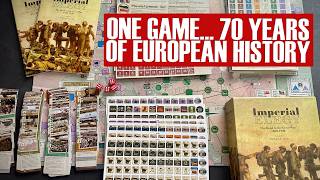
Click to watch at 0:02 · YouTube ↗
Overall sentiment (raw)
positive
Pros
- Bold, world-spanning scope that attempts to capture 70 years of history with geopolitical, economic, and military depth.
- Card-driven action system paired with a vast array of scenarios and historical events that create high replayability and narrative variety.
- Strong solo play options with bot behavior that appears integrated, well-designed, and not merely tacked on.
- High-quality components: thick player aids, durable trackers, visually appealing maps, and detailed counters that convey a sense of scale and importance.
- Organized and clear rulebook plus a comprehensive playbook with scenarios, extended play examples, strategy notes, and design insights.
- Multiple campaign scenarios and alternate history settings, including a Great War framing that can diverge from historical paths, adding to the sense of a living sandbox.
Cons
- High complexity and significant setup/learning curve; complexity is acknowledged by the packaging (7 on the complexity scale) and is likely to require dedicated play sessions.
- Long potential play times (full campaign ≈ 8–10 hours; even shorter scenarios may run long), which may limit accessibility for some groups or casual players.
- Requires multiple players to reach the full experience; while solo bots exist, the best experience hinges on multi-player interaction and robust table presence.
- Rich component count and maps may overwhelm new players, potentially slowing early-game adoption without strong introductory materials.
Thematic elements
- World history simulation focusing on geopolitics, diplomacy, economic development, and military conflict, where players pursue defined national goals amid evolving alliances and crises.
- Global geopolitical history spanning 1850 to 1920, with Europe as the central theater but a truly global scope including Asia, North America, and Africa.
- Historical, event-driven with room for alternate outcomes driven by cards, goals, and player decisions; designed to feel like a sandbox where history can diverge based on player action and card-driven events.
Comparison games
none
Mechanics (from transcript analysis)
- Alliances, treaties, and crises — Diplomacy is central: players forge and renegotiate alliances, sign treaties, and manage international crises. These elements are tracked through markers and event cards, enabling dynamic shifts in power and influence that can dramatically alter strategic trajectories across the 70-year span.
- Area Movement — The game features a point-to-point global map with a dense network of regions. While the focus is Europe, the map includes sub-mmaps for Asia, North America, Africa, and the Mediterranean, creating a truly global stage. The size and scale demand careful spatial reasoning, with geography used to shape political influence, transport, and supply lines.
- Card-driven actions — Imperial Elegy uses a large deck of action cards that encode events, options, and CP costs. Players spend command points (CP) to execute actions across military, political, and economic domains. The card events embody historical nuance, allowing players to influence development, crisis management, and geopolitical maneuvering while managing limited resources.
- Counter and tracker components — The game uses a suite of counters, markers, and player aids—trackers for stability, manpower, industry, and key locations—along with a robust set of charts that codify the rules for combat results, event resolution, and strategic options. These components help players understand complex interdependencies at a glance while enabling deep strategic planning.
- Economic, military, and industrial systems — National development requires balancing stability, manpower, industry, and budgets. Armies and navies must be built and maintained, technology advanced, and resources allocated to sustain ambitious programs of growth or defense. Management of the domestic economy directly influences military and diplomatic power.
- Global map with regional sub-maps — The game features a point-to-point global map with a dense network of regions. While the focus is Europe, the map includes sub-mmaps for Asia, North America, Africa, and the Mediterranean, creating a truly global stage. The size and scale demand careful spatial reasoning, with geography used to shape political influence, transport, and supply lines.
- Hidden Victory Points — Each major power selects three of eight possible national goals at key junctures in the campaign, which guide strategic priorities and victory conditions. These goals are kept secret from opponents, adding a layer of hidden information that informs risk-taking, alliance formation, and opportunistic play as players work toward distinct victory paths.
- National goals and hidden objectives — Each major power selects three of eight possible national goals at key junctures in the campaign, which guide strategic priorities and victory conditions. These goals are kept secret from opponents, adding a layer of hidden information that informs risk-taking, alliance formation, and opportunistic play as players work toward distinct victory paths.
- Negotiation — Diplomacy is central: players forge and renegotiate alliances, sign treaties, and manage international crises. These elements are tracked through markers and event cards, enabling dynamic shifts in power and influence that can dramatically alter strategic trajectories across the 70-year span.
- Turn structure by decade with impulses — Each turn represents a decade, but the actual activity unfolds in a set of impulses or action phases per nation. During an impulse, players can perform a mix of military maneuvers, diplomacy, budget decisions, technology advances, and influence-building. This structure enables multi-layered planning across ten-year horizons, with long-term strategy colliding with short-term tactical choices.
- World tension and flashpoints — World tension and flashpoints are tracked to signal the risk of major wars, notably the Great War scenario. Choices by players—ranging from diplomacy to mobilization—drive the latent risk of conflict, offering a dramatic mechanism for macro-scale impact without mandating a single predetermined outcome.
Video topics + discussion points
No key topics recorded for this video.
Quotes (from this video)
- This is a bold design challenge in every way and the map is no exception.
- I cannot wait to give this game a shot.
- Geopolitics, economics, military actions, a great war that can happen or not happen in so many parameters.
- what appears to be a fully functional and robust solo mode.
- Kudos for this accomplishment.
- I am so excited to dig in deeper.
References (from this video)
No references stored for this video.
Transcript Navigation
Showing 1–3 of 3