










In Vino Morte Deep Dive
What the Community Thinks About In Vino Morte
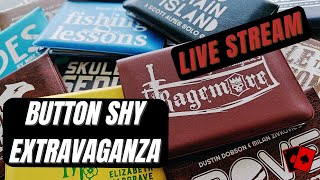
Reviewers describe In Vino Morte as a small, sharp party game built around one hidden threat: a round of wine in which one glass may be poisoned. The game comes from Buttonshy, a publisher whose titles reviewers describe as 18-card games packed into a leather wallet. The kovray video lists it among a set of portable picks, explaining that every player receives wine or poison cards and that each turn a player either drinks their card or trades it with another player. Board Game Buzzz's Kari played it at a Buttonshy convention and then ranked it near the bottom of Kari's Buttonshy list, even though Kari kept returning to it. Across the reviews, the praise centers on its simplicity, its ability to fill a table, and its portability, while the most common caveat is that there is not much game beneath the bluffing.
Core Mechanics That Define In Vino Morte
Social Deduction Around the Dealer's Hand
Social deduction drives the game once the cards are dealt. Foster the Meeple explains that the player dealing the cards knows what everyone holds, so the rest of the table has to read one another and guess who is carrying poison. The Brothers Murph describe the same tension as a battle of wits, recalling a player who openly predicted that a rival would poison a specific guest and turned out to be right about the intent. Kari's family session shows the pattern in action: the players ask whether Jamie would poison them, whether Jamie would poison Dad, and whether it is safer to switch cards. Because the hidden information is the whole point, table talk carries as much weight as the card in front of each player.
Blind Card Swapping and Elimination Rounds
The second mechanic is blind trading. On a turn, a player either flips their card to drink it, which eliminates them if it is poison, or swaps with another player without looking, so nobody knows what they hold until the round ends. Foster the Meeple summarizes the loop as a simple cycle: everyone flips their cards at the end of the round, poisoned players drop out, and play continues until one survivor remains. The Brothers Murph clarify a structural rule that shapes the risk: each round must include at least one wine and at least one poison, and the mix can be heavily skewed toward poison. Foster the Meeple also describes a host who placed a poison card in their own hand as an example, only for a player to trade into it on the assumption that the host would never keep poison, a moment that shows how the swapping rule rewards reading people rather than cards.
The In Vino Morte Experience
Playful Bluffing That Fills the Table
Reviewers frame In Vino Morte as a party game first. The Dice Tower's hosts call it a party game that plays well with a big group, and Foster the Meeple brought it to a work party where everyone had a great time. Kari reports that the game plays from three players up to nine, and that almost anyone can follow it, including children, which makes it an easy table opener across generations. The tone is silly as much as sly. The Brothers Murph call it a really simple, silly Buttonshy game, and the laughter comes from players reacting to one another's bluffs and suspicions.
Fast Filler With a Sharp Hook
Speed is the other defining feeling. Kari estimates that a full game takes about three minutes, and Foster the Meeple played it while waiting for food because the group needed something quick. The Brothers Murph describe it as a really short filler game, while the Dice Tower's hosts point to its nice little hook. That hook is borrowed from the famous wine duel in The Princess Bride, and reviewers agree it delivers a burst of tension in very little time.
What Makes In Vino Morte Stand Out
A Wallet-Sized Format That Travels
The 18-card wallet is the feature reviewers mention most often. Foster the Meeple describes Buttonshy's line as 18-card games sold in a leather wallet, and the kovray video highlights that In Vino Morte fits 18 cards into a nice portable wallet. The Dice Tower built a pocket-sized games list around this kind of compact design. Kari adds that Buttonshy games are easy to play and quick to learn, which makes a wallet like this a practical gateway for casual groups who would not sit down for a longer title.
Big-Group Chaos With a Familiar Hook
The second standout is how well the premise scales. Kari notes that the game supports up to nine players and was not aware of another Buttonshy title with that range. Its hook is instantly recognizable, since The Dice Tower's hosts tie it directly to the Princess Bride scene where two characters trade poisoned wine. Foster the Meeple's work party success suggests that the premise holds up in a mixed crowd, and the Brothers Murph's rule about always including at least one wine and one poison keeps the setup consistent even when the deal turns lopsided.
Potential Drawbacks
Limited Depth for Repeated Sessions
Several reviewers acknowledge that the game is thin. Kari says there is not much game to it and that Kari would not want to play it back to back, though Kari would happily pull it out for a quick replay. The Brothers Murph's "really short filler" framing carries the same implication: this is a palate cleanser rather than the centerpiece of an evening. The decisions come down to whom to trust and whether to drink, which suits some tables and feels limited to others.
Community Ratings and Personal Rankings Run Lower Than Fans Expect
The game sits lower in some assessments than its table performance suggests. Kari says the rating was surprisingly low, and Kari placed it near the bottom of the Buttonshy ranking even though Kari's family kept asking to play it after the convention. This account points to a social appeal rather than a mechanical one, which means reviewers who judge the design on its depth may weigh it differently than groups who value the table moments.
If You Enjoy In Vino Morte
Reviewers most often reach for the poisoned-wine duel from The Princess Bride, a film rather than a game, when explaining the premise. For game recommendations, Kari singled out Stew as a push your luck deduction and bluffing game with the same appeal of hidden information, where players add ingredients to a shared pot and someone must call the stew at the right moment. Kari's other bluffing pick, Revolver Noir, is a two-player game of hidden movement and traps that Kari found surprising for a wallet release. Foster the Meeple pointed to Deception: Murder in Hong Kong as a quick, engaging social deduction game that handles large groups, a natural next step for players who enjoy the table talk here. Foster the Meeple also suggested Awkward Guests, a murder deduction game with passed clues that the host described as a more robust, adult take on the classic Clue.
What Reviewers Are Saying
"This is absolutely simply the Princess Bride. I poisoned your wine or did I poison mine? You have to guess and switch."
— The Dice Tower
"I would absolutely pull it out and just replay it. You can play it in like 3 minutes. It's such a fast little game."
— Board Game Buzzz
"We played it while we were waiting for our pizza to get there because we needed something really quick."
— Foster the Meeple