/pic3291451.jpg)
/pic3566028.jpg)
The forest is growing fast! As caretakers for Kodama, the tree spirits, you must keep the forest a healthy and lush home for your little friends. Over three growing seasons, you must cultivate trees with the right mix of flowers, insects, and branch arrangements to make your Kodama as happy as possible. Whoever cares for their Kodama best will be remembered for generations!
From the designer of the hit game Kigi, Kodama: The Tree Spirits branches out into a fun new way to play! Grow your tree by placing cards in clever arrangements, being careful to leave room for future growth. At the end of each season, one Kodama will award you points for how well your tree suits its needs. With beautiful art and innovative mechanics, Kodama is an inTREEguing game for the whole family.
This page includes videos and mentions from the whole Kodama family. Drill into a specific game below.
/pic3291451.jpg)


Kodama - How To Play
- Haven't played it
- Kodama theme
Mechanics (from transcript analysis)
- flip-and-write — More of a flip a card and write and draw little parts between different locations on your board and scoring points by making the best connections.
- Network and Maze Building — Creating networks and mazes on your map by drawing lines.
Video topics + discussion points
Quotes (from this video)
- i would prefer to play codenames duet which is actually a cooperative version of the game for two teams and two players especially if there's people who are playing code names for the first time but definitely competitive code names is far more fun
- tile placement game where you've got little different combinations of lanterns you are trying to create either collect four collect three pairs or collect one of each type of lantern in order to score victory points
- burger where you're building cards each card has two ingredients on it and you're laying the cards out to build the best burgers possible and try to satisfy the requirements that are set out on the table and the burgers that uh they want you to cook
- trap words is a game where it's two teams pitted against each other one player is the clue giver the other players on the team are guessing the word but the other opposing team are choosing words that the clue giver can't actually say and the clue giver doesn't know what those words are so they've got to try and tiptoe around the topic as best they can without stepping into the trap words that the other team have written down as well as trying to get their own team to guess the key word
- real-time drawing and guessing game where each player is allocated a secret word that appears on a list of three cards as they try to draw their picture as quickly as possible and also at the same time they're trying to guess what everyone else is drawing they are going to be racing against each other
- letter jam is one of my favorite word games think of hannah b and scrabble blended together you can see everyone else's letters that they're trying to guess but you can't see your own
- otis a game about building flowers and you can see one on the back here there are different types of flowers and you're playing pedal cards to try and complete flowers game points and then also there are three special types of abilities that you can get and use you're playing these little insect markers on there to try and claim the flower that you are building
- muse is a really cool fun game that's kind of inspired by the game dixit players are working in two teams competing against each other where one player is giving a clue and the other players on the team are trying to guess which masterpiece card they're alluding to
- what is really cool about muse other than the beautiful artwork is the fact that the other team gets to choose the way the clue giver gives the clue it could be humming a song it could be naming a published book it could be drawing a shape with your finger in the air and you're not allowed to say a thing
- this game can be really quite tough if you've got some really great creative thinkers in your game group
- i hope you guys really enjoyed that small little insight into my board game collection i can't wait to bring you the other board game collection videos
References (from this video)

- beautiful art and consistent aesthetic
- organic tree growth mechanic
- hidden scoring cards add depth
- balance concerns with hidden cards
- one four-player game felt average/lukewarm
- nature/forest growth and hidden scoring cards
- tree-building game with branching and tree spirits
- engine-building with hidden scoring cards guiding choices
- Above and Below
- Empires of the Void
- 8 Minute Empire
Mechanics (from transcript analysis)
- branch placement and organic tree growth — place branches to grow a tree; cards overlay to create branches in multiple directions
- secret scoring cards — each player has a hidden scoring card guiding strategy
- Set Collection — points for matching symbols and collecting glow bugs/mushrooms
- set collection / symbol matching — points for matching symbols and collecting glow bugs/mushrooms
Video topics + discussion points
Quotes (from this video)
- I'm really excited about Mystic Veil
- the big reason I'm excited about this is the card crafting idea that is a new mechanism I haven't seen that before
- pretty excited about it
- it's a tester for the market
References (from this video)
- The magic of connecting everything
- Guardians are happy when you win
- Progressive scoring is cool
- Can take a big fat zero if you don't score enough
- Helping guardians of the forest build paths and reconnect sanctuaries
- Forest
Mechanics (from transcript analysis)
- Pattern Building — because you're trying to connect it to the caterpillars and the flowers around yeah because the first one you draw actually that you don't have to connect it to any sanctuary you just have to connect it to um things items or flowers or worms um and then you score points based on that
- Push Your Luck — and then you will draw one by one you'll draw sanctuaries and score that sanctuary for that round so you never can really know what you're going to build for for the next rounds
- Roll and Write — you have to score more points after the more that you go yeah the more you go so if you score four points one round the next round you have to score more than four points and if you don't you take a big ol zero
- Route Building — connecting all the different sanctuaries and what's really really neat about this game is your sanctuaries will be letters so it'll be like a b c d e f i think there's six but you only draw five
Video topics + discussion points
Quotes (from this video)
- This is the only cooperative role practice if we're wrong it's a cooperative gem.
- Oh my goodness this is like it's it's one of the heavier villain rights for sure but it's so cool.
- My first impression of this game is these dice are beautiful and wow there's a lot going on.
- This one's cool because of the track the board track.
- This is another really I'd say it's really heavy.
- It's super neat because you get an asymmetrical character board that has different abilities different advisors.
- I wasn't able to connect my paths and I was getting so frustrated because I was just sitting there I was like this isn't working this isn't working this isn't working and there was no alternative for me and I just got a little frustrated.
- This is a fantastic game hadrian's wall.
- My first impressions amazing super crunchy though holy holy.
- This game has won my heart.
References (from this video)
- Fast and clean
- Simple to understand
- Too restrictive
- Cumbersome and slow to maneuver
- Difficult to connect routes
- Almost inevitable negative points
- Game plays you more than you play the game
- Rendered obsolete by other games
- Forest spirits and connecting paths
- Avenue
- Karuba
- Trails of Tucana
- Railroad Inc.
Mechanics (from transcript analysis)
- Flip and Write — Players flip cards from a deck which show path orientations and then draw these paths on their player board.
- Route Building — Players connect flowers and bugs to sanctuaries by placing pathways on their player board.
- Set Collection — Players aim to connect specific items (flowers, bugs) to sanctuaries for points.
Video topics + discussion points
Quotes (from this video)
- This is where I take a look, rank, and review the last five new to me board games that I've played.
- I don't think there was enough for you to really take control of the game. The game kind of plays you more than you play the game.
- But I think the game became too messy in the process.
- I'm not quite sure what the unique selling point of this game is or what the standout mechanism is.
- But everything is blended together wonderfully.
- I've almost played so many euros now that it's a detriment. I played so many that everything's a comparison and everything feels like it's been done before.
- It feels definitely distinct to all the other little flip and right games I've played.
- The system is super innovative and it feels cool and different.
References (from this video)

- Can be played with children using smaller Kodama cards.
- Visual appeal of building individual trees.
- Thematic integration of nature and growth.
- Cannot gain more than 10 points in a single turn.
- Cannot place a card that covers special feature symbols.
- Guiding the growth of kadama tree spirits amongst trees.
- The forest
Mechanics (from transcript analysis)
- Card Drafting — Players choose one branch card from a face-up display.
- Hand Management — Players manage their hand of Kodama cards, choosing one to reveal and score during the Kodama phase.
- Set Collection — Players collect feature tokens during setup that match symbols on their trunk card.
- Tile Placement — Branch cards are attached to a player's tree structure, following specific placement rules regarding connections and table edges.
- variable scoring — Points are scored based on features on played branch cards, chaining back to the trunk, decree cards, and Kodama cards.
Video topics + discussion points
Quotes (from this video)
- In this video, we're going to learn the two to five player game Kadama, the tree spirits, designed by Daniel Solless and published by Action Phase Games.
- The player with the most points at the end of the game will be the winner.
- The game is played over three seasons or three rounds that are broken into three phases each.
- So visually it should appear that each new branch is more or less naturally growing off of your tree.
- So, it scores nothing. It doesn't matter that there are more clouds down here because the chain was immediately broken.
- So that means by adding this branch this turn, I'm scoring two points for stars, four points for fireflies, and four points for caterpillars for a total of 10.
- You cannot place a card so that it would cause you to gain more than 10 points in a single turn.
- The whole tree matters.
- The player who now has the most points wins.
- And that's everything you need to know to play Kodama the Tree Spirits.
References (from this video)
Mechanics (from transcript analysis)
Video topics + discussion points
Quotes (from this video)
- I look back and I always feel a certain sense of satisfaction and I know what a blessing that is not everyone can say that.
- if there's something you like about watch it played you've helped make that happen
- if you've donated to the show then you've played a financially supportive role
- if you've helped us with gameplay decisions commented on our videos or shared them then you've helped other people engage
- you've become part of a bigger community community that I just I can't build on my own
- if you simply watch the content then you've made more people aware of our show
- thank you thank you for that gift that you've given me it really it means a lot to me
- you've helped enable me to keep coming down here into this studio day after day and keep doing this thing that I love doing
References (from this video)
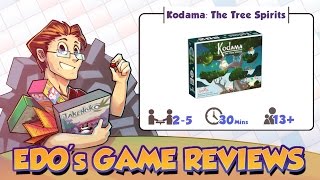
- Excellent balance and decision depth
- Beautiful art and high-quality components
- Simple core rules with meaningful, varied decisions
- Tight interaction through bonus cards and group bonuses
- Strong thematic feel that matches the mechanics
- Cards can slip on the surface during play
- Finish could be improved to reduce card slip (perceived looseness)
- Growth, balance, and harmony with nature; nurturing life
- A magical forest where players grow a tree using tree spirit cards; the seasons progress as play unfolds.
- Poetic, nature-inspired, whimsical art that emphasizes organic growth
Mechanics (from transcript analysis)
- branch/tile placement — Place branches and attach cards to your tree; cards must connect to existing branches to score.
- Card Drafting — Each turn you choose one of four available bonus cards to influence scoring and how you grow your tree.
- group bonuses and chain scoring — There are group bonuses that influence scoring down the tree, creating chain effects from the top to base.
- pattern/branch scoring — Score points for matching items or patterns on a given branch as you layer cards.
- seasonal play with community bonuses — Game is played over three seasons with seasonal bonuses and a shared score track; replenishment of options each turn adds choice.
- Tile Placement — Place branches and attach cards to your tree; cards must connect to existing branches to score.
Video topics + discussion points
Quotes (from this video)
- This game is excellent; the design is excellent.
- It is so well balanced and managed; the decisions are really fun and interesting.
- This is a beautiful and wonderful game.
- I was extremely pleasantly surprised by this one.
- The reason this game works so well is play is simple but the decisions between how points are scored based on the branches you use, where you place the branches, what bonuses, and the group bonuses make all the difference.
- I highly recommend this game.
- Don't let the pictures of the windy tree fool you; the design underneath is so good and so well done that that little looseness doesn't detract from it at all.
References (from this video)

- quick, devilishly simple
- great with any number of players; family-friendly
- high tension from near-misses and elation on good draws
- box is small; may feel limited in scope for some
- can require a few playthroughs to grok optimal pathing
- path building with cards to connect a sanctuary
- cozy sofa-based forest-path puzzle
- light, family-friendly strategy
- Scythe (not directly),
Mechanics (from transcript analysis)
- shared puzzle — all players influence a single evolving board
- Simultaneous action resolution — players place cards to create and connect a map, aiming for optimal paths
Video topics + discussion points
Quotes (from this video)
- the answer to every question is a color
- it's basically a game of listing things
- you have to come up with a fake definition for an obscure word cockalorum
- the cards are way more interesting than a hat full of TV chefs
- it's great fun trying to convince them that you can be trusted whether you're good or bad
- write fake acronyms and laws
- the original Christmas party game is the Hat game or Celebrity where you all write famous names on strips of paper
- Kokoro isn't just a great sofa game it's a great game every card flip brings elation or frustration
- it's like reading from a Sherlock Holmes novel as you meet with witnesses
References (from this video)

- Excellent family/gateway game
- Beautiful artwork
- High replayability
- Interesting scoring mechanisms
- Visually appealing components
- Less player interaction compared to original Kegi game
- Tree growth and spirit cultivation
- Natural forest environment
- Whimsical, Studio Ghibli-inspired
- Kegi
Mechanics (from transcript analysis)
- Card placement — Players add branch cards to their tree, scoring points for matching features
- hidden objectives — Kadama cards provide secret scoring opportunities
- Seasonal Decrees — Changing rule modifiers each round
Video topics + discussion points
Quotes (from this video)
- it's kind of got that Princess Mononoke feel
- you can definitely sit down and play with kids or new Gamers
References (from this video)
- Beautiful tree building theme
- Pattern matching mechanic
- Set collection variant
- nature
- trees
- spirits
- japanese
- Lost Cities
Mechanics (from transcript analysis)
Video topics + discussion points
Quotes (from this video)
- board games are diverse but card games really could feature anything
- players are all doing this simultaneously and so you want to be the player that stays in the longest
- if you turn over to many matching cards then you end up with nothing
- auction games are are well served by the sort of card game mechanisms
- play very quickly for three to six players
- an excellent excellent game
- take that card games or I think the most combative sort of card games
- totally silly extremely random but essentially we're playing cards to attack other players
- still one of my favorite games
- each card is a floor on a building
- there's a whole genre of what we call take that card games
- you could place bombs or or murderers into these buildings or the police can then take away a murderer
- Seven Wonders was the sort of figurehead for the cloud drafting games
- sushi go has been an enormous hit
- now the figurehead for the genre is probably sushi go
- deck building was created really by the game of Dominion
- there's something delightful about the simplicity of a game like Dominion
- you can teach to people really easily and play very very quickly
- a form of set collection again
- classic tableau builder would be something like San Juan
- this is a fantastic card game
- buying cards laying them out in front of us and they're going to keep generating us money
- this really is one of my favorite genres
- anybody can play these games and not everybody can play them well
- I love speed games I think it's a fantastic category of card games
- trick-taking games very very straightforward in their basic format
- the basic mechanism can be turned into all these different games
- all tweak it slightly in different ways
- my top ten card game mechanisms
- hopefully I've given you a broad picture of the world of card games
References (from this video)

- Beautiful artwork
- Accessible rules
- Satisfying chain-building
- May be light for experienced players
- Hidden objectives can be opaque
- Nature, harmony, and growth
- Forest in Japan, tree spirits guiding nature
- Poetic, nature-inspired
Mechanics (from transcript analysis)
- Card drafting and branch placement — Players add branches to their trees by selecting cards and adding to their own tree branch network, forming chains with matching symbols.
- Hidden objectives scoring — Players have hidden goals that award extra points for specific configurations at the end.
Video topics + discussion points
Quotes (from this video)
- the artwork was very attractive
- this is a lovely sort of tinned version and deluxe edition of machi Koro
- it's not much heavier than carcassonne by the same designer