

Landfall: A Cozy Volcano Island-Building Game Deep Dive
What the Community Thinks About Landfall: A Cozy Volcano Island-Building Game
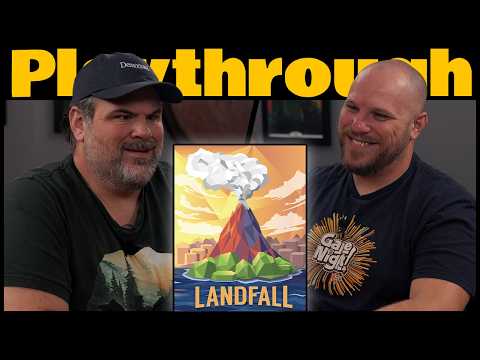
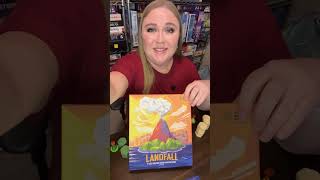
Reviewers present Landfall: A Cozy Volcano Island-Building Game from Very Special Games as a compact abstract strategy game for two players, with a theme that sounds gentler than the play feels. The Brothers Murph played a full two-player match on camera after walking through the rules, and they came away describing a game where every turn can swing the outcome. Jamie, Tabletoptiktok offers a fuller review in which the same cozy framing is used to introduce a head-to-head strategy game, and the reviewer says the strategy deepens the more the game is played.
The strongest point of agreement is that Landfall rewards attention to the whole island rather than to a single personal plan. The Brothers Murph were both focused on their own formations when their opponent quietly completed a formation that depended on their tiles. Jamie, Tabletoptiktok makes a similar observation from the strategic side, noting that building toward your own goals can accidentally create opportunities for the other player. The reviewers agree that this shared-board tension is the heart of the experience.
A more distinctive perspective comes from Jamie, Tabletoptiktok's publisher spotlight, which covers several Very Special Games titles. In that video the reviewer had not yet played Landfall and described it as a title they were eager to try, singling out its colored tiles and volcanoes as visually striking. Their later full review confirms that the reviewer enjoyed the game once it reached the table, which gives the community a useful picture of how the game's appeal carries from first impression to repeated play.
Core Mechanics That Define Landfall: A Cozy Volcano Island-Building Game
Tile Placement and Stacking
The island is not a flat map. Tiles are stacked into columns, and the height of each stack determines what can be built on it. Players begin with three volcanoes and a supply of land tiles in their own color, and the goal is to complete three formations: a mountain, a valley, and a plane. Jamie, Tabletoptiktok explains that a volcano can only land on a tile of the player's own color, and that the landing spot must touch the water at the island's edge while not jumping more than one or two levels above the surrounding stack. Placing or removing a tile is another option, and the placed tile must be adjacent to one of the player's volcanoes. The third option is throwing a tile over a volcano to the other side. Jamie, Tabletoptiktok notes that a tile cannot be thrown onto a spot already occupied by a volcano, which keeps the throwing action from becoming a simple way to bury a rival.
The Brothers Murph describe the same rule from the perspective of building a valley. The surrounding tiles can have any top color, but the tile the volcano sits on must be the player's color. Their match shows how quickly a stack can become a commitment: one of the players built a four-high mountain with their own color on top, and then realized that the stack could never move again. Tile placement in Landfall therefore works as both a building tool and a long-term risk.
Volcano Movement and Tug of War
Volcanoes are the mobile pieces, and they are where Landfall shows its tension most clearly. A volcano can move to an adjacent space up, down, or on the same level, and it can push another volcano. The Brothers Murph point out that a volcano can be pushed into the ocean, which returns it to its owner's supply. Jamie, Tabletoptiktok explains the rule in more detail: moving onto a volcano of the opposing color can destroy both volcanoes in an explosion, but a player standing on their own color can push the opposing volcano into the sea and keep their own. That push and pull is what Jamie calls a tug of war, and it means every volcano on the board is a potential target.
When a formation is completed, the volcano is removed and replaced with an oasis chip. Jamie, Tabletoptiktok notes that the chip cannot be removed and locks the stack beneath it, though volcanoes can still move onto oasis chips. This turns a completed formation into permanent terrain, which slowly changes which moves remain available for the rest of the game.
The Landfall: A Cozy Volcano Island-Building Game Experience
Cozy Theme With Cutthroat Tension
The Brothers Murph joke about how their table reacted to the volcanoes, and that playful energy is part of the appeal. But their match quickly turned serious as each player started to read the island for threats. The reviewers describe the feeling as a race that is always close: a player can be far ahead on one formation and still find that the opponent's last few moves have created a route to victory. Jamie, Tabletoptiktok adds that the game asks players to keep tracking the whole board, not only their own goals, so the cozy surface sits on top of a steady, watchful competition.
Sudden Reversals From Quiet Setups
The most memorable moments in both reviews come from reversals. In the Brothers Murph match, one of the players completed a valley through a tile arrangement that the other player had not noticed, and the board state changed in a single turn. The reviewers note that these swings often come from a quiet setup rather than a big attack. A player might push a volcano or throw a tile in a way that looks minor, but it sets up a formation for the next turn. This keeps the game from feeling settled until the very end, and it gives each action extra weight.
What Makes Landfall: A Cozy Volcano Island-Building Game Stand Out
Three Formations That Shape the Island
Reviewers praise the way the three formation goals push the island in different directions. A mountain needs height, a valley needs a low spot surrounded by taller stacks, and a plane needs six connected tiles of one color on the same level. The Brothers Murph explain that a player racing for a plane must also make sure the opponent's valley or mountain does not block their connected tiles. Jamie, Tabletoptiktok calls out the plane specifically as a goal that asks players to spread their color across the island, so each formation gives the island a different shape.
Two Actions Per Turn With Mirrored Options
Reviewers consistently highlight the two-action turn. Because a player can take the same action twice or choose two different options, the turn becomes a small puzzle of sequencing. Jamie, Tabletoptiktok describes how a player can land a volcano and then throw a tile in the same turn, which makes the choice of order important. The Brothers Murph also mention that players must be careful with their wording during play, since throwing a tile counts as an action. That detail shows how much weight each option carries when the two actions are used together.
Potential Drawbacks
Comebacks Can Feel Out of Reach
The most consistent criticism comes from the Brothers Murph, who say that an opponent's easy formation can be hard to recover from. They explain that a player may have worked hard on their own goal, but if the opponent completes a formation using the tiles they placed, the player is suddenly behind without having had to defend much. The reviewers acknowledge that this is part of the game's tension, but they also say the feeling of falling behind through another player's help can be frustrating. Jamie, Tabletoptiktok frames this as a reason to pay attention to what your moves enable, rather than as a flaw in the rules.
Board Tracking and Supply Limits
The Brothers Murph also note that the game can be difficult to track from across the table, with one player saying they could not see the tiles well from their seat. Supply is another pressure point. Jamie, Tabletoptiktok explains that players can remove tiles from the island to free up space, but the supply is limited, so a player cannot always rebuild quickly after a setback. Newer players may need a full game to feel comfortable with the sequence of options, although the reviewers agree that the rules become clearer after a few turns.
If You Enjoy Landfall: A Cozy Volcano Island-Building Game
Players who enjoy Landfall's volcano movement and tug of war will find similar tension in Abduction, another Very Special Games title that Jamie, Tabletoptiktok describes as a spatial puzzle with a shared river of ducks and pattern cards to complete. Both games reward players who read the board carefully and plan several moves ahead, and both let one player's successful setup turn the outcome in a single turn. Abduction is also a strong option for players who enjoy the publisher's two-player approach.
Players who enjoy the abstract, tile-based feel of Landfall may also appreciate Hive. Jamie, Tabletoptiktok compares the look of Landfall's colored tiles to the acrylic tiles of Hive, noting the same appeal of building a physical board that changes shape as the game progresses. Hive shares Landfall's head-to-head focus and its emphasis on positioning pieces over a shared board, so players who like watching an abstract layout grow will find a similar kind of satisfaction.
What Reviewers Are Saying
"That's the thing with the game is like if your opponent gets an easy one that you just didn't see, it's so hard to come back from that."
— The Brothers Murph
"So, there is going to be this tug of war, this push and pull. And all that happens when you have a dead volcano is that it goes back to your hand, and you can place it on a future turn."
— Jamie, Tabletoptiktok
"You have these colored tiles. They look like they might be like the hive tiles that like belite or whatever that acrylic is that I love. And you're building out this area and there's volcanoes. It looks amazing."
— Jamie, Tabletoptiktok