/pic2606106.jpg)
/pic2602684.jpg)
/pic3617946.jpg)
/pic5988900.jpg)
/pic2606106.jpg)



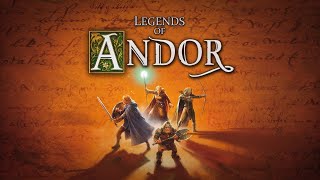










Legends of Andor Deep Dive
What the Community Thinks About Legends of Andor
Legends of Andor stands as a cooperative design that is both accessible and strategically demanding. Actualol praise it as a really tight design with a clever self-teaching system, and Adam in Wales cites its onboarding as a model for the whole hobby. Reviewers consistently respect how the game teaches itself and draws players into a fantasy world without overwhelming rulebooks, though opinions diverge on whether its depth satisfies hardcore gamers accustomed to titles like Pandemic or Robinson Crusoe. Designed by Michael Menzel and published by KOSMOS, it is widely regarded as an elegant gateway cooperative.
Core Mechanics That Define Legends of Andor
The Time-Pressure Narrative Engine
At the heart of Legends of Andor lies a marriage of time and storytelling. As heroes move or battle, they consume hours on a shared time track, and the narrator track advances with defeated monsters, triggering story events that reshape the board and raise the stakes. This creates palpable urgency: players are not simply solving puzzles, they are racing an advancing narrative. The cooperative pressure forces genuine thinking about movement efficiency and resource allocation, because wasted time directly costs the team's chances of victory.
Tutorial-Driven Rule Progression
Rather than handing players a thick rulebook, Legends of Andor introduces its mechanics organically across a series of story scenarios called Legends. Each quest layers in fresh rules at a measured pace, letting players master fundamentals before adding complexity. Adam in Wales hold this up as exemplary onboarding, noting that the game uses a simple tutorial system and then introduces the rules over subsequent scenarios, a structure that has become a reference point in design conversations.
The Legends of Andor Experience
Fantasy Worldbuilding With Purpose
The game draws its DNA from classic fantasy literature, with heroes like a dwarf, wizard, and warrior defending the realm of Andor from invading monsters. Reviewers note that while the theme does not reach the narrative immersion of the most story-heavy games, it makes every mechanical decision feel purposeful. Gathering gold to buy weapons and raise your strength mirrors the fantasy of heroes forging themselves into legends, so theme and mechanics reinforce one another rather than merely coexisting.
Shared Puzzle-Solving Without Dominant Players
Legends of Andor avoids the trap that ensnares many cooperative games, where one player dictates strategy to the table. The structure does not present a single obvious optimal path; instead, genuine constraints on time, monsters, and quests demand honest collaboration. Everyone must weigh how to spend limited hours and which threats to meet, so the cooperation feels mutual rather than subservient. Actualol single it out as a great family game and a solid cooperative for getting newcomers and teenagers into the hobby.
What Makes Legends of Andor Stand Out
Elegant Accessibility Without Sacrifice
Legends of Andor achieves something rare: a cooperative game that is easy to teach yet offers real challenge. The design prioritizes intelligibility over decoration, making it an exceptional gateway into medium-weight gaming. Families introducing teenagers find a title that respects their intelligence, and the low barrier to entry reflects design discipline rather than shallow gameplay, since every mechanical element serves both clarity and depth.
Component Clarity and Visual Presentation
The component design reinforces the game's approachability. Standees and clean, functional artwork convey information at a glance, and the timer mechanics are communicated visually through the narrator track, making the story's advance tangible without fussy bookkeeping. The Secret Cabal Gaming Podcast note that the standees make sense for a game of this scope, keeping the table legible while still evoking its fantasy world.
Potential Drawbacks
Limited Narrative Branching and Replayability
While the tutorial system is brilliant, Legends of Andor trades deep narrative consequence for guided progression. The Legends follow a predetermined arc with relatively fixed objectives, so players seeking games where choices reshape the story may find the experience more directed than co-authored. Replayability hinges mostly on mastering optimization rather than discovering new branches.
Plateau of Challenge for Experienced Gamers
Once players internalize Andor's core tension, the game can tip toward predictability. Actualol are candid that, while clever, it was not quite enough to stay in their collection, lacking the deep story or open-ended replayability of games like Pandemic or Robinson Crusoe. It excels as an introduction and a reliable middle-ground cooperative, but does not reach the emergent complexity that rewards veterans over hundreds of plays.
If You Enjoy Legends of Andor
Players who appreciate Legends of Andor gravitate toward other cooperative adventures that blend accessibility with genuine stakes. Pandemic offers deeper tactical variety and more room for clever play. Robinson Crusoe presents scenario-based survival with a harsher challenge curve. For narrative progression in a longer arc, Gloomhaven: Jaws of the Lion delivers character growth and an evolving campaign, though at the cost of added complexity. Each shares Andor's spirit of a team facing an advancing threat together.
What Reviewers Are Saying
"It's a really tight design, very cleverly done. It actually has a really clever tutorial thing to it, so you don't have to read the rules; it teaches you as you go."
— Actualol
"Legends of Andor does this with a simple tutorial system, and then the rules are introduced over subsequent scenarios."
— Adam in Wales
"I think that this would be a great family game, a great game to play with teenagers to get them into board gaming, and if you love that fantasy theme, it's definitely a really solid cooperative game."
— Actualol