Board Game Design: The Secrets to Onboarding Players Quickly and Painlessly
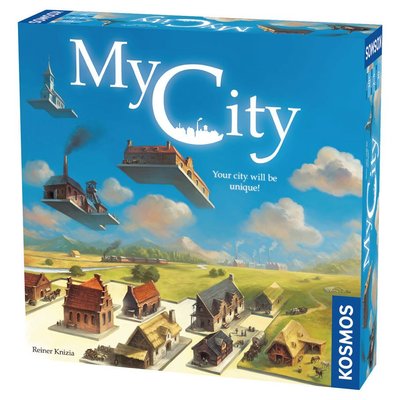
in this video we're going to look at product onboarding and what it means for board games i'm adam porter and i'm a professional board game designer based out of cardiff in wales and we're going to be looking today at product onboarding which is the process by which a user goes from being totally unaware of a product to a fully engaged user it's a term commonly used in digital products to describe somebody signing up to a service using it for the first time and understanding the value offered by the product in relation to board games the onboarding process starts when the player hears about the game carries on as they go into a game store and purchase the game they take it home they open the box they set it up they teach the game they learn the rules they play the game for the first time they pack it away and they put it back on the shelf it might also include a range of online interactions including reviews how to play videos discussions on forums and so on with many digital products twitter facebook linkedin we know that many people sign up for that service and then never actually go on to use it and these are a lost opportunity for those companies because the companies need the subscribers to continue to use the service in order to drive ad revenue in board games things are a little different the publishers already made their money when someone buys the game so why should they care whether anyone plays it or not one of the best characteristics about board games as products is the fact that they sell themselves they are multiplayer social experiences if somebody enjoys playing the game they may well go out and buy their own copy but what we know is that of all the board games that are bought a large number sit on shelves unplayed of my collection of about roughly 500 games let's say i would estimate that about 30 of them have never been played and probably 50 percent of them haven't been played more than three times so publishers really should care about what happens with the game once it gets into the consumer's hands it could make or break their business if we consider game purchases we can create a spectrum starting with collectors and expanding over to game players on another axis we can look at players who are engaged with a game going down to players who are disengaged perhaps the game was bought on a whim with little thought about how or when it's actually going to get played or perhaps the purchaser did a lot of research before they even bought the game and by the time they opened that box they're already emotionally invested in it this creates a matrix where we can plot the different states of game users and they can move fluidly between these states based on life experiences or the actions of game designers and publishers in the left-hand section of the matrix we have the collectors it doesn't really matter to the publisher what happens to the game once it gets into the hands of a collector because it's not going to be played and so there are going to be no further sales ultimately that sale is a dead end though if the collector is engaged with the game idea they might go on to buy sequels and expansions for the game on the right hand side of the matrix we have the purchasers who bought the game with the realistic intention of actually playing it if the onboarding process presents them with too many hurdles they might not actually get as far as playing the game maybe they meet a particularly tricky rule or something they can't understand in the rulebook so the game goes onto the shelf for them to revisit later and that time never comes and on the shelf it remains cynical gamers often refer to their shelf of unplayed games as a shelf of shame where collectors put a positive spin on it and call it a shelf of opportunity for a publisher it could be termed a shelf of missed opportunity in that lower right hand corner of the matrix we have players who have actively disengaged probably because they haven't enjoyed the experience of playing the game this is where the social nature of board gaming can present a real challenge to publishers because the chances are that that gamer is going to spread the message that this is not a good game a dissatisfied gamer can become a detractor and they're going to share their opinion online and in person and it can damage the reputation of the game the top right hand corner is the area where the publishers and designers should really focus their attention engaging a player can create a fan somebody who'll go on to buy expansion sequels and even other games from that same designer or publisher if they're really satisfied they might even become a brand advocate an evangelist for your products the good news for publishers and designers is that brand advocates are everywhere in board gaming they actively want to bring new people into the hobby because newcomers into the hobby means more opportunities for them to get their games played so satisfied gamers will show your product to their friends and family in person and they'll share their experiences online through social media this is hugely beneficial to a publisher or designer because there's no financial investment required on your part and also the trust levels of the audience is high most people are more likely to accept the recommendation of a friend or family member over a paid for advertisement funded by the organization who's making the game so let's get back to our definition of onboarding the process is not about just making that first sale or even making sure that people play that first game it's about creating a user who continues to engage with your product in the long term it's about creating a relationship that will endure i want to show you the onboarding process in the mobile game cut the rope it's immediate i'm playing the game immediately literally the first instructions in the game are feed with candy and swipe your finger to cut the rope within seconds i'm playing the game and seconds later i'm rewarded with gold stars and i'm told that i am excellent candy crush uses a similar approach the first instruction is drag matching candies to make a row it tells me that three candies will make magic and then i'm doing it and within seconds candies are falling all over the screen setting off huge chain reactions points are leaping out of the playing area and the in-game text congratulates me enthusiastically the phone is literally rumbling in my hand giving me tactile feedback telling me that wow you're great at this you can see where board games are a huge disadvantage i only know of a handful of games that have this degree of immediacy in speed cups players draw a card from the deck they place it on the table and then everyone races to position their coloured cups in exactly the same order as they're shown on the card the fastest player to do it hits a bell and that player wins the card which is worth one point you play until all the cards have been taken and the player with the most cards is the winner in double there's one card sat in the middle of the table everyone turns over their own personal card and then they race to spot the single image which is represented on their card and also on the card in the middle of the table and there's always one match and one match alone the winner takes the card from the middle of the table and then you continue playing until all the cards have been taken in yogi on your turn you draw a card and you do what it says and this is always a case of positioning it somewhere on your body and you're gonna have to keep it there for the rest of the game if it ever falls off you're eliminated the game continues until there's only one player left and that player wins for pretty much all other board games players have to go through the tedious process of reading a rule book and then teaching other players these are two significant hurdles that just don't feature in digital games so how do we get users over those hurdles we need to promise them an experience that they just can't miss and that requires a nuanced understanding of the sort of experiences that players want in the 2020s i'll go on to talk more about expectations and promises in a future video but in essence the expectation is set by a wide number of factors the box size the price where it's bought the artwork the setting and so on these are all the pivotal factors that determine whether that game ever comes off the game store shelf let alone out of the purchaser's cupboard strong promises will motivate players to tolerate the arduous process of learning rules but they'll only get you so far a purchaser has limited time and limited patience and we as an industry need to improve our rule books in 2021 i still buy games where the rule book is incomprehensible is missing information is poorly laid out it's poorly explained it's poorly translated and i can't make head nor tale of it too often it feels like the rule book is an afterthought i've linked above to my earlier video about writing rules of course how to play videos can be really helpful i personally watch rodney smith's watch it played channel frequently to learn how to play a game and it's wonderful but it's no replacement for a really good rule book campaign games have experimented with a gradual introduction of increasingly complex rules legends of andor does this with a simple tutorial system and then the rules are introduced over subsequent scenarios a similar thing happens in my city and charter stone and in other legacy games designer friedman freezes even experimented with doing away with the rule book altogether and instead incorporating a tutorial system into the game whereby you learn how to play as you experience that first game this is not a totally new concept flux is a very very simple card game where there's only one rule which is draw one and play one increasingly complex rules are introduced as the game goes on in a chaotic and silly fashion many publishers introduce their games for the first time at big trade fairs and conventions where masses of players can turn up and they can be taught the game by the publisher directly and the hope is that those players will go on to teach others the game and even better they might become evangelists or brand advocates but the problem is at some point someone is going to have to pick up that box off a game store shelf and learn the game by themself you're not always going to be there to help them you don't fit in the box but the burden shouldn't just fall on the rules writer and the publishing team it's not just that rule books need to be clearer our rule sets need to get simpler and more intuitive reiner kenitzio is creating deep immersive gameplay from simple intuitive rule sets 25 years ago and once the user has overcome those first hurdles learnt the game taught it to their friends played their first game we need to work out how to keep them on board to keep them engaged with our product in the long term a big part of this is about product growth a really good product gets better the more you use it it becomes a deeper more rewarding experience with repeated plays but it's also about brand growth if we can produce expansions and stand-alone games set in the same universe and sequels then that can really keep a user engaged i'm going to talk more about some of these concepts in future videos over the coming weeks of course we can also keep our players engaged as a designer or publisher by interacting with the purchaser this is often done through social media maintaining a constant flow of news and updates about the game and facilitating discussion but it can also be done in person through in-store promotions and and giveaways and demonstrations this is where crowdfunding on sites like kickstarter really comes into its own the the backers on those sites actively demand promotional content they want to be updated daily about your product and they want to feel like they've shaped the product whether that's true or not that's the message that they want to receive that's a really really good way of keeping them engaged throughout that sort of month or so that the project runs the problem for kickstarter publishers is how to keep them engaged during that long process where they're waiting for the product to actually finally be delivered this is an incredibly strong way of creating brand advocates i hope you found this video useful if you did please go back and watch some of the others on my channel i've got loads of videos about game design and product design that i've been talking about recently i'm going to be talking more about product design over the coming weeks but please also comment below this video i'd really like to hear about your onboarding experiences have you had a really good experience where you felt totally engaged with the game before you bought it when you played that first game when you taught the game and then you stayed engaged with that game for a long period of time what was it that made you feel connected with that game connected enough to become perhaps a brand advocate please subscribe to my channel so i can keep you up to date with content like this and then i'll see you next time on a future video until then all the best