

Little Wars Deep Dive
What the Community Thinks About Little Wars
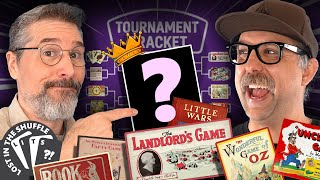
Little Wars comes up in Pair Of Dice Paradise's "Game Night Picks" and antique board game coverage mainly as a landmark of the hobby rather than as a game to pull off the shelf for tonight's session. In a two-part episode pitting antique titles first published between 1900 and 1925 against each other, the hosts placed Little Wars in a first-round bracket against The Landlord's Game. Their shared view was that both games mattered for their influence, so the matchup felt like a hard call between two historically important designs.
The hosts agree that Little Wars holds a special position in wargaming history. The game is described as the first modern miniatures war game, and the hosts point to the BGG listing that calls it the first guide to miniature war games. Their enthusiasm centers on that legacy. Disagreement is limited, and the uncertainty they express concerns the exact claims about the game's place in history, not its importance.
Core Mechanics That Define Little Wars
The reviewers do not walk through Little Wars's rules in detail, so the two mechanics below are drawn from how the hosts frame the game and who designed it.
Miniatures Wargaming Format
The format that reviewers return to again and again is the miniatures war game itself. The hosts describe Little Wars as the point of origin for a whole niche of the board game hobby, wargaming, where players stage conflicts with figures on a playing surface rather than with cards or dice alone. The hosts frame this as the defining trait that separates Little Wars from the other titles in their bracket, most of which are card games, dice games, or race-and-trade games. Because the reviewers focus on the format rather than the procedure, viewers looking for step-by-step rules should consult the rulebook directly.
H.G. Wells as Designer
Both episodes that discuss Little Wars credit H.G. Wells as its designer, and the hosts treat that authorship as substantive rather than decorative. In their discussion, Wells is the author of War of the Worlds, and the hosts argue that the connection gives the game extra clout. One host went further, stating that designing Little Wars was not a publicity stunt, and that the game's content and substance reflect Wells's work as a designer. That is the basis for treating Little Wars as more than a curiosity from a famous novelist.
The Little Wars Experience
Respect for the Pioneer
The dominant feeling in the hosts' discussion is admiration for a game that helped create a genre. One host says they have respect for things that helped grow the hobby, even when they do not want to play them. The experience of Little Wars, as the reviewers frame it, is closer to appreciating a founding document of the hobby than reaching for a favorite at the table. That respect carries a historical, almost museum-like tone, and it is the reason the hosts give the game serious consideration in their bracket.
Curiosity Mixed With Uncertainty
The hosts approach Little Wars with curiosity and some hedging. One host admits they are not fully certain of the historical claim that Little Wars is seen as the first modern war game, yet they repeat the claim while looking up what the BGG listing says. The bracket format pushed the hosts to judge the game largely on reputation, authorship, and genre significance rather than on memories of play, and they stay lighthearted about reasoning from secondhand knowledge rather than from having played it themselves.
What Makes Little Wars Stand Out
Its Place as the Genre Origin
The most consistent praise is that Little Wars is the first of its kind. The hosts describe it as the first modern miniatures war game and note that the game helped establish an entire niche within the board game hobby. Reviewers respect that kind of lineage, and they point out that games that merely influence a hobby can be just as important as games that remain in print. Little Wars earns credit in their eyes because the idea behind it stuck around long enough to define a genre.
The Designer's Name
The hosts also single out H.G. Wells as a standout element. Wells's reputation as a major author gives the game a level of recognition that a typical rulebook author would not carry, and the hosts treat that reputation as a reason to take the design seriously. This is a point of agreement across the discussion, and it helps explain why Little Wars was included in the bracket at all.
Potential Drawbacks
Limited Retail Presence
The most direct criticism is that Little Wars is harder to find and less broadly accessible than mainstream games. One host contrasts a miniatures war game with the endless variants of Monopoly that fill a big box retailer, pointing out that a shopper is far more likely to encounter the latter. The hosts treat this as a real barrier to the game's reach, even though they admire its place in history. For new players, the distance between the game's reputation and its shelf presence is a practical concern.
Relevance Against Games People Still Play
In the tournament format, the hosts judged each game on whether it is still played today or still influences modern designs. Little Wars was eliminated in the first round against The Landlord's Game, which the hosts treated as the more broadly accessible survivor. The hosts described the matchup as hard precisely because both games were historically significant, and the decision tilted toward the game with a wider everyday footprint. The implication for Little Wars is that its importance is largely historical, and its present-day table time is harder to demonstrate.
If You Enjoy Little Wars
Players who appreciate Little Wars's role as a founding miniatures wargame will find the most natural companion in The Landlord's Game. The hosts put the two titles head to head as the pivotal designs of the same 1900 to 1925 bracket, and the closeness of that matchup, decided mainly by which game still has a wider everyday footprint, makes the pairing a fitting next step for anyone curious about where the hobby's design traditions began. Readers interested in the wider wargaming tradition that Little Wars launched can use that history as a guide to other early war games, since the hosts emphasize the genre's lasting influence rather than any single successor title.
What Reviewers Are Saying
"Well, and you know, I mean, I have respect even if I don't want to play a game, I have respect for things that helped grow the hobby and you know, being the first of a sort of a whole genre. Yeah, I would say a whole niche of the board game hobby, wargaming. So, that's pretty cool."
— Pair Of Dice Paradise
"Now, I am not 100% positive, but I believe the colloquial wisdom is that Little Wars is seen by many as being the first modern war game. Yeah, they even call it on BG, they call it the first guide to miniature war games."
— Pair Of Dice Paradise
"Because if you walk into any big box retailer, are you going to see miniatures war games or you're going to see 700 flavors of Monopoly?"
— Pair Of Dice Paradise