/pic5231006.jpg)
/pic6245965.jpg)
/pic7331187.png)
/pic8402341.png)
/pic5231006.jpg)


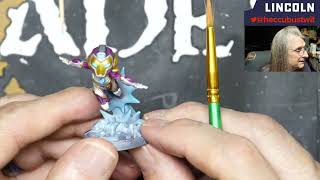
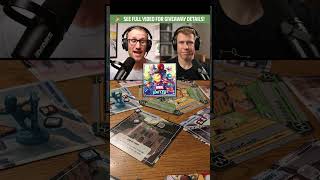
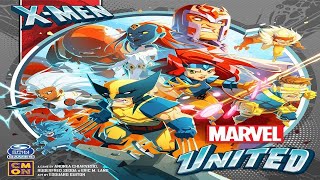
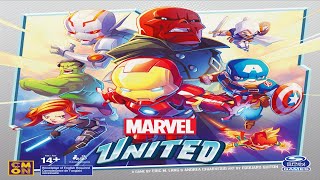








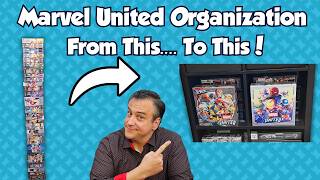

Marvel United Deep Dive
What the Community Thinks About Marvel United
Marvel United occupies a well-defined niche that reviewers consistently praise: a cooperative superhero game that teaches in minutes yet rewards dozens of plays. Board Game Coffee calls it easy to get into with a good challenge, while Rolls in the Family has logged 78 plays and still finds new heroes and villains to explore. JestaThRogue's rules breakdown confirms the system's elegance, three action types, a shared storyline, and escalating villain pressure that anyone can grasp quickly. The community agrees almost universally that the game fills the family-weight cooperative slot without sacrificing meaningful decisions. Where opinions diverge is on expansion depth: some reviewers see the growing roster of heroes and villains as Marvel United's greatest strength, while others note the cost of unlocking that full variety.
Core Mechanics That Define Marvel United
Cooperative Card Play and the Storyline
The heart of Marvel United is its storyline system, published by CMON and designed by Andrea Chiavezzio and Eric M. Lang. Each hero plays a card to extend a growing row, then resolves actions from both their card and the card played immediately before it. This means every player inherits part of their available actions from a teammate, creating a chain of cooperative momentum without requiring players to hand off control. The three action types, move, attack, and heroic, stay simple enough that new players contribute immediately. Hand management pressure builds as the game progresses: each hit forces a card to the bottom of the deck, shrinking future options and raising the stakes of every decision.
Asymmetric Heroes and Modular Setup
Every hero deck is distinct, built around that character's abilities and personality. A hero with web-based powers plays differently from one built around brute force or support. Villains bring their own dashboards, henchmen threat cards, and win conditions: Red Skull advances a fear track, others deploy unique mechanics entirely. Six random locations form a circular board around the mission guide, and three mission cards establish a progression arc: complete them to tighten the villain's turn frequency, then unlock the ability to deal direct damage. This modular assembly means no two sessions share the same board, villain pressure, or hero combination.
The Marvel United Experience
Gateway Accessible with Genuine Replayability
Reviewers consistently highlight how naturally Marvel United accommodates mixed-experience groups. New players contribute meaningfully from turn one because the action vocabulary is small and the board state is easy to read. The game scales naturally with player count, adjusting villain health and activation timing automatically. Rolls in the Family describes bringing it out with different people at 78 plays in and still finding it interesting enough to want to play again. For groups that enjoy lighter cooperative experiences, the 30-40 minute runtime means multiple sessions in a single evening are practical.
Collaborative and Triumphant
The villain's escalating pressure creates genuine tension: threats accumulate on locations, missions demand attention across the board, and the villain activates more often as play advances. When a team strings together well-timed heroic actions and clears multiple threats in a single round, the payoff feels earned. Board Game Coffee describes approaching scenarios completely randomly and having a lot of fun precisely because the combination of heroes, villain, and threat draw creates unpredictable challenges. Clearing the final health token off a villain after a close game delivers a triumphant moment that cooperative games are built for, and Marvel United reaches it reliably within its short runtime.
What Makes Marvel United Stand Out
Mix-and-Match Hero and Villain Combinations
Rolls in the Family highlights the plug-and-play design as the game's defining strength. Players choose any hero against any villain across any location setup, and the resulting experience changes substantially with each combination. A hero that dominates one villain matchup may struggle against another whose threat cards counter that hero's strengths. This combinatorial variety drives replay without requiring scenario books or campaign tracking. Caitlyn from Rolls in the Family specifically notes the appeal of playing as whichever Marvel character you love, even obscure ones, because the roster spans a wide range of the comics universe.
Scalable for Groups and Solo
JestaThRogue's rules breakdown explains the solo mode clearly: three hero decks shuffle together and the player draws from all of them, choosing which hero activates each turn. The solo game maintains the full complexity of threat management and mission progression while remaining achievable for a single player. This solo experience extends the game's value substantially. The same card-chaining system that makes cooperative play interactive translates into interesting decisions about which hero to activate and when, making the solo mode feel like a distinct challenge rather than a simplified fallback.
Potential Drawbacks
Expansion Costs Can Escalate
Rolls in the Family notes that owning both the core Marvel United set and the X-Men expansion substantially increases the variety but also the cost. CMON's ongoing release of new heroes and villains means the game's full potential sits behind multiple purchase decisions. The base box delivers a complete experience, but the mix-and-match design tempts players toward collecting more characters. For Marvel fans who want to play as their favorite lesser-known heroes, that character may only be available in a specific expansion, creating a collect-to-unlock dynamic that some reviewers acknowledge as a real consideration.
Randomness Can Spike Difficulty
The villain's master plan deck and threat card draws introduce variance that occasionally overwhelms player decisions. A run of aggressive villain cards early in the game can cascade into board states that feel insurmountable before the team has had time to establish position. TableTop Wolf's gameplay session shows how quickly sandman's health can climb when bam cards hit in sequence, and how close the margin for error can be against certain villain configurations. New players may encounter difficulty spikes before they understand threat prioritization well enough to respond effectively.
If You Enjoy Marvel United
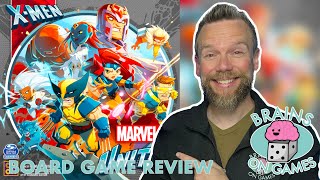
Reviewers frequently mention other CMON games alongside Marvel United, particularly Zombicide and Arcadia Quest, which share accessible cooperative structures with miniatures-driven production. Blood Rage and Rising Sun (also mentioned by Board Game Coffee as collection staples) sit in the broader CMON family for players who want to move toward more complex designs. For cooperative superhero gameplay with more tactical depth, Marvel Crisis Protocol from Atomic Mass Games offers detailed skirmish play with the same IP. Players seeking a lighter cooperative introduction comparable to Marvel United might also enjoy games from the same weight class before exploring X-Men Marvel United or the Infinity Gauntlet campaign mode.
What Reviewers Are Saying
"If you're a Marvel fan, Marvel United is a lot of fun. It's easy to get into, there's so many different scenarios, and it's not overly complicated to learn but it's got a good challenge to it. You can custom make which heroes go against which bad guys and take on which scenarios, or you can do it completely random, which is how we do it."
— Board Game Coffee
"It's got this kind of plug-and-play mix and match thing that's very fun. At 78 plays in, I can go back and play with heroes and villains that I still haven't played with, which adds a lot of variability to the game. This has really just kind of filled this spot in my collection of this family-weight cooperative game: pretty simple, easy to pull out with a lot of different people, but interesting enough and with enough variability that I would want to play."
— Rolls in the Family
"Players play as one of the many Marvel heroes, rescue civilians, defeat thugs and henchmen, and perform heroic feats to defeat the villain. The villain goes first, placing the top card of the master plan deck face up to create a row of cards called the storyline. The card is then activated from top to bottom for the arrow: move the villain clockwise that many locations, then resolve the threat card on that location. That's Marvel United, a cooperative superhero game."
— JestaThRogue