/pic6245965.jpg)
/pic5231006.jpg)
/pic7331187.png)
/pic8402341.png)
/pic6245965.jpg)





Marvel United: X-Men Deep Dive
What the Community Thinks About Marvel United: X-Men
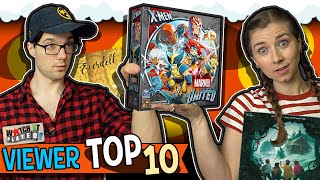
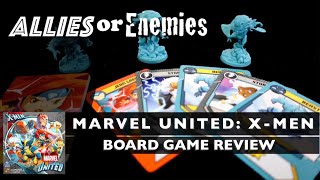
Marvel United: X-Men stands out as a remarkably efficient cooperative experience that delights both newcomers and seasoned gamers. Allies or Enemies praise how inherently fun and cleverly streamlined it is, Totally Tabled rank it among their favorite light co-ops of the year, and Rolls in the Family recommend it as a starter-collection staple. Reviewers consistently note that it threads a needle, staying tactically engaging while remaining light enough that turns resolve in seconds, so its appeal reaches well beyond fans of the superhero theme.
Core Mechanics That Define Marvel United: X-Men
Card Play and Icon Chaining
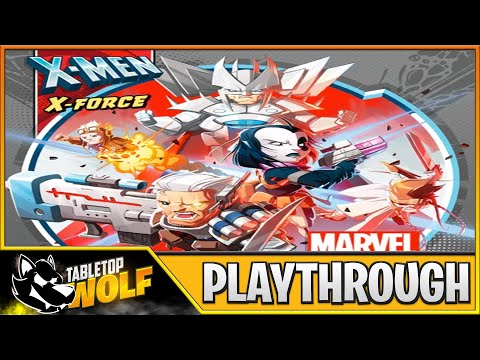
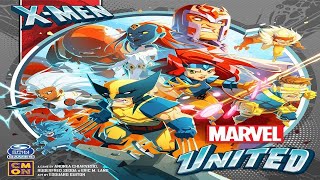
The heart of Marvel United: X-Men, designed by Andrea Chiarvesio and Eric M. Lang and published by CMON, is a deceptively simple card mechanic. On your turn you play a single card into a shared timeline, and that card activates all of its own icons plus all the icons on the card played immediately before it. This creates a chain reaction where your card might supercharge a teammate's attack, or you might play defensively knowing the next player will build off your action. Totally Tabled single this out as a simple but really impactful mechanism that genuinely encourages cooperation, since you are always thinking about the player after you.
Villain Variety and a Modular Board
The villain you face fundamentally reshapes each game, bringing a distinct threat deck and special plot mechanics, from swarms of henchmen to escalating damage schemes. This pairs with a modular board of locations arranged in a circle, each offering special actions. Allies or Enemies note how much care went into making the villains and the X-Men heroes feel varied and true to their comic counterparts, far more differentiated than the original Avengers version. Heroes move between locations, activate powers, defeat minions, and complete missions at a brisk pace, with most games resolving in twenty to forty-five minutes.
The Marvel United: X-Men Experience
Accessibility That Scales With Your Group
The game's greatest achievement is its breadth of appeal. A family introducing a young player finds the rules intuitive, with no hidden information and no analysis paralysis, yet the same game plays well with experienced groups. Rolls in the Family compare the feel to Pandemic or Horrified, working as a team against a shared threat, and note how the broad familiarity of Marvel helps it land at the table. Coordinating more heroes raises the communication demands without breaking the system, and even the solo mode, managing several heroes at once, delivers genuine tension.
A Satisfying Visual and Tactile Experience
Component quality earns its own praise. CMON's chibi-style miniatures, with oversized heads, expressive faces, and translucent costume elements, feel celebratory rather than goofy, and the per-character card art is differentiated enough that even newcomers can tell everyone apart at a glance. The icons are large and unambiguous, a small detail that keeps the quick-playing elegance from collapsing into confusion. Playing cards onto the timeline and watching them chain together creates a satisfying rhythm that carries the fantasy of heroes coordinating to stop a supervillain.
What Makes Marvel United: X-Men Stand Out
Cooperation Without Quarterbacking
Cooperative games live and die by how much they invite one player to dominate. The card-chaining mechanic naturally distributes decision-making, because playing a card changes what the next player can do, so no one can simply dictate the optimal sequence for everyone. Reviewers note this creates a genuine interplay where you set up your teammates without controlling them, which is where the cooperation deepens from a mechanical requirement into real human strategy.
High Replayability From the Base Box
The base set's villains and heroes create a surprisingly deep well of combinations, and each villain plays so differently that beating one says nothing about the next. Rolls in the Family highlight the mix-and-match nature, where each play pairs different heroes, a different villain, and different locations for a fresh experience every time. Reviewers who have logged dozens of plays report no sign of tiring, attributing that staying power to the constantly shifting setup rather than a puzzle that becomes solved once cracked.
Potential Drawbacks
Limited Depth for Heavy Strategists
Groups that gravitate toward intricate, long-form puzzles like Spirit Island may find Marvel United: X-Men thin. The turn-to-turn decisions are about reading icons and reacting to the board, not orchestrating a multi-turn master plan. The streamlined design is intentional and yields fast, satisfying play, but it will not satisfy players who define strategic depth as hours of simultaneous planning.
Fragmented Content Across Editions
A significant portion of the wider roster of heroes and villains arrived through crowdfunding rather than retail. The base set is complete and plays for months on its own, but players who want the full character lineup can find themselves either priced out or hunting down out-of-print exclusives. This is not a flaw in the game itself, but it shapes what owning the full Marvel United: X-Men experience actually means.
If You Enjoy Marvel United: X-Men
Reviewers suggest several natural neighbors. Pandemic and Horrified share the cooperative, contain-the-threat skeleton that Rolls in the Family invoke directly. For more mechanical heft in cooperative card play, Gloomhaven: Jaws of the Lion expands character abilities into a campaign. Solo-focused players who loved the single-player mode will find far deeper puzzles in Spirit Island, and for more of the same fast, friendly design, the original Marvel United delivers the identical engine with an Avengers cast.
What Reviewers Are Saying
"There is a lot of care made to have the villains reflect their comic book counterparts with different kinds of challenges, and the same goes for the heroes, which feel much more varied than the original Avengers version. Even if you have no idea who this tiny dragon is, it won't really matter, because the game's inherently fun and cleverly streamlined."
— Allies or Enemies
"Each character has their own special deck, mostly the same but with slight differences, and on your turn you play a card and get to activate all the icons on it as well as the previously played card, so you can really cooperate. That's such a simple but really impactful mechanism for a cooperative game; it really encourages cooperation."
— Totally Tabled
"It's quick; the games are usually 20 to 30 minutes, and you get that feel of a game like Pandemic or Horrified where we're working as a team. The theme helps a lot because a lot of people know Marvel, and the whole mix-and-match nature means every time you play you get a new experience with different heroes, a different villain, and different locations."
— Rolls in the Family