





Maximum Apocalypse: Wasted Wilds Deep Dive
What the Community Thinks About Maximum Apocalypse: Wasted Wilds
Maximum Apocalypse: Wasted Wilds has earned respect among reviewers as a clever, thematic survival experience that stands alongside titles like Sentinels of the Multiverse and Aventuria. Board Games UnLocked calls it a "very very thematic and super fun apocalyptic game" that covers an impressive range of post-apocalyptic worlds, from cosmic horrors to zombies to robots to alien invasions. The Hungry Gamer was initially skeptical about apocalypse themes but found Wasted Wilds refreshingly different, featuring multiple environmental and faction-based challenges rather than relying solely on undead threats. Reviewers consistently praise the game's clever design and the density of content packed into a compact box. The expansion has proven compelling enough that players return to it repeatedly, appreciating both its mechanical depth and narrative progression through a structured campaign.
Core Mechanics That Define Maximum Apocalypse: Wasted Wilds
Asymmetric Character Deck Building
Each character brings a unique specialized deck that shapes how they engage with the world. The Driver moves the van to distant objectives, the Chef throws knives and cooks for the group, the Contractor builds barricades and swings heavy weapons, the Beekeeper deploys animal companions, and the Thief brings stealth and precision. Reviewers consistently highlight how these individual decks create wildly different playstyles and problem-solving approaches. The Hungry Gamer notes that "different characters have a very strong variety in between them they feel specialized" and that "even when they might all have cards that will just move you or they might all have cards that'll do damage they feel very different." This asymmetry means the combination of characters you select genuinely affects which scenarios feel manageable and which feel punishing, giving each playthrough distinct tactical constraints and possibilities.
Tile-Based Exploration with Dynamic Hazards
Rather than navigating a fixed board, players move their miniatures across randomly arranged tiles, discovering objectives and threats as they explore. Board Games UnLocked describes this as offering "a lot of control over where you go and it's actually very easy to move around the board and there is a ton of discovery that is actually happening every single time that you move." The weather system compounds this exploration tension by introducing exposure cards when characters are caught outside during harsh conditions, triggering frostbite, hypothermia, heat rash, and fever. The day-night cycle flips cards that trigger ongoing effects, and monsters move dynamically across the map. These layered hazards mean that exploration is never purely about finding the objective; players must constantly manage their health, hunger, position, and time of day.
The Maximum Apocalypse: Wasted Wilds Experience
Tense Crisis Management in a Hostile World
The game creates recurring moments of desperate decision-making. Every round, hunger increases, resources deplete, and the weather turns. The Hungry Gamer notes that the weather system "adds a good bit of tension to the game" and creates situations where "even when you're like I don't know what to do right now well there weather stuff's going on so I got to make sure I'm safe." Characters must weigh whether to split up to cover more ground, when to scavenge for food versus fuel, and whether to invest actions in befriending a tribe for long-term advantages or focus on immediate survival. This constant resource pressure and environmental threat makes every decision feel weighty, whether you succeed through careful planning or scramble through bad luck.
Collaborative Storytelling Through Faction Relationships
Wasted Wilds transforms NPCs into dynamic characters rather than static obstacles. Reviewers highlight the tribe systems, where relationships track between hostile and allied states. Board Games UnLocked explains that the Norse tribe, for example, "will have kind of like your a meter on how much they like you from Allied to enraged." When you parlay with tribe members by offering scavenged goods, they shift from enemies to trade partners to allies, opening new tactical options. Good Time Society's gameplay session shows these moments creating narrative texture: characters discover they must warn the Norse tribe of dangerous creatures, but first must rebuild trust after an accidental attack. The game weaves together mechanical progression and emergent story through these faction mechanics, making each campaign feel like a narrative arc rather than a series of disconnected puzzles.
What Makes Maximum Apocalypse: Wasted Wilds Stand Out
Modular Mechanical Depth That Teaches Itself
The campaign structure intentionally introduces new rules gradually. Sir Thecos observes that there are "quite a lot of missions" and Board Games UnLocked confirms that "the first mission doesn't have it has the exposure deck and then it goes into oh okay now you're adding in tribes now you're adding in the day night cycle." Rather than overwhelming players with rulebook complexity, the campaign eases them in: early missions establish core exploration and combat, later missions layer on weather exposure, tribal interactions, and day-night dynamics. The designer Mike Nade stresses that "we have designed this game to be a great entry point for new players" with a learn-to-play guide that holds your hand through early scenarios. This graduated approach means players build competence and confidence alongside mechanical complexity, making the rulebook less intimidating and the game feel natural by the time all systems are active.
Massive Content Density in a Compact Package
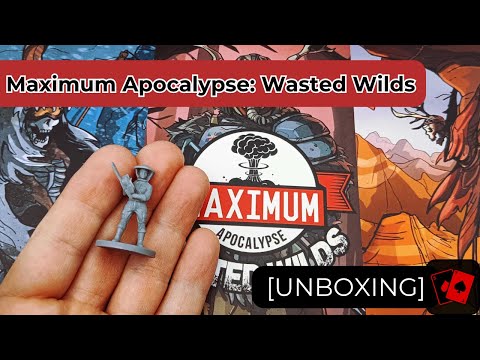
Reviewers repeatedly note the surprise of opening the box. The Hungry Gamer states plainly: "there is a lot of content in this relatively small box here I mean this is not a huge box in fact I would argue for the amount of content that's in this game it's a tiny tiny box." The game includes multiple characters with distinct decks, multiple apocalypse encounter types (from plant-based horrors to robot invasions), a campaign of ten missions with supplemental scenarios, modular rules boards for day-night cycles and tribe relations, and meticulously designed resource tokens and trays. Yet none of this abundance creates storage problems; the organization is clean enough that setup feels manageable once you learn where components live. This efficiency means players get campaign depth and replayability without needing a large footprint on the shelf.
Potential Drawbacks
Swingy Difficulty Can Leave Players Stranded
As a roguelike, Wasted Wilds embraces randomness, and that randomness does not always reward careful planning. The Hungry Gamer observes that "sometimes you find exactly what you need one tile over other times you have to go the long winding path of impossibility to get to the thing that you need." Similarly, Board Games UnLocked notes that the campaign can feel repetitive and frustrating: "we're not dying we have tons of ways to be able to manage our health and manage our hunger and we Auto kill these enemies and nothing's spawning because like of the way we built our map so like nothing's near us so we just need to find this one card and oh we finally got like it's like we're going to win there's nothing here." The map can deal you an unwinnable starting position, monstersawn too far away to threaten but objectives just out of reach, or paradoxically abundant spawns that overwhelm even prepared characters. While this volatility is thematic and sometimes thrilling, it can also mean campaigns devolve into tedious grinding or sudden, seemingly preventable defeats.
Party Splitting Dilutes the Cooperative Feel
The structure of the game frequently rewards (or necessitates) splitting your group across multiple tiles. The Hungry Gamer points out that "it seems to me that you kind of have to split up the party and kind of go separate ways a lot of times to succeed" and that "I really enjoy is that feeling of you're working together and you're comboing cards even you don't exactly combo cards I like that feel but it always feels like you have to split up and I think that loses a little bit of the co-op nature of the game." When players are spread across the board, moments of collective triumph become rarer, and the experience tilts toward parallel puzzle-solving rather than teamwork. The reviewer acknowledges this may diminish with three or four players, where board space allows more fluid togetherness, but at two players the separation is pronounced enough to reshape how the cooperation feels.
If You Enjoy Maximum Apocalypse: Wasted Wilds
Reviewers frequently mention Sentinels of the Multiverse and Aventuria as spiritual cousins, sharing the asymmetric deck-driven combat and cooperative crisis management. Earthborn Rangers offers similar survival exploration but with a longer campaign arc and less apocalyptic intensity. Maximum Apocalypse Legendary Edition (the base game) provides the same mechanical foundation with different apocalypse themes, offering additional replayability if you love Wasted Wilds. For players drawn to the roguelike tension and swinging outcomes, other board game roguelikes like Frosthaven or packed-content games like Gloomhaven offer similar depth in asymmetric characters and campaign progression.
What Reviewers Are Saying
"I think this game does do the best job of a board game rogue-like that I can think of, although there's not that many. So it is, this is a good expansion, I like it, it adds a lot of, you know, more characters."
Board Games UnLocked
"I really like this because you have loads of different enemies. You have lots of different characters. You just have lots of different stuff that you can combine with one another. It's like a lot of variety."
Sir Thecos
"This is a very clever game, it really is a clever fun game. I'm very intrigued by it, and I think it's one that's going to play best at two or three players, but I really liked it, I'm really looking forward to going back to it. Really cool mix of kind of crisis management and adventure and RPG."
Hungry Gamer