











Mooki Island Deep Dive
What the Community Thinks About Mooki Island
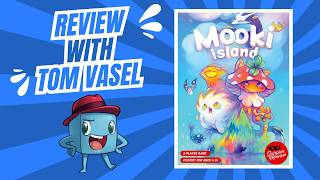
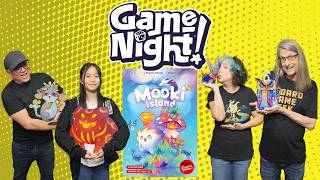
Mooki Island has generated remarkably consistent enthusiasm across the board game community, though reviewers emphasize distinctly different reasons to appreciate it depending on your age and gaming experience. The consensus is clear: this is a beautifully designed game for young players that manages to appeal to adult gamers in ways few children's games accomplish. Reviewers who engaged with the game as parents and experienced hobbyists found themselves surprised by its strategic potential, even if the game remains fundamentally designed for players ages four and up. The Game Night panel (a group of hardcore gamers who rated all three Kinderspiel nominees) was sharply divided, with some championing Mooki Island as the only nominee an experienced gamer could genuinely enjoy multiple times, while others argued it was simply too simple to hold their attention. The Dice Tower and Get Into Games reviewers praised the game for what it is: a beautifully crafted entry point into strategic thinking for young players. Dissenting voices were rare but emphatic; one reviewer found the game mechanically thin and uninteresting for adults playing alongside children. The strongest common thread: reviewers loved the game's art almost unanimously, often spending time admiring the adorable double-sided cards before discussing anything else.
Core Mechanics That Define Mooki Island
Set Collection
Mooki Island centers on collecting sets of matching symbols. Players alternate drawing cards from one of two piles, examining both sides of each double-sided card, and placing their chosen face into a personal collection. The game's five distinct creature types (suns, moons, leaves, footprints, and shells) each award trophies to whoever collects the most in that category, with trophies worth different victory point values. The key decision tree emerges from the cards' dual nature: you see one face and must decide whether to keep that symbol or flip to the other side, hoping for something more valuable. Scorpion Masque designed the cards so that certain symbols appear more frequently on particular sides, and some cards feature rare foil treatments that display two symbols at once, instantly doubling their value. This creates meaningful push-your-luck tension even for four-year-olds, who must weigh certainty against possibility. Adult players who replay the game find themselves mentally cataloging which symbols remain and making calculated decisions about card distributions, transforming the collection phase from a children's game of luck into a surprisingly thinky exercise in memory and probability.
Set Denial Through Negative Scoring
Woven into the set collection mechanic is a clever twist: spider symbols are deliberately undesirable. If either player collects too many spiders during the game, they must forfeit one of their earned trophies at the end, chosen by the victim themselves. This mechanic does two things. First, it creates a secondary decision point: sometimes you want to look for spiders to place in your opponent's pile rather than collect symbols for yourself, especially if they're on the path to a dominant majority. Second, it balances play for parents and younger children; an adult can choose to avoid spider-bearing cards, letting their child's random draws carry more strategic weight. Reviewers noted the spider cards often hide valuable symbols on their flip sides, forcing genuine choices and preventing dominant strategies from crystallizing too early in the game.
The Mooki Island Experience
Whimsical and Adorable
The first thing every reviewer mentioned was the art. Mooki Island's illustration style radiates charm: each creature has distinct personality and appeal. The foil cards catch light and draw eyes across the table. Game Night reviewers spent visible minutes simply admiring the cards during their discussion. One reviewer remarked that the art was so beautiful that players might want to repurpose the cards into other games, like Dixit, after outgrowing the base game. The aesthetic experience of playing Mooki Island is inseparable from its mechanical appeal. Children respond to the cuteness of the creatures; adults find the production values and design choices respectful of the player experience. The game's visual language tells players this is a well-considered product, not a rushed licensed tie-in.
Surprisingly Strategic, Yet Accessible
Mooki Island walks a narrow line that few children's games successfully navigate. It is mechanically simple enough that a four-year-old can grasp the rules in seconds: draw a card, look at both sides, decide which face to keep. Yet experienced gamers discovered hidden depth that persists through multiple plays. One player noted that by the fifth game of Mooki Island, competitive players would have memorized card distributions and could make mathematically optimal decisions on every turn, treating majority control as a critical strategic puzzle. Parents found they could play authentically without suppressing their natural tendencies, making the game genuinely challenging for their children without feeling condescending. The two-player format, while initially seeming restrictive, proved ideal for parent-child bonding. Reviewers who played the game across age groups reported that children stayed engaged, while adults maintained genuine decision-making tension throughout.
What Makes Mooki Island Stand Out
Double-Sided Cards That Feel Like a Complete Mechanic
The use of reversible cards with different symbols and values on each face is not new to board gaming, but Mooki Island treats this as a core design choice rather than a gimmick. The foil cards (which feature two symbols on one side for double value) create visual excitement and genuine gameplay tension. Reviewers noted that the rarity and desirability of foil cards meant players actively watched which cards came out and planned accordingly. The mechanic respects player intelligence; you cannot simply memorize the deck because different sides change the game state meaningfully. One reviewer highlighted this as a form of elegant design: the cards themselves teach players to think about multiple dimensions of value.
Teaching Strategic Thinking Through Play, Not Lecturing
Reviewers described Mooki Island as a perfect gateway into more complex strategy games. The memory aspect, the concepts of majority control, set denial through negative scoring, and risk assessment all emerge naturally from the simple act of drawing cards and choosing which face to keep. One reviewer praised the game as a pedagogical tool that lets young players discover strategy concepts organically. Unlike many children's games that feel like simplified versions of adult games, Mooki Island presents itself as a complete experience that happens to work beautifully for its target age group and scales upward for older players. Parents and experienced gamers both reported that the game never felt patronizing or artificially constrained by its target audience.
Potential Drawbacks
Limited Strategic Depth for Serious Gamers
While reviewers appreciated the game's elegance, several noted that the depth ceiling exists and is not particularly high. Experienced gamers who played multiple times reported that the decision tree flattens after a few plays once you understand card distributions and optimal strategies. One reviewer stated explicitly that by the fourth play, they had exhausted the game's decision space and felt little motivation to return to it. The two-player format, while perfect for its target age group, means there is no chaos management or social dynamics that might extend play value. For hobbyists seeking a game they can teach, play once or twice, and then shelve in favor of something more challenging, Mooki Island fills that role admirably. For families seeking a game to play repeatedly at game night, the replayability may depend on having children in the target age range.
Two-Player Only Limits Accessibility
Mooki Island is explicitly designed for two players. In a hobby where group gaming, casual party games, and family night dynamics often favor three or more players, this constraint narrows its audience. Reviewers who appreciated the game still noted this limitation. While one reviewer successfully played the game cooperatively with a child, treating it as a shared experience, that diverges from the competitive design. The two-player focus makes sense given the target demographic (parents playing with children, or pairs of young friends), but it does mean the game sits in a specific niche. For families with larger groups or gaming communities with rotating tables, the limited player count could reduce its utility.
If You Enjoy Mooki Island
Players who appreciate Mooki Island's blend of beautiful artwork, simple rules, and surprising strategic depth should explore other well-designed children's games that scale upward for adult players. Look for games that respect younger players' intelligence without talking down to them, and that feature elegant mechanics that reveal new dimensions as players grow more experienced. Games that use similar double-sided or flip mechanics, or that teach set collection and majority control in accessible ways, will provide similar satisfaction. The strongest recommendation for Mooki Island fans: if you love it at first play but feel it might thin out on replay, that is by design. This is a game meant to shine through shared discovery and teaching moments, not pure mechanical innovation.
What Reviewers Are Saying
"I really enjoyed it, especially the artwork and the uh the UV coating on some of those cards."
— Rusty, Game Night (BoardGameGeek)
"Actually the more I think about it the more I really like this game."
— Game Night (BoardGameGeek)
"It's kind of a teaching game. It's very pretty. So I'm giving this a six as a general overall rating. But for those who would be maybe four or five maybe a seven."
— The Dice Tower