/pic4134810.jpg)
/pic4134810.jpg)














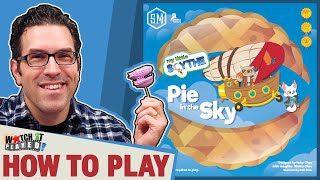
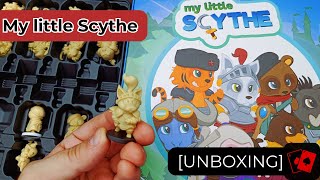



My Little Scythe Deep Dive
What the Community Thinks About My Little Scythe
My Little Scythe has earned respect from the board gaming community as a masterclass in streamlining. A father-daughter design team set out to create a game their child could actually enjoy, and Stonemaier Games ultimately realized they had something special: a gateway experience that stands entirely on its own. The game captures what made the original Scythe compelling while stripping away the complexity that would overwhelm younger players. Reviewers from Get Into Games to Adam in Wales consistently praise it not as a simplified children's game, but as a genuinely engaging experience for families, where adults find meaningful strategy and kids discover surprising depth.
Core Mechanics That Define My Little Scythe
The Action-Selection Rule
At the heart of My Little Scythe lies an elegant constraint: on each turn, you choose one of three actions (Move, Seek, or Make), but you cannot repeat your previous action. This single rule creates surprising strategic tension. You must plan ahead, knowing that the action you need next turn might not be available because you just took it. The rule forces players into interesting decisions, preventing them from endlessly repeating their favored action while keeping the experience accessible enough that explaining it takes seconds. Designers Hoby and Vienna Chou borrowed this directly from Scythe, and it does much of the same work here.
The Pie Fight and Friendship System
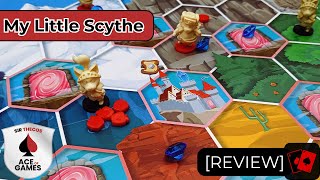
Combat in My Little Scythe uses the same dial system as its namesake, but themed brilliantly as pie fights. When your seekers encounter opponents, both players secretly choose how many pies to spend from their reserve, potentially enhanced by magic cards. The player with more pies wins, and the attacker loses one friendship point simply for being rude. This reframes combat as inherently costly: you win the fight, but at the price of relationships, since friendship is itself a path to trophies. It preserves the tension and hidden information that make the moment exciting while teaching a gentle lesson about conflict.
The My Little Scythe Experience
Accessible Complexity with Real Strategy
My Little Scythe occupies a remarkable sweet spot. Kids grasp the core loop within minutes: move your two seekers, gather apples and gems, and gradually accumulate trophies by delivering resources to the castle, winning pie fights, completing quests, or upgrading your abilities. Yet the game offers enough texture that adults playing alongside children can make genuinely interesting decisions. Friendship management becomes a real tension, since attacking aggressively wins the fight but costs the resource advantage that friendship provides. The beautiful hexboard and chunky components feel premium, signaling that this is a real game worth playing rather than a dumbed-down toy.
A Tournament With Personality
Rather than a military conquest or economic simulation, My Little Scythe frames itself as the Kingdom's Harvest Tournament, where cute animal seekers compete to earn trophies through their deeds. Player power cards give each kingdom a slightly different path to victory, ensuring replays feel fresh. Magic spells, quest encounters, and resource deliveries replace the industrial warfare of Scythe with a pastoral story of friendship and competition. The artwork and theming never feel like they are talking down to younger players; they are authentic to the charming world Stonemaier Games created.
What Makes My Little Scythe Stand Out
Streamlining as a Template
My Little Scythe is remarkable not just as a game but as a case study in distilling a complex design down to its essence without losing the soul. Hoby and Vienna Chou identified what made Scythe tick: moving around a map, gathering resources, delivering to a central location, the combat dial, the no-repeat action rule, and the diversity of victory paths. Almost everything else was stripped away. The game shipped without blocking terrain, without a separate economy, and with a clear, accessible victory condition: be the first to earn the required trophies. What remained is tight, and the result is a game that plays in roughly an hour and teaches in five minutes yet never feels trivial.
A Rare Bridge Between Ages
Most family games either bore older players or overwhelm younger ones. My Little Scythe does neither. Parents report playing it alongside their kids not as a chore but as a genuine game-night option. The reason is that the mechanics do not mask a simplified experience, they enable one. When you have meaningful choices about whether to build friendships or crush opponents, whether to upgrade your movement or your craft ability, whether to push for the castle or pursue quest cards, the game stays fresh across plays. Children sharpen their strategic thinking while adults find real puzzle-solving, and both can occupy the same experience at once.
Potential Drawbacks
Two-Player Games Lose Interaction
With two players, the large board means opponents can spend much of the game moving through the same space without meaningful contact. Pie fights happen rarely, and the social tension that makes multiplayer rounds sing largely disappears. The game accommodates two players and includes a solo mode with an automated opponent, but the design truly comes alive with three or more at the table. Those looking for a tight two-player experience might find themselves wishing for more direct conflict.
Quarterbacking and Player Dependency
As with many family games, My Little Scythe is vulnerable to experienced players dominating decisions for younger ones. A parent who plays aggressively or dictates strategy can drain the fun from children who need room to experiment and fail. The game's elegance also means that once players internalize the systems, the decision space becomes more navigable, which can reduce the surprise factor in repeat plays. The experience is best with groups who embrace its collaborative spirit and give less-experienced players room to drive their own strategies.
If You Enjoy My Little Scythe
If My Little Scythe captivated your table, explore Scythe itself once your group is ready for deeper economic systems and map control. For families seeking thoughtful design at a different scale, The Isle of Cats offers polyomino puzzle-solving with charming creatures and a family-friendly mode. Ticket to Ride: London delivers a shorter, bite-sized route-building experience in a condensed box, perfect when you want familiar mechanics in a speedier format. Disney Villainous shares the no-repeat action-selection rule, creating surprising strategy within an accessible ruleset. And Via Nebula provides a gentle, network-building euro that rewards the same kind of relaxed forward planning.
What Reviewers Are Saying
"It somehow still carries the same complexity and the same details that Scythe has, but in a much simpler way. It's a family-friendly game, but it's got enough meat on the bones to really keep coming back to the table and strategizing."
— Get Into Games
"I call it Scythe light. It's basically Scythe but super family-friendly and very streamlined, and you're controlling cute critters in a tournament trying to pick up and deliver gems and apples to the main castle. There's more going on here than you'd expect, and I wouldn't call this a kids' game. I'd call it a family-friendly game."
— Our Family Plays Games
"The combat system in My Little Scythe is identical to Scythe, which is amazing, really, that Scythe managed to come up with such a streamlined, simple combat system in what is a relatively complex game. I think that's going to appeal to the family-type audience."
— Adam in Wales