Tips for STREAMLINING your Board Game: Scythe to My Little Scythe *Board Game design*
Games in This Video
14 games are featured in this video — they unlock as you watch.


Transcript
hi I'm Evan Porter and this is my board gaming vlog and today I'm going to be talking about streamlining your game and the reason that I'm bringing this up is because often people will turn up at our play testing group with a prototype that they've made and it's usually the first game they've created and it's a sprawling epic that takes I can only imagine hours and hours and hours to play there are components everywhere often excessive amounts of artwork and money spent on 3d printing miniatures decks of cards all over the place lots and lots of dice extensive world beat the building of law all sort of poured into this design and it takes an hour to even explain the game let alone to explain the sort of world that the game sort of exists in and often my suggestion to people when they bring along those sort of games is to think about what would that game be like if it was a junior version of that game so set aside the game that you've been making and instead think about the kids version okay imagine this you're making monopoly junior or Scrabble junior or kudo junior you know but for your game what would the junior version be and often that junior version is much closer to something that might be accessible and marketable in the current marketplace you know these big massive sprawling epics are very specific very niche in terms of the publishers that will go for them and in terms of the people that are
going to buy them and if you're a first-time designer there's potential for so many mistakes in there the thing is to strip it all out and find the fun in the game so that's what streamlining is all about there's several different aspects to streamlining a game so the first aspect is that you need to make the game easier to learn you want players to be able to pick it up from the rules you don't want them to sit there for hours listening to you explaining the rules they should be able to read a simple rule sheet and get playing relatively quickly so easy to learn but also easy to play okay so looking through your game and looking for the things that are tripping people up the complexities the edge cases the contradictions the things that don't need to be in there barriers to the players having an enjoyable gaming experience things that disrupt the disrupt the flow okay another aspect of streamlining is reducing the components from you know bringing down the the physical size of the game so smaller components smaller cost for the game you know this is only a positive thing when you actually go to publish if you can make it cheaper it's easier to set up is easier to package it's more portable this is all a bonus if you're trying to make your game marketable and profitable in the longer run another aspect of streamlining is of course making the duration of the game shorter generally people want shorter games not these big epics there's a place for those with certain publishers with certain players but for the majority
games need to be short they need to be playable within an hour or a couple of hours but probably not much longer than that and for some games far far shorter than that if it's something that should be relatively simple or relatively random I think a big part of streamlining is about finding the fun and honing in on it looking at what the players are enjoying when they're playing your game what do they want to do in your game that they can't which bits are they visibly smiling and laughing out and which bits feel like a bit of a chore a bit of work take that stuff out focus in on the fun give them more of that more of what they want to be doing and a part of that is killing your darlings you know that classic pros kill your darlings and what that means is some of the bits in the game which are your favorite bits the bits that you think of really clever really innovative perhaps really thematic and really enhance the narrative in the world-building sometimes that stuff is not helping your game and you need to strip it out even if you love it strip it out you haven't lost it it's like I said earlier with that big epic game put it on the shelf you haven't lost it you can come back to it later those mechanisms might be perfect for another game but there if they're getting in the way of the fun right now then you need to be willing to get rid of that stuff so this brings me on to the main topic of this video which is scythe it's eventual transformation to my little site in size each player is trying to gain coins and on a player's
turn they take one of four actions the first action is move this allows you to transport workers and resources across the map or you can produce this adds new resources or workers onto spaces that you already occupy or you may bolster this gives you more power for future combats and the fourth option is to trade and this gives you goods or popularity but you have to spend coins to get them you may not take the same action two turns in a row and each action that you take is associated with a second reaction so these are upgrade which allows you to move a cube to uncover an additional benefit on your board and cover up a different cost or you might deploy this allows you to purchase a mech which is great for transporting workers and resources and also useful in combat or you might choose to build and this allows you to purchase buildings which have different special abilities or maybe you will enlist this allows you to select a one-off bonus but also gives you an additional reward every time one of your neighbouring players takes a certain action when players take mix they also uncover a special ability which now applies to them for the rest of the game the layout and special abilities are different for each player and they're very variable from game to game if a player wishes to move greater distances they can use tunnels either those Illustrated on the board or using mines that they have built if a player's
character lands on an encounter token then they read the card text and choose a reward and if a player's character or mech lands on a space with an opponent's workers they retreat to their home base leaving their resources behind and you lose popularity as the attacker if a player's character or mech moves into the same space as an opponent's character or mech then combat ensues each player takes a combat dial and secretly selects how much power they wish to use they may add a combat card if they wish to bolster this both dials and cards are revealed at the same time and the highest wins the combat the losing units all retreat leaving resources behind and the winner loses popularity throughout the game players gain stars for achieving certain goals for example moving six cubes to upgrade their boards or moving all four mechs onto the board or building all four of their buildings or having eight workers on the board or completing their personal objective cards or winning a combat or being extremely popular etc when one player has achieved six stars then the game ends and coins are awarded for various bonuses including those stars themselves and the player with the most coins wins so the game scythe by Jenny stedmeyer Domeier games came out in 2016 and then the following year it was followed by a family game called my little side with very cartoony sort of artwork on it created by a different designer called Hobie Chow and
his daughter Vienna Chow who was six and the story seems to be that Hobie was a fan of scythe and he wanted to play it with his six-year-old daughter so he created a version of the game that was playable by a six-year-old that used My Little Ponies as the player pieces and he produced print and play files on the internet and it got some traction and created some buzz people were enjoying it and it came to the attention of the original designer Jamie stedmeyer who then played this print and play game and then offered a publishing contract to Hobie in Vienna and so that's a wonderful sort of story a wonderful tale clearly the My Little Pony license wasn't available or was too expensive so we end up with my little side but it's it's generic cartoon characters rather than that my little pony world and we're going to come back to the details of how that games society was streamlined into my little sides because I think it's a really good example of how you might approach a an exercise like that but before I do I wanted to talk about some other games that have tried to do similar things over the last few years so the first example is evolution the beginning which was a streamlined version of my favorite game evolution from North Star games so evolution is not a complex game but it's got a fair amount going on it's it's got several different sort of phases so in the first phase we all do this in the second phase all players do this and then in the third phase all players do this okay so
that was the first thing that changed and evolution in the beginning was that on a player's turn you do this this this this you'll turn it over now it's the next players turn they do this this this this and then the next players turn this is a much more intuitive sort of sequence it's much more familiar to players who haven't played a lot of these more complex games and so it streamlines the whole experience while achieving very similar sort of results um in the original game evolution you could spend a game sorry you could spend a card in order to gain a species Ward or to increase your population in which case you would take a total movie token move a marker to show this okay so there was always an additional step get rid of a card and then do something with your components or add components in the evolution of beginning the card that you would normally discard you don't discard it what you actually do is you just flip it over and that becomes your new species or you add it to an existing species and that becomes some extra population for that species this is a really slick way of reimplemented that system of spending a card in order to build your population or to build your new species the other thing evolution the beginning did was reduce the number of special types of cards there are loads of special types of cards in evolution that with all sorts of different things but an evolution the beginning they've really honed in on the most useful the most fun and the most sort of simple to learn and actually with evolution the beginning you get familiar with those
cards so much quicker than you do in the original evolution game now that doesn't mean it's got the same depth it doesn't evolution is a much deeper game and if you want to go in even deeper you can go for evolution climate or oceans but evolution based game is a lot more complex a lot deeper and probably going to give you a lot more sort of long-term entertainment if you can get over that initial barrier of learning game evolution the beginning is a smaller package it's a cheaper package to buy it's sold in mass-market stores in America that was its primary sort of function was to get into Target and it serves as a really good stepping stone to get into the evolution games Ticket to Ride has had a lot of sort of it's got a branched out in different directions in a similar way to evolution actually it's got more complex ticket to ride with with various expansions it's got less complex with the children's version check into the ticket ride first journey and but what ticket to ride did with New York and London I thought was the most interesting I have the ticket rider London version but these two products only not on making a shorter game not a reduced complexity just shorter and smaller and more portable and cheaper and so ticket to ride London can be played in 15 or 20 minutes with exactly the same rule set as the original Ticket to Ride which is not a complex game at all and so the same rules to smaller board fewer playing pieces reduced scoring opportunities and you get through it that much quicker
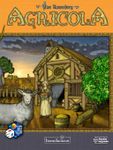
Agricola now this is an example I think where somebody has failed to kill their darlings because a curricular family edition is essentially the same game as Agricola there's no reduction in complexity in a degree cooler family edition in the original Agricola you could either play using a handful of cards minor improvements and occupations and they added a lot of complexity and and card interactions into the game but the game always came with a family version where you played without those cards but otherwise played with exactly the same rules at some point in the last few years Mayfair and lookout decided to make the Agricola family edition a completely different edition of the game that comes in a separate box so no longer do we have the cards but the gameplay is essentially the same as the original Agricola the changes that have been made are things like changes to graphic design so we no longer have text on board we've just got a cons for the various different actions but we've lost some of the resources so we don't have vegetables anymore we don't have stones switched some minor reduction in some sort of complexity we've moved away from having individual player board so now we have tiles so when you plow a field or or extend your house or you know you you place a tile down into the farm to demonstrate this and and I suppose most significantly you don't place fences anymore you just place a pasture that is on a pre-printed tile again not a huge change in complexity
there albeit we don't have to worry about some of the layout restrictions and minus points for not filling in spaces and things like that the endgame scoring is supposed to be simplified in so much as you score one point for each tile that you have on the table and one point for each item that's on the tile but there's quite a few exceptions to those rules like for example you don't score anything for tiles which have wooden rooms on them and you do score for animals which are not on the tiles but are in a stable but you don't score for other resources which are not on your tiles but you do if they're on the tiles and then you've got some tiles which have special scoring criteria and those ones can get fairly complex specifically because they've removed the text you then have to kind of work out what do they mean and explain that away to another to the other players and so it feels like this is not as radical a change of the game as some other games have done when they've when they've streamlined to make their sort of junior or family version of the game it feels like they just couldn't let go of what they felt were the key defining features of Agricola and so the complexity remains and actually although it is a family edition and a really good really good game and a really good stepping stone to two full Agricola it's not really good for younger children it's not really good for children at all I would say unless they're playing with adults and so it's a little bit limited in its scope and it hasn't streamlined the game as much as I would have liked I love cats is a recent game that I've
been playing an awful lot it's been a huge hit with my wife and me and I love cats has a degree of complexity to it there's quite a lot of phases there are a bits where you have a hand of cards and you draft the cards and pass the cards around the teh there are bits where you have to pay for those cards using fish various different phases to the gauge certain cards can be played at certain times when you want to place one of the little tetris type tiles onto your board you have to pay for it with fish and different tiles cost different amounts now the game the game itself comes with a family version in it okay so you don't have to buy a separate product to have the family version of Isle of cats it's in there and what the family version does is it does away with an absolute ton of the components and actually does away with a lot of the phases and reduces it to its absolute bare bones of on your turn you literally take a tile and place it on your board you don't have to pay for it there are four tiles available you choose one the other player chooses one this is if you're playing a two-player game you place it on the board you try and cover up the rats because they they give you negative points try and fill up the rooms because otherwise you get negative points if the rooms aren't full you try and cover up the little treasure maps because they give you extra tiles that you can use and you try and put groups of the same colored cats together but essentially that is it at the start of the game you're given two cards which give you two little objectives to work towards but no other point in the games you have a hand of cards or have to work
towards multiple objectives or pay any fish for anything really simple homes writing on the phone and it's no that is no to no detriment to the bigger game the bigger game is fantastic - they are quite different games but they've got the same sort of DNA behind them it feels like a real streamlined honing in honing in focusing on the fun in the game and stripping everything else out and so that brings us onto my little site which is the main topic of this video how did sides become my little side what are the defining features of side that needed to be kept in and which bits did Hobie and Vienna feel that they could take out so it seems to me that Hobie and Vienna decided the defining features of scythe the original game were the big hex map Hicks map move around the map little tunnels which allow you to move from one part of the map to another resources being produced on those different tiles that you can collect and gather and move that map gaining stars which are little objectives that you gain throughout the game and this brings on game end and allows you to work towards different strategies in the game a popularity system in the gates you gain popularity or lose popularity for taking various actions and combat and using strengths and those dials in combat that stuff all feels quite defining of sigh how its combat system works no randomness in the side combat system having different types of terrain and that affecting how
the resources are produced the encounters that you have when you go to certain spaces and draw a card and see what happens upgrades scythe is full of upgrades upgrading your player boards upgrading your actions and I think the key defining rule of scythe is that you can't take the same action two turns in a row so if I move on this turn I'm gonna have to take a different action on the next turn now all of those features were lifted from side and moved over into my little scythe but there were some things that were left behind so the things that didn't make the cut where the endgame scoring systems in scythe this is relatively complex looking at various tables scoring for lots of different things multipliers and so on so this is simplified in my little scythe to make it into a simple race and that's something that children and families understand is the first player to get to four trophies which are the replacement for the Stars so in size you'd have if you've got six stars that would bring on the end of the game and they would score you points along with lots of other things and my little side is very simple first player to get four stars or trophies in my little side wins the game outright but also reducing the complexity in that upgrade system my little side does have some upgrades it sort of has a nod to it but nothing like the complexity of the player mats that you have inside my little size removes all the blocking terrain it makes it simpler to move around that map you don't have to worry about rivers and lakes and things like this and as I said with Isle of cats no money you never
have to pay for anything in my little site you never have to you know pay money in order to take certain actions or anything like that that's completely removed the game to make it more accessible for younger players there are no buildings in my little site you don't have to spend resources to build buildings and you don't have any personal objectives no hand of cards that you're working towards nothing that you're keeping secret and having to remember or anything like that there are no second reaction site has that system where when you take an action you get a sort of mini secondary action if you can afford it that doesn't happen in my little scythe so let's look at the actions that you can take inside there are four of them you can move you can produce which generates resources on the board you can trade which means you're spending money to get resources and you can bolster which means that you gain power on the power track to help you in combat in my little site this has all been reduced to three actions same rule applies you can only take if you take one action you can't take it again on your next turn but the actions are move or seek which is the equivalent of produce which generates resources or make now make takes the bolster action and combines it with those secondary actions to give you a few little options for basically getting upgrades an upgrade for your board or get them take a magic card or you know it gives you a few different little bits and pieces that you can buy using your resources the miniatures this was a key defining feature of size you've got your character piece which is
very character full you know you've got the animal and the person that's that's a big part of the visual appeal of sight and then you've got those mix that are very you know very exciting and toy-like then you've got a whole bunch of little wooden meeples that represent your workers and look a little bit more boring so three different types of units my little side combines these three units into one which is your seeker and you have two of these seekers that work identically they move around the board they carry resources with them in the same sort of way as your combat and and and worker units would in scythe but they don't produce resources they don't have that worker function so we have to find a new way of producing resources and that's done with the seek action so when you seek you roll some dice and that generates resources around the ball and the color of the result on the dice indicates which type of terrain that resource is going to appear in so apples might appear in the red area or or gems might appear in the snowy area and so we've got that element of different terrain doing different things but without the complexity of or the iconography of the original board from scythe and a much smaller amount of resources we don't have the four or five resources I think of four resources in the original site and now there's only the two which are the gems and the apples in the original game site there was a factory in the middle of the board and players tended to move towards this Factory and it brought them into into
proximity and forced them to interact with each other and the reason they wanted to get to that Factory was because it would give you a card which you could lay alongside your player board and it would up give you an upgraded action and new action that you could use on your turn now in my little scythe you don't need that because there's already built into your basic actions if you take the make action you can upgrade your board every turn well every other turn if you wanted to so we don't need that factory space in the middle but we do need something to draw people towards the middle and make them interact with each other so instead we have a castle there and the function of the castle is that you move towards it to deliver things to it you can deliver apples or you can deliver gems and that helps you to gain certain trophies so so it replaces the mechanism of why we're going there but keeps that key thing of drawing the players towards the middle of the board and of course the tunnels inside are one of the main ways that people do that they can transition they can move across the board quite easily and you can do that in my little scythe too using the the portals which are direct replacements of the tunnels when you do come into contact with other players the combat system in my little side is identical identical to the combat system inside which is amazing really that scythe managed to come up with in the original form such a streamlined simple combat system in what is a relatively complex game but the combat I don't think the reason it's unchanged is because it's it's such a fun combat system the dials at their very toy like aren't they turning that
dial and hiding it the reveal is exciting it's quite a simple system and I think that's going to appeal to sort of the family type audience so in my little side there called pie fights but essentially the system is the same and instead of having power we have a chart which shows you how many pies you have and you still gain or lose what's called friendship in my little size but is essentially the same as popularity in the game size so the only other change really is that in size you have unique traits okay so each player has a board which has its own special ability on it and then they'll have various cards and things and upgrades that give you different special abilities and when you play mechs then you gain more special abilities and they're unique to that individual players there's a lot of asymmetry this is simplified and streamlined in my little scythe to each player has a personality card one card which just makes it easier for you to complete one type of objective and gain one type of trophy and that's it that's the simplification there so I think that's a really nice sort of example of stripping out the stuff that you don't want keeping the stuff that you do and focusing in on the bits that are important to you that you think of fun I mean I may have gone further I might have taken out let's say their friendship trap I might have taken that out completely I don't I don't think that's the most important bit or the most interesting bit of scythe but I do think the miniatures are important I do think the rule about not taking two actions and aterna important I do think
that factory or castle in the middle of the board is important and so I you know III think I'm if I was doing it I would keep those things in just as hoby and and Vienna have done as well now I think the interesting thing is what this generates is a game that looks very much like a children's game because of the style because of the artwork and it looks like a game for very young children and actually I think it's a bit complex for very young children we're not in the complexity of a curricular Family Edition here but we are a game that probably children aren't gonna play on their own they're gonna play it with their parents I would think in most instances until they were quite familiar with the game and actually the game is of a similar similar sort of complexity to quite a lot of games that adults play and buy and don't think anything of for example I could see this game with a different art style coming out with days of wonder you know who make ticket a ride and five tribes and Yamatai and those those are fairly complex games I'm thinking of there but relic runners and the river you know some of these games are relatively simple games and not that much more complex than something like my little side and actually the game that my little scythe reminds me most of is the game via nebula by space cowboys via nebula was a game that came out in 2016 I think it was my 2016 video I think I said it was my number one favorite game of the year and I really really like it by Martin Wallace who made a lot of very
complex big economic games he's gone a bit lighter in recent years but but a decade or two ago he was making a lot of his really complex games and one of his big games was the game steam a train game where you would lay down tracks to make routes to to move resources around the board and deliver them to various locations lots of money and things changing hands and for a complex but really good game via nebula was originally I believe designed as a junior version of Steam this is what Martin Wallace said in an interview I saw a few years ago and I think it moved so far away from Steam that in the end they decided to release it as a totally different product and it was given this sort of totally different graphic design and things and it looks lovely but essentially it's sort of similar to my little site that's got a hex based board and you've got a series of resources that generate on spaces they get carried around the board and delivered to different locations in order to fulfill objectives which give you points and you know there's not that many rules in in via nebula in fact I would say there's probably fewer rules in via nebula than there are in my little side and yet via nebula is sold as yes a gateway introductory game but it is a game for gamers and it was considered as such on its release so I think using this as a lesson basically take your big complex game that you've been working on that you're struggling with you mitosis is struggling with strip it back strip it back don't throw it away put it on the shelf you can come back to it but strip it back to see if at the heart of
that there's something a bit more accessible a little bit more marketable and and it may just be that that's the project you can pursue or maybe you've got two games that are now so different you can pursue both of them at the same time which is a win-win isn't it okay so I hope you enjoyed this video if you did please watch some of my others on my channel it's Adam's board game whale so I've got loads of videos on there about sort of top ten different types of mechanisms in various different you know genres of games ways to deal with runaway leaders and degrees of player interaction all this sort of stuff anyway if you if you want to follow me on Twitter you can follow me on Twitter at board game whales or on board game geek I'm Adam seventy-eight thank you very much for watching all the best