/pic3357724.jpg)
In Yamatai, 2-4 players compete to build palaces, torii, and their own buildings in the land of Yamatai. The game includes ten numbered action tiles, each showing one or more colored ships and with most showing a special action. You shuffle these tiles, place them in a row, then reveal one more than the number of players.
On a turn, each player chooses a tile, collects the depicted ships from the reserve, optionally buys or sells one ship, then places the ships on the board. The land has five entryways, and you must start from these points or place adjacent to ships already on the board. You can't branch the ships being placed, and if you place your first ship adjacent to another, then that first ship must be the same color as the adjacent one; otherwise you can place ships without regard to color.
After placing ships, you can either claim colored resources from land that you've touched with new ships this turn or build on one vacant space. To build, the space must have colored ships around it that match the ships depicted on one of the available building tiles. If you build a personal building that's connected to others you own, you receive money equal to the number of buildings.
You can bank one ship before the end of your turn, then you can use any three resources or a pair of matching resources to purchase a specialist, each of whom has a unique power.
After all players go, you shuffle the action tiles, place them face down in the row, then reveal enough tiles at the front of the line to set up for the next turn, with the turn order being determined by the numbers on the tiles that players chose the previous turn. Once you trigger one of the game-ending conditions — e.g., no ships of one color or no more specialists — you finish the round, then count points for buildings built, specialists hired, and money on hand.


- engaging turn order
- flow and discussion throughout game
Mechanics (from transcript analysis)
- perimeter placement / island clusters — placing ships around island clusters to build your network and structures
- token-based turn order — end of round determines next round order via flipped tokens
Video topics + discussion points
Quotes (from this video)
- this game is amazing
- it completely blew me away
- Gaia Project... I enjoyed it more than Terra Mystica
- Masters Trials did a good job of combating the number one issue of cooperative games
- it's a really good card game version of a previous game
References (from this video)

- the game is no longer being made
- the publisher gave up on it
- null
- null
- null
Mechanics (from transcript analysis)
Video topics + discussion points
Quotes (from this video)
- Yamatai is never going to be made again cuz I don't I'm mad about Yamatai because Desaana that's a very good game that y'all gave up on and that's a very good game.
- UNMATCHED. NO. YES. YOU'RE NOT TOUCHING THAT. THEY'RE TAKING UNMATCHED. NO, NO, NO. I don't Okay, you're not touching none of those. None.
- Unmatched. They stay. Every one of them.
- This is what I deal with.
- It takes up a lot of space in your home and you do fall in love with these games and you want to play them and then a lot of times you can't play them because you're so busy getting new stuff.
- It's hard. It's hard.
- I want an alarm to go off. An alarm after 365 days if you haven't played it. Yeah, it's got to go.
- Board game collections are gaseous and tend to expand to fill the entire volume of the space you allow them in.
- The stores are not going to help you sell your games. That's their business.
- I wish you get a store, which is not bad. Okay. No, store credit is NOT GOOD BECAUSE THAT'S GREAT. That's great.
- If you haven't played it in three years, get rid of it.
- Okay. Next week, next Sunday, we will not be here. No, we won't be here, y'all. We will be at BG Spring. We are not doing a tape show because we got a lot of other videos that we've got to get done before we leave.
- A friend asked me, did you know it takes five sheep to make one sweater? I answered I didn't even know they could knit.
References (from this video)
- Japanese theme
- Architecture
- My Little Scythe
- Five Tribes
- Relic Runners
Mechanics (from transcript analysis)
Video topics + discussion points
Quotes (from this video)
References (from this video)
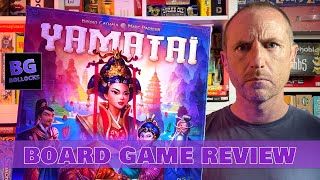
- Gorgeous components, vibrant color palette, and tactile wooden houses
- Engaging puzzle that prompts strategic balance between building and culture
- Strong visual design provides immediate appeal and atmosphere
- Early-game setup can enable opponents to progress before you act
- Some turns feel wasted or too dependent on others' choices
- Box contents can feel light for a Days of Wonder-weighted product; modular depth may vary by session
- Coastal empire-building through naval resources and cultural expansion
- Isolated island development with boats, culture tiles, and building construction
- Abstract, color-forward presentation focused on engine and scoring rather than story
- Five Tribes
- Barrage
Mechanics (from transcript analysis)
- Building placement — Capture building tiles by aligning boats and surrounding areas to score through structures
- culture tiles — Acquire culture tokens/tiles to enable alternative victory avenues and scoring strategies
- Positive Player Interaction — Acquire culture tokens/tiles to enable alternative victory avenues and scoring strategies
- Resource Management — Trade or sell boats to gain currency and influence subsequent turns
- resource management and trading — Trade or sell boats to gain currency and influence subsequent turns
- specialists — Hire specialists for action modifiers and endgame bonuses that influence scoring and turns
- Tile Placement — Place boats on the board following color and entry-point rules to claim spaces and unlock actions
- tile/board placement — Place boats on the board following color and entry-point rules to claim spaces and unlock actions
Video topics + discussion points
Quotes (from this video)
- it's a fun and engaging puzzle experience that is at the same time instantly forgettable
- it looks absolutely bloody gorgeous
- the specialist tiles are not only varied but they stand in stark contrast to the main way that you're going to get victory points
- it's not completely on the light category it's not completely on the heavy it's just a nice happy medium
- some games are best off left out of print
- the cycle of opening up opportunities for others to act before you can really capitalize can be frustrating
- you might feel like you're spinning wheels until someone else makes the move you needed
- overall it feels like a well-produced game that lacks a lasting impression after the session
References (from this video)

- Most beautiful games in existence
- Gorgeous cover and board
- Elegant tile-based gameplay
- Simple ruleset with deep strategy
- Can cause analysis paralysis but rewarding
- Abstract with no theme
- Fiddly tile placement rules
- Doesn't get as much buzz as Five Tribes
- No expansions
- Abstract with island aesthetic
- Island navigation
- Abstract
- Five Tribes
Mechanics (from transcript analysis)
- Ship Placement — Players position colored ships around islands
- Token Collection — Collect tokens around islands to meet objectives
- Turn order auction — Choose turn order token which gives ships or bonus abilities
Video topics + discussion points
Quotes (from this video)
- it's just like falling off it's just literally there are 100 better games in it
- Small Islands uh this is the one that i've been saying is a replacement for carcassonne
- way too complicated for its own good
- it is one of the most beautiful games in existence
- i still think five tribes is better than yamatai
- nations is still my preference to fruity ages in terms of playing a physical game
- really good negotiation game
- great teamwork cooperative very cool
- this is a really good solo
- the deductions are really hard it's a really tough one to do
- it's oh it's a mind bender gorgeous looking
- reef is still a really cool game
- azul is only that good at two player
- near and far still really good
- there's no reason to play that one if you have near and far
References (from this video)

- Elegant puzzle-space with many interesting decisions
- Beautiful production and thematic flavor
- Downtime and dense decision space
- Turn-order mechanics can bog down some groups
- strategic tile and order-management
- East Asian-inspired archipelago
- puzzle-driven, thematic euros
- Grand Austria Hotel
Mechanics (from transcript analysis)
- Tile placement with chain-building — Chain of boats and color-mate constraints influence scoring.
- Token collection and building placement — Gaining tokens from adjacent buildings and placing new ones for points.
- turn order selection — Players select turn order; affects future moves.
Video topics + discussion points
Quotes (from this video)
- this is one of those very simple little games where I played it and I thought I wish I'd thought of that
- Accessible everybody can understand it
- it's the best real-time cooperative game that I've played
References (from this video)
- gorgeous board and components
- simpler rules than Five Tribes
- innovative initiative bonus mechanic
- colorblind-unfriendly due to color-coded tokens
- setup and organization can be fiddly without an insert
- sailing and building palaces across islands
- islands with boats and palaces
- highly visual and tactile, deluxe components
- Five Tribes
Mechanics (from transcript analysis)
- color/power token management — own distinctive character tiles with special abilities
- initiative-based bonuses — turn order tokens grant initiative and bonuses; late turns can yield better rewards
- Tile Placement — place boats and build palaces to trigger abilities
- tile/board placement — place boats and build palaces to trigger abilities
Video topics + discussion points
Quotes (from this video)
- this is one of the best racing games out there
- this one's a keeper
- corruption mechanic you play certain cards and if they're more powerful they get you corruption
- I love games that do this
- Yamatai is severely underrated
- the board is absolutely gorgeous
- it's a color puzzle
References (from this video)

- Beautiful components and production values
- Colorful boats and temples
- Less widely known, considered forgotten by some players
- Boat chaining, color-coded tiles, and temple-building
- Ancient island-based trade and route-building in East Asia
- Strategic route planning with thematic art and components
Mechanics (from transcript analysis)
- Boat chaining / route building — Chain boats to optimize movement and resource gathering.
- Network/Route Building — Chain boats to optimize movement and resource gathering.
- Patterned scoring / set collection — Score points by achieving specific patterns and collecting resources.
- Tile Placement — Place and manage tiles and temples for scoring.
- Tile/temple placement — Place and manage tiles and temples for scoring.
Video topics + discussion points
Quotes (from this video)
- Above and Below love that game and that came out in 2015.
- the art is so gorgeous
- we love champions of midgard so much we got all the expansions
- quadropolis you've got some hand management you've got your toys and you're building up your metropolis
- it's a great gateway it's cute and fun
- Yamatai... it's a beautiful board; production values are amazing