


In Agricola, you're a farmer in a wooden shack with your spouse and little else. On a turn, you get to take only two actions, one for you and one for the spouse, from all the possibilities you'll find on a farm: collecting resources; building meadows; and so on. You might think about having kids in order to get more work accomplished, but first you need to expand your house. And what are you going to feed all the little rugrats?
Agricola is a turn-based game. There are 14 game rounds occurring in 6 stages, with a Harvest at the end of each stage (after Rounds 4, 7, 9, 11, 13, and 14).
Each player starts with two meeples that can each take an action per round. There are multiple options, and while the game progresses, you'll have more: each round a (fixed) additional option becomes available. Each action can be taken by only one player each round, so it's important to do some things with high preference.
In comparison with the family game of the predecessor, much has changed: the new action each round is fixed, and the game has been simplified by removing stone and vegetables. Similar to 'Agricola: All Creatures Big and Small', there are now buildings (replacing the major improvements) that score points for leftover resources at the end of the game.
Also, there are no building restrictions (nor player boards). And finally, there are no negative points or point limits anymore, each player simply scores for all he has achieved.
Part of the Agricola family — see Agricola for the combined view.


Caverna Board Game - 4 Player Live Playthrough

- Fine as an entry-level worker placement game
- Rapid, very quick game
- Pales in comparison to the main Agricola game
- Nothing really sets it apart
- Decisions are fairly obvious
- Not much depth
- Quickly tire on it
- Farming and animal husbandry with worker placement.
Mechanics (from transcript analysis)
- Resource Management — Collecting resources to build and breed animals.
- Worker Placement — Players place workers to collect resources, build enclosures for animals, and gain victory points.
Video topics + discussion points
Quotes (from this video)
- There's a very steep incline this month I've got 18 games I need to talk about ranging from pretty awful up to pretty spectacular
- Botswana which is another commodity speculation Style game where all you're trying to do on your turn is you're going to play a card and you're gonna pick up an animal
- it again it does what it does in a very small concise little package that is Botswana
- Next station London which is the most recent game on this this is a 2022 uh release and this is a flip and right Style game but with a Twist
- Acquire which is the oldest game on this list because this game actually goes all the way back to the 1960s and is the third of the kind of economic stocks and shares you know quantity speculation style games
- Brazil Imperial so this is another game that I've actually reviewed in depth already
- Nippon by what's your game and this is a game I've had on my shelf for a long time really happy I've got some for the table out because it is pretty damn spectacular
- The Magnificent which is a circus or Carnival themed game and the main mechanism of this game is a dice drafting which just so happens to be one of my favorite mechanisms of all time
- Brussels 1893 So This truly is a dry mishmash of mechanisms but those mechanisms do such eyes are harmonized in my opinion to a very high standard
- if you are a fan of dry Euros you like worker placement you like a bit of um you know a bit of trap climbing and loads of different ways to score points then Brussels 1893 is exceptional
References (from this video)
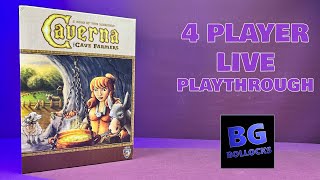
- Familiar farming combined with house building and furnishing
- New elements like rooms and buildable things
- Ability to have babies
- farming and house building
Mechanics (from transcript analysis)
- animal husbandry — Players can acquire and manage animals like sheep, cows, and dogs, with specific housing requirements like pens and stables.
- building — Players can build rooms, tunnels, and mines.
- expeditions — Players can go on expeditions using weapons to gain loot.
- Farming — Players cultivate crops like pumpkins and wheat.
- Furnishing — Players can furnish their dwellings/cabins with tiles.
- Marriage — The ability to make babies is mentioned.
- Resource Management — Players gather and manage resources such as stone, ore, food, and rubies.
- Set Collection — There are negative points for not having certain things, implying a need to collect a variety of items or animals.
- Worker Placement — Players place workers on action spaces on the main board to perform actions.
Video topics + discussion points
Quotes (from this video)
References (from this video)

- the family edition was fine
- never really took off
Mechanics (from transcript analysis)
- Streamlined — very streamlined version of Agricola
Video topics + discussion points
Quotes (from this video)
- Money, the latest updated version of Reiner Knizia's game. I have my ups and downs with this game of about collecting money in groups of it, but this is an up for me. Seven out of 10.
- King and Peasant, a very intriguing two-player game where you're playing cards and the peasants are trying to have a revolution and king's trying to quash that and it's just kind of like guess where the McGuffin is type situation, but I think it works really well. Eight out of 10.
- And Light Speed Arena, this game is so good. This is the game apps were made for. You play the game, you take a picture with the app, and then it that tells you what happens. Spectacular game. Gets better all the time. I'm increasing my initial rating of a nine to a 9.5. Fantastic game.
- That's it. Those are all the games I played one, five, 10, and 20 years ago. Thanks for watching. I'm Tom Vasel.
References (from this video)

- brings Agricola to families with approachable rules
- still offers meaningful strategic decisions
- not as deep as the full Agricola experience
- some may still find it heavy for very young players
- family-friendly adaptation
- family-focused farming with pared-down rules
- accessible, streamlined
Mechanics (from transcript analysis)
- cooperative family playment — keeps core worker placement feel while being approachable
- Cooperative Game — keeps core worker placement feel while being approachable
- simplified rules — removal of some complex cards to reduce cognitive load
Video topics + discussion points
Quotes (from this video)
- it's a smaller version ... it's just colors ... you just draw from a random deck in this game and as an experienced board gamer I like to have those options face up especially since there's no text to read on those cards it's just colors
- there are no points and I think this is really clever they got rid of all the points you're scoring in a Tickets to Ride
- it's a race to complete as many tickets as possible. Tickets that say things like 'okay you need to get from Denver over to Atlanta'
- it's King Domino with dragon eggs that you get to hatch
- the ghost player is trying to communicate which of these five cards is the correct card for us to pick and if we get it right we we proceed further in the game
- the twist is ... instead of using visuals it uses sound. This is a tambourine that comes in the game of Mysterium Kids, and the ghost has to communicate using this tambourine
- not only that but because this is such a fun component you wouldn't want to play a full game of mysterium kids with only one player as the ghost. Instead this passes around the table; players take turns being the ghost
- I think that's a really clever way to onboard someone onto a game not even just a kid but anyone onto a game to layer these pieces one step at a time
- storytime chess had helped her teach my nephew how to play chess it's a story book where you open the story book and you play a very simple version of Chess using only one type of piece as the game explains how that piece works and then it adds another piece
- it adds another piece and so it kind of lay layers on the rules for chess until you know fully how to play
- we published my little side ... a fan of the game he wanted to play it with his daughter and so he created a My Little Pony themed version of the game
- My Little Pony wasn't interested in licensing their brand for the game and so we made it my little side
- it's a much simplified version of scthe (sic) where you still have actions inside you're running around you're picking up resources off the map
References (from this video)
- Graphic design improvements
- Tile system easier than board management
- Real stepping stone to full game
- Minimal complexity reduction
- Many scoring exceptions still exist
- Confusing without text explanations
- Poor for younger children
- Didn't kill darlings effectively
- Farming
- Resource management