/pic3287905.png)































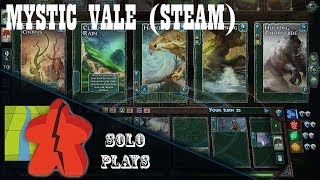

Mystic Vale Deep Dive
What the Community Thinks About Mystic Vale
Mystic Vale has earned a devoted following since its 2016 release by introducing something genuinely fresh to the deck-building space. Designer John D. Clair created a game that feels both immediately familiar and strikingly original, allowing players to physically craft cards by layering transparent upgrades into sleeves. Community reviewers consistently praise the game's clever mechanics and unique gimmick, noting that despite some rough edges in the base design, Mystic Vale has stayed in collections and conversations far longer than trends usually allow. The Essential Edition release addressed many early criticisms, making the game more accessible while preserving what made it special.
Core Mechanics That Define Mystic Vale
Card Crafting Through Transparent Sleeves
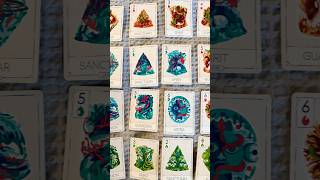
The signature innovation is deceptively simple: players acquire transparent cards and layer them into card sleeves to build increasingly powerful combinations. Unlike overlay mechanics in other games, these crafted cards retain all their properties and can be shuffled, discarded, held in hand, or played face down. This physical system makes deck crafting tactile and satisfying. Each card can hold up to three (or four in later versions) transparent upgrades, allowing for genuine combo discovery when the right cards appear at the right moment. The mechanic creates moments where players carefully plan which card they want to enhance next.
Push Your Luck and Spoilage
Mystic Vale combines risk and reward through its spoilage system. Players flip cards from their deck into a playing area, building resources and symbols for the turn. The moment a fourth spoilage symbol appears, the turn ends and most gains vanish except for a small consolation bonus. This creates natural tension: keep the strong turn brewing or stop safely? Early versions punished busting heavily, but evolved design reduces penalty severity to keep the mechanic engaging without crushing players' spirits.
The Mystic Vale Experience
Deceptively Quick and Breezy
Despite elaborate card-crafting potential, Mystic Vale moves surprisingly fast. The app adaptation famously handles all tracking automatically, but even physical play accelerates once players understand card synergies. Games run 15-20 minutes in typical play, making it accessible for casual sessions. The game doesn't drag despite its mechanical depth, thanks to streamlined turn structures and limited player interaction during opponent turns.
Gorgeous, Detailed Art Direction
Reviewers consistently highlight the game's visual presentation. The original artwork is faithful to tabletop cards, and the Essential Edition made significant quality-of-life improvements including wooden tokens and storage dividers. Interactive elements even appear in digital versions, where hovering over cards reveals subtle animations like deer raising their heads or rain effects. This attention to aesthetic detail rewards engagement without impacting gameplay, though it can slow first-time plays as players linger on beautiful card art.
What Makes Mystic Vale Stand Out
Innovative Component Use and Kinetic Design
Clair pioneered the use of card sleeves as a core game mechanism rather than mere card protection. The system remains largely untapped in board gaming, giving Mystic Vale a design space all its own. The transparent cards create stunning visual layering effects while maintaining perfect shufflability and functionality. This approach influenced later designs but Mystic Vale remains the best execution of the concept.
Multilayered Strategic Depth
While the base game offers obvious combos, experienced players discover subtle strategic paths. Some combinations require expansions to truly shine, but skilled play reveals timing decisions, card placement puzzles, and resource sequencing that reward repeated play. Newer players enjoy straightforward power scaling while veterans pursue sophisticated synergy chains, making the game work across skill levels.
Potential Drawbacks
Multiplayer Feels Like Simultaneous Solitaire
Mystic Vale functions as a multiplayer solitaire experience with minimal interaction. Players rarely directly impact opponents except by acquiring market cards before they do. Most turns resolve without meaningful choices affecting other players. Community reviewers note this honestly as a weakness, though they acknowledge that many players enjoy this style of competition where everyone optimizes their own engine rather than fighting directly.
Setup and Card Tracking Complexity
The original physical game requires substantial administrative overhead. Tracking symbols, mana generation, and victory point calculations demands attention, though the streamlined app version demonstrates how automation alleviates these burdens. The base game repetition can become noticeable without expansions, though essential releases bundle multiple expansions into a single product.
If You Enjoy Mystic Vale
Players drawn to Mystic Vale typically enjoy elegant mechanical innovation paired with satisfying resource optimization. If you love the feeling of discovering unexpected card combinations and watching your personal engine grow turn by turn, this hits that exact note. The comparison games Edge of Darkness (which uses similar ownership mechanics in shared deck-building) and For the Crown (which shared ownership concepts but without card crafting) offer similar territory. Players seeking direct competition or substantial player interaction should look elsewhere, but those wanting a gorgeous, mechanically clean optimization puzzle will find a timeless experience.
What Reviewers Are Saying
"I love this card game. It's in my top 100. The card crafting is really cool, but what I really like is how this accelerates play while maintaining the strategic depth of the tabletop experience."
— The Broken Meeple
"Mystic Vale has stuck around despite my criticisms because the game remained so unique and compelling. It's both completely traditional deck building and completely unlike any other game. My affection has only grown with it over time."
— The Cardboard Herald
"Card crafting was the first thing I did that was successful in the hobby market. I like to claim I was the first. Mystic Vale was the first game that used card sleeves in a way that was meaningful for gameplay, and that's been a really untapped design space that I continue to explore."
— BoardGameGeek Podcast