Episode 80: John D. Clair, Card Crafting & Deckbuilders
Games in This Video
4 games are featured in this video — they unlock as you watch.


Transcript
Are you ready to lead your tribe into the unknown? Resources are scarce, rivals are closing in, and only the most cunning will carve their story into the land. Welcome to Dewan, the brand new strategy game from Space Cowboys. Created by award-winning designers Yoan Levit, the author of Turing Machine, and Johannes Gupy, the author of Far Away. Dewan is a fast-paced Euro style game of territory control with a modular board, four gameplay variants, and breathtaking artwork. Every game is a unique battle for dominance. And here's your chance. Dewan will be available in exclusive pre-release at SN 2025, a full 3 months before the worldwide launch in January 2026. Be among the very first to discover it, play it, and share your experience with the community. Dewan, the story begins now.
Hello and welcome to episode 80 of the Board Game Geek Podcast, where we geek out about board games, the mechanisms behind them, and the people who create them. I'm your host, Amanda Panda. Uh, I'm excited to be here today with the amazing John D. Claire.
Hi all. We're at We're up in my office right now uh
on location where all the magic happens.
And this is this is this is one of the prototype shelves of this is largely old stuff that I've am not actively working on, but there's there's a little mix in there. So,
anyway, welcome.
Thank you so much.
Thanks for coming over. Yeah, I mean I'm very uh lucky to live close enough to you that I can come over to his house when he has his industry days or play test and
Southern California is a great great spot if you're into the tabletop industry
or just into board games in general. But
so many designers, uh
influencers, designers, um
a couple publishers.
Yeah. Uh I the only like board game dedicated artist I know of that's here is Quantai. He lives in Pasadena. He's nearby. Yeah.
Um but yeah. Yeah, it's a good mix of folks.
I mean the west coast is the west coast because Seattle
there's also and we also overlap a bunch with like digital companies. There's a lot of video game companies in LA. Um you've got EA Sport, EA um Blizzard, etc.
Yeah. Yeah. I think the opposite lower closer to
the opposite down San Diego. Yeah. San Diego,
which is,
you know, either six hours away or two hours away depending on what time you're driving.
Yeah. And I think there's a um a sleeve company that work like here. Yeah.
No, I got to look them up.
Yeah, exactly.
That's like a thing I do in game design is use card sleeves. I got
Yeah, you know that you're known for your card crafting mechanism, right?
Uh yes, among among hopefully a few other things, including space base space. Yeah. But yes, card crafting, card crafting was um the first thing I did that was successful in the hobby market, you know,
and I think
and I haven't stopped.
I know.
And you were like the first to do it though, right?
Um I like to claim that I'm the first. Um it depends on uh it depends on how you define card crafting. So as far as I know, under my definition, uh Mystic Veil was the first card crafting game. Um, but it depends on how you define it. So, a lot of people are like, "Oh, Mystic didn't do it first. Gloom did it right." And I wouldn't take anything from Gloom. Gloom Gloom's a Gloom's a solid game. Very clever game. Um, but it doesn't fit what I would consider card crafting. Okay.
Since, uh, for example, in Gloom, the cards you play on the table, you just overlay them on the table.
Yeah.
Um, so it no longer needs to function in all the ways a card can function.
Oh, that's true.
Right. It's more or less the same as putting modifi like token modifiers on a card, but it's but the art is cool. The art overlays and it does it in a cool way, but not in a way like you couldn't then shuffle that card into a deck and it would keep all the changes, right? So my definition of card crafting is like you change the card as part of course of the game or as part of the meta of the game. So in between games like in a legacy you would change it or something and then
whatever change you made to it it retains all the properties
of being a card. It can be shuffled. It can be discarded. It can be placed face down, face up, held in the hand, right? Um so uh to my knowledge with maybe a couple caveats, Mystic Veil was the first one to do it. And the caveats are I think it did it in a way that was transferable across a lot of games.
I think there was a game that came out, I don't remember the name of it, but it came out. It had stickers. Oh yeah,
this was in like the early as um I think it was like a CCG where you could put stickers on your cards and under my definition that's card crafting, right? It's changing the card in a way that then keeps it. Uh but it's not resettable.
Mhm.
Um so I what I do think Mystic Veil did was it was the first game that used card sleeves.
Yes.
In a um
to change
in an essential aspect of the game, right? Like card sleeves existed for a long time. I didn't invent card sleeves. I didn't invent transparent cards. I think Mystic Veil was just the first game that put them together um uh in a way that like was meaningful for the game play, right?
Um
Yeah.
Yeah. Like I think Canvas you do sleeve clear cards, but that's the end of it. Like you don't touch it anymore, right?
Yeah. Canv canvas wouldn't uh canvas fits the definition in that it does provide sleeves and you do uh put them on the sleeve so it does sort of retain all the properties but then it's never actually in the game used as that. So like the sleeves are sort of optional but they make it they make it work better. Yeah.
Um and again I
canvas is great. Canvas is a great use of transparent cards. That game is very well sleek design. Yeah. Love it.
What it did actually and we can talk about this when we talk about mystic lands. um canvas sort of. So, one of the things that's funky about making games with transparent cards is how do you do the art? Well,
yeah.
Right. Because um you think about it where you're just like, "Oh, just just layer it." Right? And you can have this there's a foreground background problem when you uh when you have it where you you don't like if let's say you have three like original Mystic Veil, right? You have three advancements you can add and they go and there's a and there's a single background card. Um, if the art on those cards overlap,
right, anything that's a background that gets sleeved in front of a foreground, all of a sudden it makes the art makes no sense and looks terrible.
Yeah.
Um, so canvas canvas very cleverly as its art. It's like this is a literally a game about abstract weirdo art. Like that's literally what we're doing. So like it worked perfectly thematically in the context of the game and then also like made cool art, right?
Yeah. Yeah. So what was the inspiration to create this system for Mystic Fable?
Yeah. Where did the idea of card crafting come from?
Um uh so uh at this point in my game design career, I was full-time in in a data job doing marketing mix modeling. Um I had sold uh a uh a little mass markety type of game called Rumble Pie. Um uh and I had I had licensed Downfall, but it hadn't come out yet.
Okay.
Uh to TMG. Um and uh I this doesn't work usually as from a creative perspective, but I literally was like I want to come up with something that I've never seen before. Uh because I feel like in order to in order to get a hit, uh you should a great place to start is with something that's really fresh and new. Yeah.
Um, and the brainstorming process I went through, um, that landed me on the idea of card crafting was, uh, I started by going through game components.
Okay.
Uh, and being like, okay,
this component, what is a way I've never seen it used before, right? Dice,
the box,
like a cube tower,
um, cards. Cards have been done in tons of different ways, right? And when I when in that process when I landed on card sleeves, I was like, okay, what's a way you could use card sleeves I've never seen before. And it's like, well, I've never actually seen card sleeves used before in any way that is like something beyond just protecting your cards.
Um, so immediately my brain was like, wait, that might be it. That might be the idea. I've never that that could be really cool. Uh, and I didn't actually go straight to card crafting. The first idea I had and the first prototypes I made were for a game where um players would have their own sleeves,
okay?
And the with like an insignia on them,
um and we would all be communally deck building the same deck
and when you buy cards, you put them into one of your personal sleeves and add it to that central deck. So, um you're not so much changing the card, you're merely marking it, you're identifying it as your card, and then you shuffle it into that central deck. um the prototype I made for that was coming along. It was there was clearly something good there. But in that process, I came I realized I was like, well, you could actually put multiple cards into the same sleeve. And if you and if you build the cards with transparencies or with cutouts, all of a sudden you can have a card that is um variable and can change either as course of the game or before the game. And I was like, "Oh, wait, that's really cool. Let me pursue that idea." And it's funny cuz recently I just played a game called I think it's called for the crown or for the king
which I was like wait a second this is just like that idea that I worked on and then um didn't purs didn't end up pursuing but it was a that was a great idea. So I think I just played that one which is like a group deck building. It doesn't it's not so much card crafting but you use card sleeves to identify which cards are yours. I was like wait this is great.
Yeah.
Yeah.
But also you did that in ruins from all play where
Yes. I used I used the ownership in ruins in a in a in a not core element of the game, but an important element of the game. So, the game isn't about claiming ownership of cards like it is in For the Crown.
Uh but there's an important moment in the game where you can be like, well, we made this amazing card that normally goes into this communal deck that everyone just shares. Yeah.
But this card is so good that I think I'm going to keep it, right? This is now my card for this. And you can do that twice per game, right? Uh so that idea of ownership and I did it in Edge of Darkness. So, Edge of Darkness is a shared deck building game with card crafting with card ownership.
Um,
so it's a less distilled version of the idea of like owning cards in a shared deck than For the Crown was or my original idea is was, but um uh but yes, I love that idea of a shared deck where we own different parts and card crafting or at least using sleeves gets you there in a really physically elegant, simple way.
Yeah, absolutely. Uh, and you're still playing around with components because Roland Heights was the meeples, you know.
Oh, yeah. So, I haven't I haven't come off of the idea of using components as as inspiration. I I I use the term kinetic design. Okay.
Uh, which I like I like to claim as my term that that I came up with for this definition. Um, I'd seen it before in interior design called kinetic design, but I hadn't heard in the context of game design. I've I tried to come up with a term and my definition of the term kinetic design is using the physicality of the product
um to find inspiration or uh solutions.
So um when I have a problem with a game design, I'm like how do I make um I want these things to happen like I want this piece of bureaucracy that's not fun to do to happen quickly. I want uh and I want it it to happen in this way,
but I don't want to have to make players spend a bunch of time doing it or whatever, right? Like this is a problem and it's like annoying. Is there like a physical component way to solve that? Um or and then also just like trying to find inspiration. So like um you just play tested Seventh Siders, which is a prototype um I'm working on. uh where I was like, "What what what would a die look like if it just had like what would it how would you make a sevensided die in a way that is like cool and like there's a little hook to it?"
Yeah.
Um so I'm working on a game called Sevens Siders where literally like it's it's a D6 with just a corner cut off. Yes.
So every now and then it lands like cocked on the corner.
Um yeah. So the the physicality components is still an area I go to for inspiration, cool ideas. Yeah.
And that's really cool. So if you're a designer and you're like a little bit stuck, maybe try something like that and play with your components.
Yeah.
Yeah. That's awesome.
Yeah. Stuck on a like solving an idea or being like if you have a good idea for a game, but it it's like not a full hook. It's like a it's like that's a cool idea, but it doesn't fully differentiate itself. Then you're like, how can that mesh with a really interesting component design?
Um and and not just like a gimmicky component, but like a component that matters for the game play. Um, then that can become a hook that's like, "Oh, that's cool. I've never seen that before. That looks fun." If you if you can like toyify some part of your game in a way that u matters for the gameplay, but is also like feels cool and different. Yeah, I always like that stuff.
There you go. Tips from John. By the way, you have like I I remember there was one con and then you brought all your prototypes and I was like, "How many prototypes do you have?" And you're like, "I make I'm like working on 20 of them at the same time." That was Dice West I think two or three years ago.
Yeah,
it was the cuz uh a lot of uh LA does not LA has Strategic Con was a very small which was a small con that happens three times a year.
Um and LFGcon which is the first time it happened was this year and hopefully uh the good folks running that make it into a bigger thing.
But LA does not have a big convention and it certainly hasn't for a long time,
right?
But uh when Diear West started in um Vegas, I was like okay that's like almost local. So, I was like, I'm going to drive out there and I was like, and I was thinking about like normally when I fly to a convention, I'm like, what four prototypes can I fit into my bag or three or whatever. Depends on if I bring the big ones or the little ones, right?
But I was driving to Dice Terror West and I was like, I'm just going to bring them all.
Yeah. I think I had like 12 prototypes with me.
Yeah. Yeah.
That's crazy. Like, how do you keep them all straight in your head?
Um, I I try to focus on one at a time.
Okay. Um that so like um
you just showed me like three different prototype games you're working on.
Well, so I'm working I'm working on a bunch at at the same time, which obviously doesn't mean literally at the same moment. It means over the course of a two-month period, I may work on eight different games.
Okay.
Right. But in a given like 4 day period,
I'm going to focus on a particular game. Okay.
Generally.
Okay, that makes sense. And like, you know, I'll be doing maybe some emails that communicating with a developer about some other game, but like I won't be like cranking on a prototype on like four different games at once or whatever. I'm going to like focus on content creation for a single game for like a week, a two week period, right? So like I've been cranking for the last four, three weeks on Unstoppable content, right? And but and now that content's in a good place and I'm now moving on. Um, I mean this week we're doing a lot of I'm doing a lot of Mystic Lands talking to people about Mystic Lands cuz the Kickstarter is coming up. But from a design perspective, I'm going to be probably working on um like Brave or um uh another like another game, but it's going to be mainly focused on something like that.
Oh, nice. So, now that you're completely established, people know your name. Um
I mean, let's not get let's not get beyond ourselves. I can still walk down the street and no one know
you're incognito. Literally, he's usually in a Dodgers or baseball cap.
True. Yeah. I'm in I'm in home. I'm in I'm in I'm in like home mode here.
Yeah. I'm not wearing my official work hat, the Dodgers, which I should be because the Dodgers are in the World Series right now. So,
yeah.
Let's go.
And I always like say when he doesn't have his hat on in a convention, I'm incognito. Yeah. Yeah. Because you can't find him. Um, so speaking of Mystic Lands, it is a standalone sequel to Mystic Veil. Yes. Your first card crafting game.
It's a new game.
It's a new It's a new game, but not completely new. It has a lot of
So, it's a new game. It is not compatible with Mystic Veil. It's not expansion. Um, we're not calling it a second edition. It's a It is its own game. Um, but it it is very much an evolution of Mystic Veil.
Oh, okay.
Right. So, if you've played Mystic Veil, playing Mystic Lands, you'd be like, "Oh, okay. This is very similar to Mystic Mystic Veil, but um it's different enough that ascribing a second edition to it."
Really kind of doesn't apply. There's some there's some substantial changes, right,
uh to almost every element of the game, almost everything about the game has changed in some way, some big, some small.
So, calling it a second edition probably isn't appropriate. So, we decided to keep it within the Mystic brand, uh, if you will, but not um explicit, not call it a second edition,
right? And it is coming to Kickstarter
in in this November. I don't have the exact date. I think the 10th around there somewhere in Yeah.
Yeah. Uh, I am a play tester and we just played a a semi close to finish copy of it, right?
Yes. I mean, it's got it it has a portion of the final art, a portion of it is we don't have the final art, so we have copy and pasted images on cards, but yes, we're we have a uh from a play standpoint, pretty much all the stuff is balanced and played at this point, and the art is rolling in. Uh we can talk about the art challenges for making a game like this. Um cuz we uh we did not we wanted to level up the art. This was a big ask from John Zer, the owner of AG, that he was like, uh this one we have to level up the art
way up. for this one. And we don't want to do the edge of darkness or the old mystic veil uh art style where it's just different sort of in three spots. We we do want to do the overlapping art in a way that looks cool. Um which again the foreground background problem is was a real problem that we had to solve. Uh we could talk about the way we did it. Um but because of that uh a lot of the initial art that we got were like this this isn't quite doing it because you would get a foreground piece and you're like that piece on its own is fine but like this is pairing with a card that has text here right like this cannot fit this piece of art does not work with this card even though it was designed to be for that card because uh there's a there like we need to put text there or uh this piece of art uh was just like the color scheme of it works with this with this background but not with this background. Right. So, um there's been a lot of trying to get that right. Uh and I think um they've they've now we've gotten a p in the last couple months we've sort of found the solution and started going through it which means we've got um I want to say 60% of the art done still as opposed to where we'd hope to be at this point 100%. But because of that process, the art is lagging a little bit where we want it to be, even if the game design from a balancing play testing development standpoint is pretty crisp at this point.
Yeah. Yeah. So, I got to see some of the art. It is gorgeous. Um, as a content creator, they gave us these like round Yeah. Wilds, which you still have to sign for me. Sure enough.
So like what were the challenges besides I know uh John Z was saying how like they some of the artists paired the foreground with the background but then the foreground doesn't work with other backgrounds
right we made I think when the the the art directing made the mistake of asking for an artist like hey artist can you please design us this is this is the the framing that we want uh and within this framing can you can you make a foreground and a background um and they would make a forground on a background that are very cohesive,
right? Uh but not transferable to other like so let's let's zoom out a second and talk about the way we did it with the cards cuz it's it's an interesting and hard challenge to problem to solve. So when I first started working on Mystic Lands, um I wanted to first the the the first order of business for me was there was a number of things from Mystic Veil that I was like given the chance cuz I'm getting that chance to like change things, improve things, alter things, what would I do? So one of them was um the card crafting as a gameplay experience in Mystic Lands. Um, there was a lot of subtle important ways to sleeve cards that made more sense, but until you added expansions to the game, the like really like, oh, that's a cool combo wasn't didn't pop as much. In the base game, there was like some some very obvious combos and then some subtle strategic things that if you played a lot, you're like, oh, this is better with that. Right?
I wanted those cool combos right away. And I wanted to level them up. I wanted like the the awesomest combo you can make in Mystic Veil is only 70% as good as the awesomest combo you can make in Mystic Lands, right?
Um uh I didn't at the same time I don't want, you know, from from a balancing standpoint, you don't want those amazing combos to hit all the time. You want that like a once in every five games you make the ridiculous combo, right? So you're always reaching for it. I like that.
Um so so I wanted to level that up. So the one thing I one thing I did was instead of three advancements per card, there's now four advancements per card,
right?
So every card can have up to four advancements sleeved in it to create a combo. And the original prototype, I was like, I don't know how to solve this art problem. Like I have no idea how to solve it. So we're just going to go with Dead Reckoning style where the advancements essentially in Dead Re the advancements don't have art. You just have your crew art, right? Uh, and I was like, well, we'll give art to the advancements, but we'll put all our art in the same spot. It'll just be a typical sort of Magic the Gathering square piece of art. When you buy a new advancement, it goes on top. Whatever the latest one is, the art you see, but the abilities all stack, right?
Um, uh, and from there I play tested the game. Uh, but when we got down the line, John was like, "No, I want to solve this problem." Um, and we had a bunch of meetings on it. Uh we talked we uh we actually had a few we commissioned a few artists to try to come up with something and we weren't getting we were getting ideas that were like it's like it's it's only this it's only so far along the way to cool and it's not necessarily cooler than just a really nice piece of art, right? So like we have to that you know my the original idea of just like square art and they just overlay each other. In that scenario, we can make really nice pieces of art. We don't have to do weird things to make them fit. We can just nice pieces of art. Um uh and then we were getting back these ideas that are like, yeah, they they kind of mesh, but it doesn't actually look that good in the end. It just looks mediocre. Um so finally I was like, "All right, give me give me a week or two. I am going to devote my brain to this problem." Um and the problem forever was foreground background,
right? How do you how do you make it so that like if I have a foreground, a midground, and a background, I'm not forcing the players to stuff that midground card right in between two others.
Yeah.
So that the art makes sense. Yeah.
Right. I want people to get a card, pop it in the sleeve, and not have to sweat being like, you know, if I want my art to look
sensical at all, so like the eagle flying in the sky isn't in front of the foreground tree. Yeah. Right. um uh that you don't force them to have to do this really annoying like sleeve in the right spot. Um so finally what I the solution was to actually not the card does not create a single image
right? Um because what I was going how do you get four pieces of art to make sense in one image without worrying about foreground background? Like you have to either have them in quadrants, right? Um
so I was like, okay, wait a second. It's the midground sleing that's the problem. The background is e it's easy to pop a card at the back. It's easy to pop a card at the front. And we've even like we've even cut a corner out of the foreground cards to make it extra easy to just pop the backgrounds right in the back. Um foreground background isn't so much the problem. It's the midground that's the huge problem. So the four things if I break them like the there was the quadrant idea. But what if we do foreground background for two instead? So we have a two sets of images that have very cool sort of interlacing sort of Celtic things around them, right? Um and each of them has their own foreground and background on a single card. So a single card will have two sets of foreground background images. And that ended up being the solution that works. So any given card can have up to two foregrounds and up to two backgrounds. Um and the background the order of the backgrounds doesn't matter and the order of the foregrounds doesn't matter. So whenever you buy a foreground card you just pop it at the front.
Whenever you buy a background card you pop it at the back. Um and that was the final that was the solution to making that problem. And then from there this the problem was of course okay great. Now how do we make sure that the art that we're getting uh you don't get like lighting coming from this direction on one and then lighting coming from this direction on the other.
Right? So, you have to you have to have a cohesive art that makes sense.
We went with like a stained glass look
to the art that we thought um from a lighting standpoint is going to be really sort of visceral and cool um uh and not create like weird shadow like it has to be abstract enough that if you have a like a a nighttime background with a daytime foreground, it'll clash if it's supposed to if it's like photorealistic. Yeah. Right. But if you do it in a more abstracted way, so uh then it's like, "Oh, that's just a cool piece of art." Um so we took that approach. We took a sort of stained glass approach to give it that more abstract look to it. Um yeah, interesting problem to solve. Um uh I it was it was a funny meeting we had when I find when I landed on that solution and I sort of laid it out in Adobe Illustrator on my computer and I was like, I think I did it. I think this is the solution. This looks really cool.
And then we had the meeting with the AEG guys and they're like, "Oh, yeah, that's it. We did it. We got there."
Yeah.
Um cuz up till that point I was like, "Guys, it's not going to work. We can't like the midground. It's the problem. It's just we can't do it. We have to do the overlaid art."
Um and uh John Zinger was like, "No, I'm sure we can come with a better idea."
And uh he believed in you.
We got there.
We did it. Yeah.
Um and there is a lot of artists. It's not just like one or two. I mean,
yeah. So, um, uh, we worked with a studio, a couple studios who have a bunch of artists within the studio doing it. Um, so it's going to be a whole a whole set of artists. Yeah,
that's cool. So, that was one of the differences between Mystic Veil and Mystic Lands is that there's going to be four layers,
correct?
Uh, there's new art that's going to look different. Um, is there any special abilities? Like what other changes?
Yeah, so I can I can go to the if people are familiar with Mystic Veil, I can go to some of the things that are different. the um
uh and I'll try I'll try to talk about it from a from a design perspective like why would I make these changes um change like making changes to a design just for the sake of changes isn't isn't really why you want to have good ideas to make changes that it either make the game different in a way that people appreciate or make it better, right? Mhm.
Um, so, uh, the biggest change to the game is that the veil cards have been taken out and completely replaced by a land a veil board. Um, so in mystic land, in Mystic Veil, um, there was there's two types of cards you could buy. The advancements, which is what we talked about, the it's card crafting, and then there were these other cards called veil cards. And you would spend these spirit icons. It would sort of be like a set collection of these spirit icons to match the cost and then you'd get this card and the card would just sit on the table next to you and provide endgame points or abilities or or both. Um uh that always was a bit of a a almost a missed opportunity thematically.
It's like what do we we're buying these cards and they sit on the table. They have these beautiful pieces of art and um it doesn't really feel like we're doing anything. And Mystic Veil was always a a bit of a pasted on theme game. Um and that's not to say that Mystic Lands isn't
also a it's game first, theme second, right? Game game and art first and then like theme second, right? Um uh but I was like maybe those veils is an opportunity where um it can feel like we're doing something as opposed to just like counting icons and paying costs, right? So um the new veil board has a single resource uh not these cost matching things. Um and it's and it's a pathing network. So the whole board it looks like sort of the the the airplane view of a landscape um with this pathing network. And we uh the base game of Mystic Lands will actually have four boards or I should say two double-sided boards. So, four different scenarios you can play. Uh the base board is the is just very straightforward. There's sets of veil cards that go out onto this board. And in the baseboard, you just fill in all the spots with it. In the in the other boards, there's like a theme to the board and you don't necessarily fill in all the spots. Some of them are printed on the board and then some of them like put a random board here. So even that same board will be different from game to game
at least in like 50% of it. Right.
Right.
Um and you spend spirits and you sort of travel around this network on this board. And the idea is this is this is this board represents the world or a port a part of the world. And this part of the world is not infused with magic yet. It's just it's just beautiful. It's beautiful terrain. It's land. Uh but there's no magic there. And we are the druids that are traveling around this world and infusing it with magic. There's all this potential on the board and we're coming to buy and dropping our magic or enchanting the land with magic, right?
Um
the idea of traveling is gives the game a bit more of and you can see the the flow of the board u coming out. Um I don't I don't mean to make it sound like now oh now it's a super thematic game, right? Um, it's still it's still a mechanics first game, but that was the reason for that change was like, can we can we simplify the sort of gamey mathy like icon matching thing? Simplify it and then also make it more um a little bit more thematically vibrant. Uh, and then finally introduce a bit of player interaction. So, Mystic Veil was also a virtually completely solo uh multiplayer solitary game.
Yeah. which I was fine with. I I I enjoy many multiplayer solitary games. I enjoy many highly competitive interactive games. Um they both they both have their place. Uh but Mystic Veil was um aside from like, oh, you bought the card in the market that I want it. Um there was virtually no interaction. So the Veil board is a place where if you get to a spot first, you get the first option. And if someone's already gone that way, you can choose to try to outrun them on a particular route to get to the next the good thing, or you can choose a different path or whatever, right? So there's a little bit of like, okay, my opponents are doing a thing, so I'm It's a very Euroey interaction. It's not like I'm going to do this to stop you.
Yeah.
Um, yeah. So that's the biggest change. Sorry for the long ramble on that. The um the the deck that we've also have four advancements per deck. A big part of the card crafting. So the other part that I mentioned that I want it I want it to level up the card crafting. I want it like like if a if the best combo you can make in Mystic Veil was here, I want the best combo you can make in Mystic Lands to be here, right?
Um, so there's four advances, but there's also every advance in the game has an aspect and potentially multiple. Most of them are single aspect, but some of them have multiple aspects. Um, and this is from Mystic Veil. This is sort of a carryover from the Guardian icons a bit, but those were very basic. Yeah. And this it's more like factions in um a game like uh Ascension, right? Where you got the four different types of cards, but it's card crafting, right? So, uh the factions don't mean if I get a certain faction type, it doesn't mean anything until something says it means something. But because I can layer cards under the same card, I can go make a one card like an uber uber particular faction card and then pop on a thing that's like for every of this faction aspect on this card, I can do it. you can have other cards that are like for every different faction on this card or different aspect on this card, you can do it.
Um, so that
is a big part of the reason why the the combo is and how you're like, if I have this advancement, I really want to find this other type of advancement to put with it scaled up a lot. So in Mystic in Mystic Land, in Mystic Veil, a lot of the time you're like, I buy this advancement and it's cool and I don't really care what card I put it on. It's just now in my deck. Right.
Right. Um, and in this one, almost every card you get, you're like, okay, this is Can this should this go on a new card? Should I stack it? Right. Um, we've changed one thing where advancements you buy can stay off to the side and you don't have to sleeve them right away. So, that was a big a big thing I wish we had done differently in Mystic Veil, which was
I buy this awesome advancement that combos with this really cool card I have, but this really cool card currently is in the middle of my deck. Yeah.
And I have to sleeve it right now on something in my field and I don't get to make the cool combo that those would make. So now any advancement you buy, you just hold on to until you choose to sleeve it,
right?
Um so if you're aware of that combo, you can plan for it.
Um the final big there's other changes, but I think I think we've rambled on it enough. Um the final really important thing is, and this is a design lesson I've learned with Push Your Luck Engine Builders.
I've made a few of them. Mystic Veil, I made Cubitos, I made Rolling Heights. Um, and they've progressively gotten closer to, I think, um, what is the the a general player preference in engine luck in engine building pusher luck games uh, is to make the punishment for busting actually really minimal.
Yeah.
Right. Um, so in Mystic Glands, it's very punished. You bust, you lose your turn, right?
Um, in Cubitos, you bust, you lose your turn, but you get a cool consolation. You got a pretty decent consolation prize, right? that um you know goes along in in Rolling Heights you bust you lose half your turn. Right.
Right.
So that was like okay I'd played Quacks of Quiddlinberg. Right. And I'm like okay Quack did that in a really smart way where early in the game you lose the victory points late in the game you lose the money. Right.
Um so learning from other seeing other people do it well and learning from the feedback I'd gotten on games I'd done like that. Uh, Mystic Lands approaches it from a um pushing pushing matters,
busting matters, but it's not that punishing, right?
Um, uh, so in Mystic, we've got victory points, spirits for the veilboard, and mana to buy advances. And on any turn which you don't wither or bust, um, you get to get you get everything, right? But on a turn in which you wither, you pushed and you busted, uh, you pick one of the three and you get that one and not the others, right? But your starting deck makes almost only mana. That makes a little bit of victory points and a little bit of spirits. Right. So most turns early when you bust, you're like, "Well, that's not so bad. I lose I miss out on one victory point and I still get my four mana." Right.
Right. Right.
Uh and only later in the game when you're like, "Well, I'm getting four mana. I'm or I'm getting seven mana, five spirits, and 10 victory points. I'm like, I don't want to bust right now." Um yeah, so that was a good learning that I think um makes that aspect of the game both still there in a meaningful way but uh has less of less feel bad moments for players, right?
Uh and less punishing of having bad luck.
Yeah. Yeah. And um it's I don't know. I really enjoy it. I really like Mystic Veil. So um I have to say that Mystic Land was like an instant back for me. Uh, now I have to ask like all of your games from AG have expansions to them. Do you work on your expansion at the same time or does it always come after?
Um, uh, it's it depend. I would say most of the time the expansion is part of the is is at least partially or fully designed before the base game comes out. I want to say that's true. Um, it's certainly true with Mystic Lands. We're in the in the launch of the Kickstarter, we're going to have an expansion as part of it. Um, so our art the artwork we're getting that we're getting slowly in is um inclusive of the expansion. Um, it's not always true though. Um, uh, but like yeah, Dead Reckoning as example. Yeah, we had the first saga already going
when we were working on the when we were closing out designing the base game and stuff like that. So, usually we have expansions in mind. We think about what's expandable. We mix that in early. Um, I usually actually I overdesign the content for my games.
Okay.
Like I put more content in my prototype as I'm working on it than I think should be in the base game.
Oh.
Uh, and then that gives me the opportunity to be like, what if this content makes the most sense for this amount in the base game?
Yeah. That's very much what we do with Mystic Lands. I designed 30% more cards than I thought the base game needed or should have. And then then I can basically say, well, what what of that what is the 30% that belongs as an expansion, right?
Okay. Oh, that's cool. So, you know, if Mystic Lands does well, we can definitely see an expansion.
Yeah. I mean, I mean, there's going to be one as part of the the launch and then um
even more.
Obviously, if sales weren't, it's an easy game to expand.
Yeah.
Buckle up, racers. Joyide Full Throttle is coming to Gamebound. This high octane standalone racing game is fully compatible with all previous Joyide titles and brings six brand new cars, including a hot dog car with unique abilities, expanded team modes, and over 20 tracks across two stunning new maps from the sun soaked beachfront boardwalk to the neon drench abandoned mall. With gorgeous new ink wash miniatures for every car, old and new, this is an ultimate ride for Joy Ride fans. And with awards from Shut Up and Sit Down, Tabletop Gaming Magazine, and The Dice Tower, the Joy Ride series reputation speaks for itself. Follow the campaign now and be the first off the line when it launches October 28th. Catch waves, burn rubber, go full throttle.
That's awesome. Um, so since we were talking about card crafting and stuff, so I decided let's talk about our five favorite deck building games.
Sure.
Uh, I don't have I don't
this was this was this was for me it was the five that came up to the top of my mind.
Okay.
Um without without spending a lot of time I did not scroll through Board Game Geek to remember all the ones that I've played. Yeah. So it's possible you might even mention one where I'm like, "Oh, that that belongs in my top five." My my top five it's it's the top five that I thought would be interesting to talk about uh relevant to interesting game design conversations and that I like.
Okay.
Yeah.
Yeah.
And not and not including anything I've made, of course.
Oh, okay. Well,
that would be unfair.
I mean, because you Yeah. Um my top five, it's it's basically like you said, the top five off my brain, you know. Um I love deck building as a mechanism, so I probably played a lot more than this. And are we fudging it to say baguilding counts?
Just a little bit. Just a little bit. One. One.
We get one bag. We get one bag building. Okay.
Do you want to go first?
Sure. Um, so, uh, I'll try to pick one that I'm going to guess is not on your list.
Oh.
Um, uh, yeah, I'll go with the weirdest one on my list. Uh, so it's a it's a digital game
called Hexarchy.
Yes. Never heard of it.
So it's a 4X civilization deck builder. What?
Uh uh so imagine Sidmer civ
condensed into uh a deck building civ game.
Oh, interesting.
So you get a hand of cards and you play your cards and like if you play a uh uh like an explorer card, the explorer causes you to spawn an explorer on the board,
right? Uh and then every turn you can move that guy around.
Um what it does deck building wise that I really like is the way the technologies work in the game. and it reminded me of an idea that I still want to work on. Uh which is why particularly I want to mention it um because I love this idea and I I want to pursue it at some point. Um the way the techs work in the game uh whenever you so a tech you have to play it, you have to pay some resources for it and then that card eliminates itself from your deck.
But if you if you research say writing, right, it will spawn three new cards that you can then choose one to add to your deck. Actually, the way it works is it spawns three new cards. you choose one to add to your current hand and the other two go to your discard pile.
Oh.
So every but you don't have to research that tech. So like if you're like I don't uh you know I want to go heavy into something you can go down that path but if you research all the text now you bloat your deck with a bunch of stuff. Right.
Right. Right.
Um so I loved how that I love how the like the the texts cause the deck building. So it's like it's all self-contained deck building within that deck.
I really like that. And I've I've had an idea for a Civ game that I wanted to make for a while where like it would uh the cards it would be card crafting because I love cards with sleeves, but it's not card crafting. It's card uncrafting. So like a card would be in a sleeve and it's got
four cards in it,
but only the top card matters. Okay.
Right. But when you jump to the next age or when you like when you play it, like if it was a tech card, you would play it and it would become the next card then down the line.
Right. But and and your deck has maybe you go through age one through five and your deck as you play the game goes through age one through five but there's no ex there's no other cards coming into the deck. The deck itself is just upgrading
progressing through the levels.
Yeah. Interesting. That is interesting.
There's something to that.
Yeah, absolutely. Um and do you know who is the publisher of that game?
Uh it's a studio. They are Main Tank Software.
And the name again?
Hexarchy.
Hexarchy.
Yes. Okay.
Like anarchy, but hex at the front
and there's a lot of hex's in the game.
Yeah. I mean, it's a hex board.
Okay. I was about to say I was like, are you moving hex's?
Yeah. Yeah. Again, like imagine a civ civ meers civilization hex board.
Okay.
Right. Um but all of your actions are driven by cards in your deck that works like a deck builder.
Okay. Interesting. Um
so that was my weird one. That's the first. The rest are all board games. I have a That's a board game, too. But yeah, probably one.
That is clearly a digital game inspired by It's a digital game inspired by tabletop games.
Okay. Wow. You get two kind of fudging then.
So, my first one is the one that I actually probably played the first. Like my first deck builder was Star Realms and I really love Star Realms and Hero Realms um from it is Wise Wizard Games um designed by Robert Doyri and Darwin Castell.
Um but yeah, so I love Star. It's a twoplayer deck builder. Really quick Star Realms. I mean, it's one that me and my friend, we know how to play, so we can just really quickly pop it out. It's just a little deck of cards, but now there's so many expansions that you can mix and match. Um, there's digital ones that I love having on my phone. You know, it's a pass and play. So, this one's really easy. You're just trying to knock the other person out as fast as possible, but there is bases that could help you.
It's a two-player only game.
Well, for Star Realms, yes. Uh, Hero Realms, you can play up to four co-op
and you can have co-op or you can have competitive. Yeah. Um,
and Hero Realms is like uh it's a it's a it's a later iteration of it, but it's very much like Star Realms and Fantasy Land.
Yeah.
Yeah. Yeah. Or like Mystic Veil and Mystic Lands. It's it's a you know, like once you play one, you can
It'll help It'll help learn.
Yeah. Learn that.
I think those two are even more similar, though.
Yeah, they are. They're more similar. There's less differences in those two. I think there's just because of the characters that you have. That's the biggest difference.
Right. That's right. In Hero Realms, you start with like a hero that's very unique. I love that addition. That was really That was a really good idea.
And of course
that sort of inspired some of the doing something very similar in Unstoppable.
Okay. Yeah, that's cool. Um and of course Maddie Hutchinson was in on the box. So yeah, but yeah, Star Realms is just such an easy two-player
and that I mean I don't know I don't know the design story of that game, but it was very I
I suspect I could be wrong that it was very much inspired an iteration of like Ascension, right? Has a lot of Ascension feels to it, but it's like if you took Ascension and you're like, how do we make Ascension as much like a Magic the Gathering game as possible? And it was very well done.
Yes. Yes.
Very good iteration on it. Yeah.
Yeah. So that's Star Realms/Hero Realms from Thunderworks. Oh, wait. Sorry. From Wise Wizard King
because they changed their name. So like it's not that. Yeah, it's Wise Wizard.
Um, so that's a good lead into my next one cuz this one I think I suspect also is a inspiration and an iteration on that. Um, my favorite in the genre of uh deck building fighting games is Shards of Infinity. It's on my list.
Uh which which is uh it's Justin Gary and Gary
Arant. Sorry if I pronouncing your name wrong. Um uh and Justin designed Ascension which again I suspect was a big piece of the inspiration for Star Realms. I don't know that though. Um and then I suspect that Star Realms was an inspiration for Shards of Infinity. Again, maybe that's not the path, but from an outsider perspective, it it feels like it.
Um, and then and then Shards of Infinity was very much an inspiration and informed my my Misborn game.
Um, but man, Shards of Infinity, it's so good.
Yes.
Um, and I'll just talk about one thing about it that I think is so that I love, and that's the mastery system.
Sorry, I'm going to talk about two. I'm going to cheat and say two talk about two parts of it because I think they're two parts are great. The mastery system is so good. It's like card crafting without card crafting, right? Um it's like here's your card comes with two abilities, but you don't get one until you level up this thing and then the card levels up. I love it. It's so well done.
Uh and then the other really great innovation that that it did
um
which then the Star Wars deck building iterated on again, right, in a really good way. But the way what it the the mercenary system in Shards Infinity, so some a lot of cards normally you buy, it goes in your deck. Some of them are mercenary cards, like half of them, I want to say. Um, and when you buy it, you can put it in your deck like normal or you can immediately eliminate it from the game but do its power this turn. Yeah.
And it got a long way of the way to solving um the stale market problem.
Oh yeah, that's true.
Right. So what happens in a lot of these deck builders is like I don't want to add any more cards to my deck, but I have all this money
and like none of these cards will make my deck better. every individual one of them is an ability I would like to do, but I don't want that card in my deck so that I draw that instead of the nice deck I've already built.
And you end up with this sort of stale market, right? But that was like, well, half of these cards you can just buy and chuck right away. It
was great. Yeah.
Um
and uh that inspired me to do something similar though I I I feel like I iterated on it more uh in Misborn
where uh players will reach a ability threat like a timeline ability level where ability will turn on about Midame
that one card per turn they can buy and chuck and do it right away right
um and I was like well what it should just apply to every card but at least once a turn so the market's always moving always something to do with your money. Uh, but that that mercenary idea, I was like, "Ah, that's such a just such an elegant solution to the stale market problem."
Yeah. So, that was your number two. I'm going to just say that was also my number two because it was definitely on my list. It's it's definitely one I absolutely love. Um, I know there's a card that people say is OP, but it's really hard to do, but it's a instant win card. Like, if you get to
It's the shard. I mean, the game is called Shards of Infinity, and in your deck there is a infinity shard.
Yeah.
Yeah, that's true. And if you get to a certain level, right, mastery mastery, it does infinite damage.
Yeah. You just automatically
It's just It's a you win card.
Yeah. Yeah. Yeah. Which is kind of funny, which some people love and some people. Yeah. Do you get to win with it? I mean,
oh man. I was at I was at uh Shu's place.
Yeah.
And I was literally going to do it on my turn. And then they were all like, "He's going to do it." And they all three people in a row were like, "Kill kill." uh which is my least favorite part about that game is the attack the person who's winning.
So I did that different in Misborn also.
Okay.
Uh I used a targeting system that inspired from King of Tokyo to be like
Interesting.
Yeah. You can only attack the person with the target.
Uh but whenever they're attacked, they can give it to somebody else.
And if you have the target on your turn, like a turn's got a round and you got attacked but you're like I'm holding on to it on your turn your damage hits everybody.
Oh, that's really cool.
I love that. Like when I I was like, "How do you solve this problem?" And I was like, "All right, King of Tokyo already solved that problem,
right? Um, and we do it similar, not quite exactly the same, but um, yes, I love you win cards in games. I think they're fun."
And she is from Going Analog, one of another local influencer, uh, in the LA area. So, give us your number three.
Oh, my number three.
Yeah.
Um,
we both agree Shards of Infinity from Ultra Pro is a very good game.
Uh, I I don't know if it's from Ultra Pro anymore. or it used to be. It might still be. Uh but um I think I think Justin's company Stone Blade Entertainment got the rights back. So I think they're the publisher now.
So Shards of Infinity from Stone Blade Entertainment.
I think that's right.
Yeah.
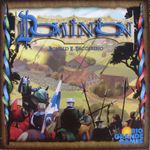
Um okay. Uh I will talk about an obvious one. Um Dominion. So uh Dominion was um I think appropriately gets credit for being the first deck builder. Mhm.
Um there will be people out there who will say that um Starcraft from Fantasy Flight was actually the first deck building game.
Interesting.
Uh because you do deck build in that game,
but it's not a deck building game. Okay.
It's very much like an area control game with this
little with this element of deck building you do. Um, Dominion is the first deck building game that said we should um, and I have no idea if Donald Varina was in had ever even played it. Um, I suspect he just came up with it on his own. Um, the idea of like you have a deck and as you play the game, your deck gets better iteratively. Um, and it was I think so I wrote in my um I did a design diary for Unstoppable and I had a whole little like sidebar conversation about this cuz I think it's interesting. Um cuz people have asked me like hey card crafting like that's that's a cool uh thing that you would see in more games. And then it's like why haven't we seen that in more games? And I think we are we actually are starting to see elements or full-on card crafting in more games but nothing like Dominion.
Dominion came out and all of a sudden there was a bunch of deck building games that followed it immediately. And
I think it's because that system is it's such a
it's like a cheat code for game design.
Yeah.
Um if you if you're making a deck building game and you do it in the vein of Dominion or Ascension, right, which is like you start with 10 cards, you draw five, you play them, they give you money, they get you buy another card. When your deck cycles, you flip it. Like if that's your starting point, your game is already good. Yeah.
Right. Like Donald Varino designed a system to make everyone who wants to make a game in using that system to already have a good game.
Yeah.
Right. And then from there it's does your game differentiate itself? Is it is it better than good etc. Right. Uh but it's like a cheat code. If you start with that you already have a good game.
Right. And so and it's and it's just so because it's just so simple and fun and great. Right.
Um so
tons of props to Dominion for being so original.
Yeah. But then it's also like really good. Yeah. It's didn't just do something new. It did something new, but also in a really excellent um way. And that is kept and with expansions just has kept it up, right?
Um uh I'm nowhere tired of playing Dominion. It's great.
I mean, I enjoy it. It's not the first one I would go to. like I would rather play Mystic Veil, but um it's also one of those games where you like there's h a point where you know you need to start what I call greening or what people call greening which is just go to the point cards. You're not deck building anymore. You're just going for the point cards in order to end the game fast and then have the most points which is really interesting. And like the the thing I don't like is the art. Like the Dominion art is kind of
meh. Um,
certainly first edition was lacking,
I would say.
But I love like each of the expansions has a different feel to it. So like if you want something more kind of combative, you can get a certain deck.
You put attack cards in or you can not, you know.
Right. Exactly. So it kind of makes it where you can customize it to how you like to play the game, which is very nice. And they have a good web uh browser based
an exceptionally good digital digital
digital version. Yeah, absolutely. Um, do you know who publishes it now?
I think it's so Rio Grande.
Rio Grande. Okay. Yeah, Rio Grande. So, Dominion from Rio Grande. Um, my next one, I might as well just say it. It's Mystic Veil. I mean, for me in my brain, Mystic Veil and Shards of Infinity.
Oh, wait. Is it Mystic Veil is it Mystic Lands?
Oh, see that's hard because I like I play tested it and then I just today played
the final. Yeah, the final
the pro well the prototype final. It's still exactly
it's still got semi blurry cards shrunken. The text is too small.
Yeah. Some of the icons are too small.
Way too small.
And then like I forgot some of the rules because you know it's like
it's been a year since you played it.
Yeah. Exactly. So I I think with multiple plays I will like Mystic Lands better. Um and I know that
there's also Mystic Veil has a ton of content which Mystic Lands does not yet have.
Yeah. Exactly. So, I think for this one, I'll have to say Mystic Veil because Mystic Lands is not out yet. Uh, and it's definitely I I got into the same time as Shards of Infinity and it's been one of those like I I swap between the two and th those two are always connected in my mind.
That's funny.
So, yeah.
So, sometimes I'll say one versus the other even though they're totally different.
They're very different. They're they're in I would they would I think they're both correctly uh put into the deck builder category, but they're not very similar.
No, they're not similar. Yeah, but in my mind I'll switch them because Yeah. And that is Mystic Lands from AG designed by Mr. John Declair.
Mystic Veil Mystic.
Oh my gosh. Okay, let me
Mystic Lands is the evolution of that one.
There you go.
Which uh I prefer.
Yeah. Uh I think I would have designed it would have been a failure in design if I had made if id iterated on one of my designs only to make a game that I liked less.
Okay.
Um uh but
yeah so that's Mystic Veil from Ag designed by Mr. John Declair. Yeah.
No. Well, you now you don't go by John Declair, you go by John Cla. But in your all of your games is John D for your middle name.
Yeah. I mean I mean so uh you know the first game to have my name on the cover was Mystic Veil. Okay. Yeah.
And AG's like, you know, how do you want your name on here? And I was like, well, I guess we put the middle initial, right? That's what like authors do.
George RR Martin, you know, etc. Um, like, yeah, put the initial. Uh, and you know, and here we are. Yeah.
Do you can you
I introduced myself to people as John Declair, though. Actually, in the board game world, I've kind of started doing that because that's how people know me,
right? But you know uh as a normal
in a in a normal context. No.
Yeah. Can you tell us what D stands for?
Daniel.
Daniel. John Daniel Cla.
And I'm actually the fourth. John Daniel Cla the fourth.
I had no idea.
Oh, fun fact about John Claire.
U. Okay. So, that was our number three. What's your number four?
Uh, all right. What do I want to pull off the list? Um, I'm going to guess we have an overlap on this one.
Um,
and I'm going to say Dune and Dune and Period. M
nom you're not Dune.
Well I like Dune or Dune Imperium. Uh but it's not on my list.
Fair enough. Fair enough.
Um so uh this is the first on my Well, that's not true. Hexarchy has a board. Um uh Dune Imperium has a board. Uh and it is so it's not a it's not a pure deck builder. It has a deck builder that drives a board game. Mhm.
Um, and uh I mean it uh it does the worker placement board game way thing in a it's just like it all fits so cohesively together. Um it's one of my favorite high interaction games.
Yeah.
Um it it combos that sort of like you're doing your own thing in a way that's really satisfying while you really care about what other people are doing. Yeah.
Uh in a way that's ex excellent. Like you can't it's you can't really build an epic engine, but you can build a you can build that in a way that really matters, right?
Um excellent game. Absolutely excellent game.
I agree. Um I think it's the multi-use cards
that always gets me because I want to keep all the cards.
You're like, I want that power and that power.
Yeah. Yeah. Yeah. And I don't know which one to use out of the cards. So multi-use cards always kind of break my brain a little bit. But that is uh Dune Dune Imperium.
Dune Imperium. I almost won the World Series of Board Games Dune Imperium Championship and I fumbled it in the championship.
Oh no. This year.
Last year.
Last year. Yeah,
it was a great game.
Yeah, absolutely. Uh my number four is going to be Clink or Clank in Space or uh Clay Catacombs.
Same designer.
Same designer. The designer is Paul Denin from Direwolf Games. I mean, I I love all of them. My first love was Clank in Space. Um I like Base Clank was good, but I really liked Clank in Space with the modular board. Um and then I started playing more of the different boards from Clank, you know, the expansions and those are really really good because it kind of changes things. Um and h it's such a good like system. It's such a good game. It's kind of thematic. Clank Catacombs now takes that modular board and really changes it up because you are actually exploring the catacombs and when you go off the board, you're taking a tile and choosing where it goes. And the crazy thing is
I think catacombs is the one to get if you have if you don't have if you're not into clank yet. I think catacombs is the one to get.
Yeah. I mean, although sometimes people really hate it when you get the cars that make you rotate everybody around because you're rotating the little, you know, boards that you're on and so now you're not facing the right way, you know, to get what you need and it's just so irritating, but at the same time it's like really fun. But yeah, it is like one of those really great games, great systems. Um, lots of good expansions that really does upgrade or change the game for how you want to do it. And then of course they have the legacy um Clank Acquisitions I do believe um which I have one that's in
I've heard it's great. I've not played it.
I haven't finished one. I started two during the pandemic and then
you know the world shut down and now Yeah. But yeah, it's it's going to I hope to get it back at to the table somewhat. Clank is great.
Yeah, Clank is a great one. That is Clank
again. My list my list is not my favorite of all time. It's the ones that came to mind and Clank is Clank I I I mean I'd have to I'd have to do a full assessment but Clank Clank would certainly be in consideration. Yeah.
Yeah. So that is uh Clank from Darwolf Digital and your last one.
So this is my cheat. I'm going to I'm going to I'm I got two because one's a bag builder.
Uh very briefly on the bag builder war chest.
My favorite two-player game of all time. Uh, if you don't count Magic the Gathering,
um, MA Magic is the Jones category because it's like a CCG. Right. Right. And Magic would be my favorite two-player game ever. Um, uh, but War Chest, favorite two-player board game of all time. Uh, absolutely, uh, fantastically elegant, nice design. The designers did an amazing job. Uh, Trevor Benjamin and David Thompson, excellent game design. And then props to Mark Wooten at AEG, uh, who loves that game and has done a lot of great development on it. Um, okay. Then the the the actual card game deck builder that I've got, the last one on my list is Eminent Domain by Seth Jaffy.
Okay.
Um, uh, I I mentioned that one because I just think it's an interesting uh, uh, interestingly different deck builder. Um, it does deck building in a very different way than everything else we've talked about. Um, you don't buy your cards. Uh, you uh you pick a action to do on your turn and you gain a card of that action type. Yeah.
So, like if you um uh if you want to settle a planet, if you want to colonize a planet uh in the game, it's a it's a space opera type of game. Um, if you want to colonize a planet, you take a colonized card, play all other colonized cards you have from your hand, and that tells you your power of your coloniz action, and everyone else at the table can then follow you and also do it. Or they can they can uh p they can pass. There's a specific word for it. Uh, pass and just draw a card. Yeah.
Which improves their chances later. So the
and then because you've colonized, I think Seth Jaffy called it deck learning. Okay. was the term he used it. Like your deck evolves by the cho by the action choices you make, not by the buying choices you make.
So like what you want to do on your turn is the thing that you become better at doing.
Uh but you're not going to win the game if you're good at one thing. So you have to be careful that your deck doesn't overspecialize itself.
Yeah. Anyway,
awesome.
That game's pretty cool. I like that game a lot.
Okay, good. So I'm going to do something similar. My last game will be uh Losenza Arnack, which is like Dune Imperium, right?
Well, it's not that much like it, but in in the sense that it's a a deck builder that drives a board game.
Yeah. Yes.
And deck building is not the main thing. Um it is a little you'll have a little bit, but I really love Lost Run of Arnac. I got to play test the new expansion that already came out, the new board, and it's really fun. Um so yeah, I mean, uh Elwin and Min did such a great job. They're really nice people, too. And this is uh lost runes of our deck from CGE. So it is uh you're basically a tiny bit of deck building to help you get better actions, worker placement mainly. You're going to go out, explore for more worker placement spots, fight monsters, go up the temple track to get most points. And yeah, I really enjoy it. It's very interesting mix of mechanisms.
It's a It's a very nice design. Yeah. Yeah. It's a little light on the deck building for me. The first time I played it, I was like, I'm going to do the deck building strategy and it it didn't work. The deck building is very much supplemental to what you're doing. Like it matter your choices there matter, but there isn't, as far as I'm aware from my experience and what other people have said, there isn't a I'm just going to be really good at deck building path to victory in the game, which for me was like I wanted that to be there, but it is a very nicely uh nicely made game.
Yeah. So that's why it's supplemented though because I have a baguer as well. So, uh, Lost Moons of Varnax from CGE is my number five, but supplemented by Orleans, which is an awesome deck like bag builder. Um, very much feels like a deck builder. Um, and you can actually, you know, it you're pulling out workers to put on different spots on your board to actually do actions. the kind of worker placement a little bit and then you're trying to go down different uh level or I say go down the map to explore different things to get different things to go and then you know turn it in for this or that and get points and stuff and it there is now expansions that you know make it more you know confrontational or you know a little bit nicer and stuff. So, uh, and I'm glad that, uh, let's see, it was Capstone. Capstone Games picked it up from because it was a team TMG.
Was it I don't think it was TMG.
Yeah, it was
really originally.
Originally, it was Team MG. So, we're going to go, but that was uh, yeah,
I played it once way back when it came out and I remember liking it, but it was a long time ago.
I really need to get the expansion.
It's like a classic at this point.
I know. And I'm so glad Capstone, you know, picked it up. But yeah, thank you, John. Thanks for thanks for coming over.
Yes, this has been so much fun feeding us with pizza and letting us play test all your games. Um, how how can people find you?
Uh, I am unfindable. Uh, if you're not in LA, tough luck. No. Um, uh, I I have I actually I actually have nyx social life, social media out of my life. So, it's um uh I I I don't post I don't make stuff. If you follow me on Facebook, you'll occasionally uh or you'll occasionally see me post something. Um, so, uh, yeah, that's my answer. I am I'm mostly unfindable now.
Do you answer questions on BG?
Uh, I do I do subscribe to all of my own games and when I see a question pop up and I have the time to answer it and it doesn't look like the type of question that um, someone else could easily answer, I will jump on. I'm usually most active on there right after a game comes out and there's a lot of questions. Yeah, I'll be I'll try to be really active for like a month after the game comes out and on top of it and then there's like there's only so much I can actually try to keep up with. So,
yeah.
Um but yeah, I try to pay attention there.
Yeah. And I've had him on my Twitch uh stream and that was really fun. Uh so, and then you might see him walking around at a convention or something. Yeah, the guy with the Well, I probably won't be the only one, but I when I'm not incognito, my work hat is a Dodger hat.
So, look for the Dodgers.
That's right. Go Dodgers.
You've been listening to the Boardgame Geek podcast, produced and edited by Amanda Wong. Be sure to visit us on the web at boardgamegeeek.com. You can also find us on YouTube, X, Blue Sky, Instagram, Facebook, and Tik Tok under Boardamegeeek. At Twitch, we are under Boardamegeeek TV. And you can reach us by email via podcastamegeek.com. Thanks for listening and happy gaming.