/pic5673404.jpg)

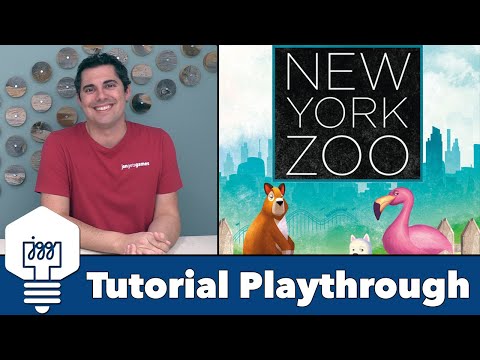




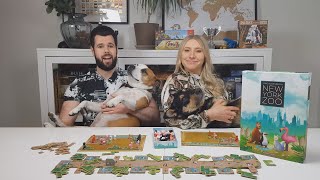



























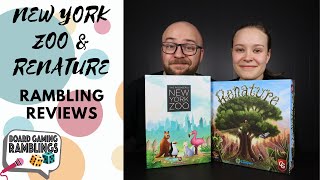






New York Zoo Deep Dive
What the Community Thinks About New York Zoo
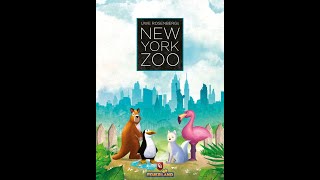
New York Zoo has struck a chord with board gaming communities for different reasons depending on player experience and preference. Experienced gamers appreciate the polyomino puzzle challenge and the breeding mechanic's strategic depth, while families value its accessibility and engaging theme. The game generates consistent discussion about its balance, pacing, and how it compares to Uwe Rosenberg's prolific catalog of tile-laying designs. Reviewers frequently highlight the tension between pursuing large enclosures and maintaining animal breeding synergies, along with the satisfying rush of filling a completed board.
Core Mechanics That Define New York Zoo
Polyomino Tile Placement and Zoo Building
At its heart, New York Zoo is a polyomino puzzle where players race to fill their personal zoo boards with irregular shaped enclosure tiles. Each turn, players move an elephant token around a shared circular rondelle board and select either an enclosure tile to place or animals to collect. The polyomino tiles vary dramatically in size and shape, from sprawling five-square enclosures to efficient single-square sections. Reviewers praise the spatial reasoning required, as fitting awkward shapes into remaining board gaps becomes increasingly challenging. The game elegantly handles the core tension: larger tiles offer greater coverage but demand more animals to fill them, while smaller tiles fill faster and unlock attractions sooner. This creates genuine strategic decisions about whether to pursue early-game momentum with quick wins or commit to building a grand, consolidated zoo.
Animal Breeding Engine and Set Collection
The breeding mechanic layers elegantly over the tile placement, creating a secondary economic system. When the elephant crosses designated breeding spots on the rondelle, every player with at least two animals of the matching species in a single enclosure may breed, adding one more animal automatically. Breeding becomes the primary way enclosures fill up, and players must carefully manage which animals they collect and how they arrange them to capitalize on breeding cycles. Reviewers note that planning around breeding creates engaging micro-decisions each turn: should I grab this meerkat now to breed before the next meerkat breeding, or prioritize a tile that fits better spatially? The mechanic rewards efficient animal stewardship while remaining accessible to younger players who simply enjoy watching their animals multiply.
The New York Zoo Experience
Solitary Puzzle Satisfaction with Relaxed Pacing
Despite competitive elements, New York Zoo delivers a primarily solitary puzzle experience. Each player optimizes their own board independently while others' actions provide distant ripples through shared tile availability and breeding timings. The game creates a calm, meditative atmosphere where players can lose themselves in spatial problem-solving, similar to video game puzzle experiences. Unlike heavily interactive games, there is minimal direct conflict, allowing players to play at a comfortable pace without pressure from opponents' aggressive tactics. Reviewers highlight this relaxed tone as particularly valuable for family gaming, where younger players don't feel threatened by opponent aggression and can focus on the satisfying act of filling their board methodically.
Gorgeous Art and Tactile Components
The visual presentation immediately captivates observers. Polyomino tiles are rendered with clarity and color-coding, the animal meeples are intricately sculpted and delightful to handle, and the zoo boards themselves remain attractive despite functional design. The art direction emphasizes the zoo theme without becoming cartoonish, striking balance for both family and hobbyist audiences. However, reviewers note a significant drawback: the components are genuinely fiddly. Placing tiny meeples into crowded enclosures frequently results in knockovers, and managing dozens of animal tokens amid dozens of board spaces becomes tedious. One reviewer with large hands found the experience particularly frustrating, while families accommodated the fumbling with humor and patience. The component fiddliness doesn't ruin the experience but creates friction that more experienced gamers notice.
What Makes New York Zoo Stand Out
Unique Rondelle Tile Availability System
The way tiles emerge from the rondelle creates novel pacing compared to other polyomino games. The shared board holds multiple tiles stacked at different depths, with larger tiles automatically appearing first due to deliberate stack ordering. As the elephant marker orbits the track, the available tiles rotate into and out of reach based on positioning and movement choices. This creates a dynamic market that evolves naturally rather than through random draw or pre-set layouts. Reviewers appreciate how the system ensures large tiles appear early when players' boards are empty and benefit most from coverage, while smaller tiles emerge later when fine-tuning gaps becomes critical. The system requires genuine strategic foresight about which tiles will arrive when, rewarding players who think ahead.
Variable Player Counts and Thoughtful Scaling
The game scales exceptionally well from two to five players, with deliberate mechanical adjustments for two and three player games. In larger player counts, breeding happens only for the specific animal that triggered the breeding. But in two to three player games, players gain a bonus breed action, allowing them to breed a different animal of their choice that same turn. This creates richer animal management in smaller groups while maintaining tighter decision-making in larger games where the board shifts faster between turns. Reviewers note this attention to scaling is uncommon and valuable, as many polyomino games feel forced at extreme player counts. The design acknowledges that with fewer players taking turns, you need more agency per turn to maintain engagement.
Potential Drawbacks
Pacing and Mid-Game Slowness
Several reviewers noted an unusual pacing curve where strong early momentum eventually gives way to deliberate late-game play. Because large tiles appear first when the board is spacious, players burst from the starting line. But as boards fill and gaps shrink, available tiles become increasingly incompatible with remaining spaces, and decisions become more agonizing. The rondelle movement options narrow as empty spaces disappear, further reducing player agency. Reviewers describe a deflating sensation where the game's energy front-loads then gradually dissipates. While others argue this mirrors natural Tetris-like progression, the consensus suggests the pacing could feel drawn out by mid-game, particularly in longer player-count games where turns between your actions extend waiting periods.
Limited Thematic Integration and Replayability Questions
For serious hobbyists, the theme feels grafted on rather than organically woven. The animals breed and create variety, but nothing mechanically exploits the zoo setting—swapping animals for abstract shapes would function identically. Some reviewers sensed Rosenberg prioritized the polyomino puzzle over thematic richness, and while that yields an excellent puzzle, it diminishes the sense of building something meaningful. Additionally, the core puzzle loop—place tiles, breed animals, fill board—lacks hidden information or arc-defining decisions that make repeat plays feel fresh. With the same tile set and breeding rules, experienced players quickly recognize optimal strategies, and early games feel familiar to later ones. Reviewers hypothesized that once you internalize the animal synergies and board-filling patterns, replay appeal may fade for dedicated gamers.
If You Enjoy New York Zoo
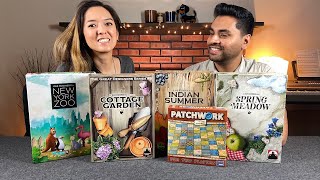
Fans of New York Zoo should explore Patchwork, Rosenberg's elegant two-player classic, which removes the animal layer but refines the core polyomino experience further. Agricola and Feast for Odin showcase Rosenberg's mastery of worker placement and resource management in more complex settings, ideal for those wanting deeper decision trees. For pure polyomino satisfaction, Cottage Garden and Spring Meadow offer alternative puzzle frameworks. Families specifically seeking animal themes with similar accessibility should consider Tiny Epic Dinosaurs, which captures that same park-building joy with different mechanics. Those drawn to the relaxed, meditative puzzle experience regardless of theme might enjoy Cascadia, a newer tile-laying game with nature themes and similar solitary optimization.
What Reviewers Are Saying
"It has that animal breeding mechanism where you have at least two, they're going to duplicate and fill up these tiles, and I think that's quite a cool mechanism, particularly because you have that conundrum of wanting to get the big tiles down because they're going to fill up a lot more ground and cover up your zoo quicker, but the smaller tiles are good because they go hand in hand better with the animals."
— Chairman of the Board
"This game is a polyomino puzzle game from Uwe Rosenberg where players build out a zoo and on top of the puzzle nature of trying to put these pieces together so they fit and fill in your area, you are also trying to manage and breed your animal population. I really enjoyed that metagame layered on top of the polyomino placement."
— Getting Games
"As a family game, I absolutely love this. It's amazing to have a game that is challenging and interesting and engaging for me, that I can have fun with it, but also my kids can really get on board and feel like they have a strategy that they can launch on to. My six-year-old understands the entire game and can strategize through it."
— Board Game Dad