




Ninja Camp Deep Dive
What the Community Thinks About Ninja Camp
Ninja Camp, designed by Adam E. Dalton and published by Action Phase Games as part of its Small Box/Big Fun line, draws reviewers who agree on the basics. It is a short, tactical card game that avoids luck. Watch it Played, hosted by Pep McDonald, covers the two to four player rules in a single walkthrough and frames the game as a contest of speed and skill for the title of Sensei Saru's personal apprentice. Board to Death TV, where Nick from Action Phase previewed the game at Gen Con, makes the strongest case for it. They call it a quick game that is not one of those quick games where you are at the whim of everybody or rolling dice.
The Dice Tower's Tom Vassel is the most restrained of the three. In a roundup of lesser-known titles from BoardGameGeek, they give Ninja Camp only a brief mention and calls it a cute little game that is worth checking out. They do not describe any frustration with it. The three channels differ mainly in depth. Watch it Played and Board to Death TV spend most of their time on how the cards move the ninjas, while The Dice Tower offers a recommendation without much analysis.
Core Mechanics That Define Ninja Camp
Skill Card Movement
Movement is the center of the game, and every turn revolves around it. Players pick a skill card from their hand, place it in a personal discard pile, and must be able to resolve its effect fully. Watch it Played lists the skills that appear in the training ground. Evade moves a ninja three spaces in any direction, Stealth moves two spaces and claims the first card stepped onto, Dodge can move diagonally, Sprint slides in a straight line until it meets an edge, a wall, or another ninja, and Ambush pushes an opponent one space as long as that space is legal. Leap jumps over adjacent empty spaces, and Shadow copies the last skill another player used.
The card a ninja leaves behind becomes a central decision. After the move, the player adds that card to hand, which opens a gap in the grid that later moves cannot cross. Nick describes the tension this creates: you do not want to leave behind the cards that help your opponent, and you want to reach the cards that benefit you most while planning how your pawns will move later. Traps, which cannot be played, clog the hand and subtract from the final score.
Clan Abilities
Each player also has a clan card with a single special ability. Instead of playing a skill, a player may use the clan ability and flip the card over, and it can be used only once per game. Watch it Played uses the penguin as its example, where the player returns a skill card from the discard pile to hand and plays it immediately. This gives each clan a one-time swing that is best saved for the moment it matters most. Turns end with the claim of a card, and a player who cannot play a skill or clan ability must pass, which keeps the game moving toward its end.
The Ninja Camp Experience
Interactive/Dynamic
Reviewers describe a game where the board changes with each move. Because a claimed card leaves a gap, and because ninjas block one another, the grid never stays the same for long. Nick points to the planning this requires: every time you have multiple choices, you are weighing where your pawns can go and where they might end up. The feeling is less about waiting for a turn and more about reacting to what others have just done, which gives the game a steady, tactical rhythm.
Confrontational
Ninja Camp puts players in direct contact on the grid. Tom Vassel of The Dice Tower notes that the ninjas fight other people, and the Ambush skill, as Watch it Played explains it, moves an opponent's ninja one space to make room for the attacker. Because a card cannot hold two ninjas, the cards players want are often the same cards their rivals are chasing. Nick's warning about leaving behind cards that help an opponent captures the same tension: every move can feed someone else's plan.
What Makes Ninja Camp Stand Out
A Fast Game That Teaches Quickly
Reviewers repeatedly stress how little time Ninja Camp demands. Nick says the game sets up in five minutes, teaches in three minutes, and plays in 30 minutes or less. Watch it Played walks through the full setup and rules in a short video, which supports the claim that it is easy to teach. The result is a game that can fill a short slot in a game night without feeling thin, since the tactical choices arrive quickly.
Distinctive Ninja Meeples
The physical components earn praise as well. Nick highlights the stretch goal meeples from the Kickstarter, which show ninjas in dynamic poses such as a standing kick and a jump kick. They describe them as the coolest ninja meeples they have seen, and the artwork and presentation are part of why Action Phase's Small Box/Big Fun line appeals to reviewers. The meeples give each player's color a clear identity on the grid.
Potential Drawbacks
Trap Cards and Restricted Movement
Watch it Played raises the most detailed criticisms. Trap cards are a cost of collecting skills, because a trap cannot be played and simply fills a hand while reducing the final score. Movement is also limited: ninjas cannot move onto, over, or through wall cards, and meeples cannot be placed on the same card or on walls. Players who enjoy freer movement may find these restrictions limiting, although the same rules create the planning that other reviewers praise.
Availability and Fulfillment
Nick is candid about the game's release. At Gen Con, the game was still being delivered to Kickstarter backers, and some had not yet received their copies because of problems with Amazon. Nick says the team has apologized to people in line and that retail copies will wait until backers are served. Backers who waited for delivery were understanding, but the situation shows that the game was not yet in general circulation when reviewed.
If You Enjoy Ninja Camp
Nick compares Ninja Camp to Hey That's My Fish, a game they say is similar in that players collect and move around a shared board. They note the difference: instead of picking up point tiles, Ninja Camp players collect movement cards that change how their pawns travel. Players who enjoy Ninja Camp's movement planning will find a related feeling in Hey That's My Fish, with the movement choices carrying more of the decision making.
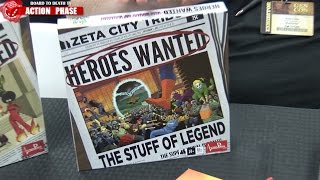
Nick says Action Phase builds its games around individual player powers, a theme found in its other titles. Players who value that focus may want to explore Heroes Wanted and its expansion, Heroes Wanted: Stuff of Legends, where the hero types and superpowers differ from one game to the next.
What Reviewers Are Saying
"Instead of playing a skill from your hand on your turn you may use your ninja Clan special ability by resolving its effect and flipping it over. This effect can only be used once per game."
— Pep McDonald, Watch it Played
"All the cards are individual ninja Maneuvers like evade or stealth or Shadow or leap and those let you move around the grid differently. And every time you move one of your pawns you pick up the card that you left so you're planning to get where you're going."
— Nick, Board to Death TV
"This is a game where you play the right ninjas at the right time and they do, they fight other people, but basically they're moving around. It was a cute little game. It's worth checking out."
— Tom Vassel, The Dice Tower