


Ninja Dice Deep Dive
What the Community Thinks About Ninja Dice
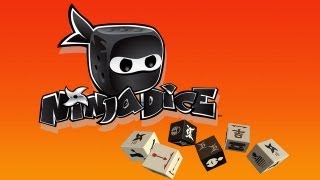
Reviewers who have covered Ninja Dice, the 2013 dice game published by GreenBrier Games, generally describe it as a push your luck game with more personality than its box suggests. Board to Death TV calls it a fun push of luck game with a little meat, and its host explains that a single player attempts to break into a house over three rounds of increasing difficulty while the rest of the table works to stop them. Watch It Played, whose host had not played the game before covering it on its People's Choice segment, said the inner ninja head on the box made the game seem sillier than it turns out to be, and that the dice system looks interesting and fun. the gameplay picture here comes from those two discussions.
Core Mechanics That Define Ninja Dice
Ninja Dice, published by GreenBrier Games, is built around a house that becomes harder to infiltrate as play continues. Board to Death TV explains that black house dice are rolled to create the building, with guards, residents in their kimonos, and locked areas appearing on the table, and that more house dice are added as each round goes on. Two systems then drive the action.
Skill Dice and Fortune Die Orientation
The active player rolls five skill dice showing stealth, fighting, lockpicking, and a wild face that counts as all of them, along with two fortune dice. Board to Death TV stresses that the orientation of each fortune die matters, because its arrow marks a front 180° arc. A fortune die can only boost the skill dice inside that arc, so a fortune die that lands facing the wrong way may be unusable. In the reviewer's demonstration, a wild combined with a fortune die became three wilds counted as stealth, which opened a lock and got past four of the five occupants. The player then decides whether to roll again and keep going, since one occupant remained unpassed.
Threat Dice, Hourglasses, and Arrows
Each time the active player keeps rolling, the other players roll threat dice to disrupt the attempt. Board to Death TV describes the hourglass faces as the intruder's time being wasted, and if all four threat dice show hourglasses, the intruder is captured, the round ends, and that player scores nothing. The arrow faces steal money from both the player trying to get into the house and the other players, so the reviewer stresses that everyone must track where dice land and who is a valid target, even when dice fall off the table. Watch It Played adds that the longer a ninja keeps going, the more dangerous the situation becomes, and that rolling more time symbols makes the attempt harder.
The Ninja Dice Experience
Push Your Luck With the Whole Table Involved
What sets Ninja Dice apart from a solitary push your luck roll is the pressure from the rest of the table. A Watch It Played viewer, Frost GT, described a push your luck dice game in which everyone is doing something at the same time to stop you as pure magic. The Watch It Played host, who calls themselves a big push your luck fan, said they would play it. Because the other players roll threat dice whenever the attempt continues, the game keeps everyone engaged even when they are not the one breaking in.
Tension, Drama, and Ninja Theming
The ninja theme comes through in the targets and skills: stealth, fighting, lockpicking, guards, residents in kimonos, and locked areas. Board to Death TV's host admits to liking drama and says players have to watch the arcs of their dice even when the dice fall off the table. The Watch It Played host noted that the direction of the arrows matters and that each additional roll makes the situation harder, which produces a steady build of tension. The box art may suggest a lighter game than the one reviewers describe.
What Makes Ninja Dice Stand Out
Dice Orientation as a Spatial Puzzle
Reviewers return repeatedly to the way the dice work as the game's most distinctive feature. Board to Death TV says that placement is very important in a roll, and that a fortune die facing the wrong way cannot be used at all, which turns reading the dice into a skill in its own right. Watch It Played calls the combination of rolling the dice and the direction of their arrows cool, and treats facing as a central decision rather than a cosmetic detail.
Shared Threats During Someone Else's Turn
Threat dice, hourglasses that waste time, and arrows that steal money from the intruder and from the other players give everyone a direct way to affect an attempt that is not their own. Board to Death TV's emphasis on watching where every arrow lands reflects how much of the table's attention the game demands. This shared involvement is the feature that Frost GT singled out as pure magic.
Potential Drawbacks
Orientation Can Waste a Roll
The facing rule that reviewers find interesting can also cost a player an entire roll. Board to Death TV demonstrates a fortune die that is useless because it faces the wrong way, so a turn can produce no benefit even when dice are rolled successfully. The reviewer presents this as part of the puzzle rather than a complaint, but it means that how the dice land can matter as much as what they show.
Not Presented as an Easy Win
The Watch It Played host says the game does not look particularly easy to win. Combined with the four-hourglass capture rule and the escalating danger of a long attempt, that impression suggests a demanding push your luck experience. The assessment came from research before a first play rather than a playtest, so it is a first impression, and neither gameplay video offers a long-term verdict on balance.
If You Enjoy Ninja Dice
The Watch It Played host connects Ninja Dice to Age of War, calling it one of the favorite push your luck games in that lineup. The host notes that an expansion for Ninja Dice adds locations that recall Age of War because they give players symbols to overcome. Anyone who enjoys rolling to overcome symbols while managing escalating risk will likely find Age of War a natural companion to Ninja Dice.
What Reviewers Are Saying
"It's very interesting in this game. Placement's very important in this roll, for example."
— Board to Death TV
"It's cool that the way the dice work and you roll them and the direction of the arrows matters. And then the fact that if you keep on going, you might roll more time symbols that makes things more difficult."
— Watch It Played
"So, I've been a fan of push or luck, but when it's a push or luck dice game and everyone is doing something at the same time to try to stop you, wow, it's pure magic."
— Frost GT, Watch It Played