







Oddland Deep Dive
What the Community Thinks About Oddland
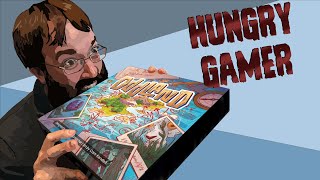
Oddland is a small-box tile placement game that has earned enthusiastic approval from reviewers across the board gaming community. The consensus is consistent: this is a cleverly designed game that delivers surprising strategic depth in a compact package. Reviewers consistently describe it as both immediately accessible and cleverly layered. While some note that the game benefits from learning aids that could be included, the overall reaction has been positive. The Hungry Gamer calls it "one of the best" small box AllPlay games released, and multiple reviewers express genuine excitement about returning to the game repeatedly.
Core Mechanics That Define Oddland
Tile Placement
Tile placement is the foundation of Oddland. Each turn, players add terrain cards to a shared, growing map of the island. As reviewers describe it, each new tile must overlap one or two spaces of previously placed tiles, creating a interconnected landscape. The spatial arrangement matters intensely: the tiles define the terrain types and territories that will determine which creatures can score effectively. Reviewers note that the mechanism creates a collaborative map-building experience, yet because creatures are placed by individual players, the shared board becomes a site of strategic tension. Allies or Enemies frames this perfectly: players can intentionally disrupt each other's scoring opportunities by placing tiles that break apart the terrain configurations others need.
Compound Scoring
Each of Oddland's hybrid creatures scores in a completely different way. The grizzly bear-kangaroo hybrid might score points for every surrounding mountain tile, while another creature earns points based on how many of its type appear in the same row or column. Because each creature card has two sides, representing two different scoring conditions, the game expands dramatically in replay value. Reviewers praise how this forces constant tactical decisions: do you pursue your own optimal placement, or sabotage an opponent's setup before they capitalize on the board state? The expansion adds even more creatures with distinct scoring rules, but reviewers emphasize that even the base game includes enough variety to feel fresh across multiple plays. The Hungry Gamer points out that this unique scoring system is the heart of the game's appeal, creating a "smashup" of the spatial puzzle of Confusing Lands with the creature-placement philosophy of Life of the Amazonia.
The Oddland Experience
Competitive Social Chaos
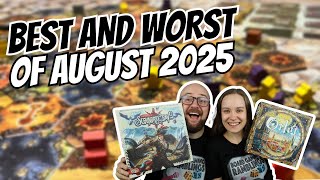
Playing Oddland feels like orchestrating controlled mayhem. Reviewers consistently note the competitive tension inherent in the design. Allies or Enemies describes the game as "super competitive, super cutthroat," where the primary strategy often involves watching what your opponent has set up and dismantling it before they can capitalize. Players must juggle two competing impulses: setting yourself up for scoring and preventing others from doing the same. The interaction echoes Carcassonne's dynamic, but with sharper teeth. Because creatures are placed on the shared map, a perfectly laid plan can be ruined by an opponent's strategic placement. That tension is the game's secret sauce. Reviewers enjoy how the game never feels overly mean-spirited despite the sabotage, instead creating moments of hilarious realization when someone's elaborate setup crumbles.
Satisfying Spatial Puzzle
Beyond the competitive jockeying, Oddland is fundamentally a spatial puzzle. Board Gaming Ramblings describes it as "a joint spatial puzzle" where each player is trying to find the optimal spots for their creatures within a shared, ever-changing landscape. There is genuine brain-burn to figuring out which creature should claim which adjacent terrain. The Hungry Gamer notes that the "real delight" comes from "figuring out the best way to take that one shot that you have with each of the animals that you're going to score." Players must calculate whether a creature's current placement will score well enough, or whether waiting for a better configuration is worth the risk. The puzzle deepens over the course of a game as the map grows more complex and options tighten. This aspect satisfies players who love the optimization puzzle even when they lose the competitive game.
What Makes Oddland Stand Out
Adorable, Hilarious Creature Art
Reviewers are nearly unanimous in their praise for the creature designs. These are not standard animals but hybrid creatures that blend two species into one card: a pig-pigeon, a kangaroo-pandalion, an owl-moose. The Hungry Gamer calls the art "adorable" and "weird" in equal measure, expressing delight that they are openly embracing the strangeness. The Board Game Garden and kovray both describe the creatures as "hilarious." One creature, the "pajor" (a hybrid that seems to blend a panda or similar creature with another animal), left such a memorable impression on one reviewer that they vividly recalled imagining themselves "riding into the sunset in a desert" on it. The art elevates what could be a mechanical puzzle game into something that brings joy simply through its presentation. The creatures are weird enough to stay in players' minds long after the game ends.
Strategic Depth Without Teaching Burden
Oddland achieves something genuinely difficult: genuine strategic complexity wrapped in a mechanically simple package. The Board Game Garden and kovray both highlight that the game is "easy to introduce to people" yet contains "how much strategy there really is in each and every game." Players grasp the core loop in minutes: place a tile, place a creature, score it. But the decision space is far larger than that simple rhythm suggests. The expansion, which adds additional creatures and alternate scoring conditions, creates even more replay value. The Hungry Gamer notes this is why they would recommend it to anyone interested in tile placement and unique scoring: the mechanical simplicity lets new players engage without overwhelming them, while the strategic puzzle keeps experienced players thinking.
Potential Drawbacks
Lack of Player Aid Cards Slows Early Plays
The Hungry Gamer raises one genuine concern: the first few plays are noticeably slower than they need to be. Because every creature scores differently, and because there are no reference cards showing how each creature scores, players must frequently pass the cards back and forth to check scoring conditions. For a game marketed as quick and easy to learn, this creates friction. The reviewer notes it's "a huge miss" for a game in this price range not to include a simple reference card showing all scoring conditions. Once players have played enough to memorize the creatures, play accelerates, but that friction in the early plays is worth acknowledging. This is a relatively minor issue, easily solved with a printed reference aid, but it does impact the onboarding experience.
Shared Board Creates Unpredictability
The fact that all players contribute to a single map means that player interaction cuts both ways. While the competitive tension is part of the appeal, some players may find that the shared space creates situations that feel frustrating rather than fun. If an opponent consistently blocks your chosen placement spots or ruins your setup before you can capitalize on it, the game can feel chaotic rather than strategic. This is more of a playstyle preference than a genuine flaw: players who love interactive, confrontational games will relish the back-and-forth sabotage, while those seeking puzzle-like optimization with minimal interaction might find the constant disruption less satisfying.
If You Enjoy Oddland
The Hungry Gamer's comparison to Confusing Lands and Life of the Amazonia is a natural starting point. Confusing Lands offers similar spatial puzzle mechanics where players must navigate a shared, shifting landscape. Life of the Amazonia shares the creature-placement and unique scoring DNA that makes Oddland tick. Players who enjoy Agropolis, the cooperative tile-placement game that appears on the same shelves, should note that Oddland takes a similar mechanical foundation and transforms it into a competitive experience. Carcassonne players will recognize the tile-placement foundation and the way player interaction emerges naturally from shared board construction. If you appreciate games where the map-building is as important as the final score, and you enjoy games where helping yourself sometimes means hindering opponents, Oddland deserves a spot in your collection.
What Reviewers Are Saying
"You're trying to get them either to have the biggest area or to have certain things adjacent to them or whatever else it is. Other people are immediately going to mess with that and so you're kind of balancing messing with other people's scoring and then nailing your scoring at the same time."
— Jess and Shawn, Allies or Enemies
"The real delight in the game comes from the way that you're putting out the different cards, making the territory, and trying to figure out the best way to take that one shot that you have with each of the animals that you're going to score. That is a delight because you kind of have to figure out which of the animals you're going to kind of sacrifice as a poor score."
— The Hungry Gamer
"It's really clever cuz all you're really doing is you're playing a map tile and you're playing a creature and each of your creatures scores differently and it's a collective board so you mess up scoring for everybody else. So the simplicity of it is just so nice, but then all the creatures are so fun cuz they're like a hybrid of two animals, so it's just like hilarious to see the art is amazing."
— kovray