/pic158548.jpg)
/pic2305703.jpg)

/pic158548.jpg)










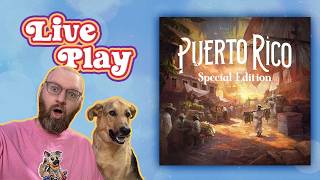























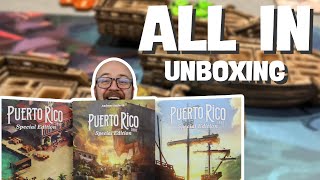









Puerto Rico Deep Dive
What the Community Thinks About Puerto Rico
Puerto Rico holds a rare distinction in the hobby: it sat at the top of the BoardGameGeek rankings from 2002 through 2008, a reign that BoardGameGeek's Hall of Fame coverage calls unmatched. Reviewers across channels, from veterans who bought it on release to newcomers discovering it decades later, arrive at roughly the same verdict. Tom Vassel of the Dice Tower describes a journey many echo: skeptical on first play, then increasingly convinced over time, arriving at a ten out of ten. Board Stupid's Wayne and Matt came to it with completely fresh eyes after twenty years in the hobby and declared it "amazing" and "brilliant." BoardGameGeek's Hall of Fame entry credits Puerto Rico not only with mechanical innovation but with being the first game popular enough to force a community-wide conversation about historical representation. The 2022 edition, Puerto Rico 1897, addresses those concerns by resetting the timeline to a period of growing island autonomy. Chairman of the Board calls it "a work of art" and "amongst one of my favorite games of all time," one that "still holds up immaculately." Neon Gorilla summarizes the minority view: players who dislike take-that interaction may find it uncomfortable, but for everyone else the mechanisms deliver something genuinely uncommon in Euro design.
Core Mechanics That Define Puerto Rico
Action Following (Role Selection)
Puerto Rico's engine runs on a role-selection system in which the active player picks one of several available actions, everyone else gets to perform a weaker version of that same action, and the player who chose it receives a small bonus: an extra coin, a resource, a discount. This sounds simple but generates constant, compulsive engagement. Board Stupid describes sitting at fourth in player order and still always having a meaningful choice, noting that "you'll always have a meaningful choice between two equally good options." Neon Gorilla goes further, calling it the most interactive Euro they have ever played: "this is not multiplayer solitaire, this is a highly interactive, highly dynamic game state." The Dice Tower highlights the feel of it: "someone picks an action, you're like, all right, and you're constantly doing something. There's no downtime in this game." The tension comes from weighing your own optimal action against the gifts it might hand to opponents, or deliberately timing a role to strand a rival's goods or deny a key building. BoardGameGeek's Hall of Fame coverage credits Puerto Rico as one of the first games to popularize this follow mechanic, describing it as "a very simple way to incorporate a lot of very subtle interactivity between the players without being directly confrontational."
Engine Building Through Buildings and Plantations
Each player develops a personal board, filling island spaces with plantations and town spaces with buildings. Plantations determine which goods a player can produce; buildings determine whether those goods can be processed, sold for higher value, or converted into points. Board Stupid explains the stakes: "once you build something you cannot remove it, so if you do a mistake at the start of the game you're going to pay at the end." Neon Gorilla details how commercial buildings open new paths, citing the Wharf (a personal ship that cannot be blocked) and the Factory (which generates coins per distinct good produced, making selling obsolete once active) as transformative investments. Chairman of the Board won a game by pairing the Wharf with the Harbor, preventing lockouts and gaining a bonus point on every shipment. Tom Vassel notes that swapping a few buildings between sessions keeps veterans from defaulting to the same opening, preserving strategic variety.
The Puerto Rico Experience
Cerebral and Intense
Puerto Rico demands sustained attention to both your own board state and every opponent's. Neon Gorilla describes tracking the number of goods a rival has, the spaces remaining on each ship, and the coins in each player's supply simultaneously, then using "simple arithmetic to help you screw other players." Board Stupid calls the timing decisions "really crunchy," describing moments where the obvious choice (crafting goods) becomes wrong the instant you realize how much it benefits the player with a full storehouse waiting to ship. Tom Vassel recalls what it feels like when everyone at the table knows the game: "it is kind of a sublime experience because there's just so many cool things that happen." The game ends abruptly when workers run out or victory points are exhausted, with no warning round and no trailing turns. Board Stupid calls this "the finality of a scissor cut," appreciating a design that refuses to soften consequences.
Rewarding Mastery with Multiple Paths
Puerto Rico offers no single winning formula. Chairman of the Board describes a three-player game where all three opponents pursued different strategies and all remained competitive. BoardGameGeek's Hall of Fame notes that in its peak years the game generated documented meta-analysis on BGG: standard openings, counter-strategies, theoretical frameworks. Neon Gorilla explicitly values this depth: "there's so much to explore in grabbing buildings and combinations," and acknowledges that reading the BGG strategy forums before playing gave them a significant advantage, yet still did not guarantee victory. The game rewards the player who best reads what others are doing and adjusts, not the player who memorizes a formula. As Neon Gorilla puts it: "this is a sandbox, you can go in, try different stuff, maybe it works, maybe it doesn't, but reset and try again."
What Makes Puerto Rico Stand Out
Elegant Constraint Design
What separates Puerto Rico from comparable economic games is how its restrictions create interaction rather than isolation. Every limiting rule, ships holding only one type of good, the trading house filling up, buildings capped in quantity, creates a specific opportunity for another player to exploit. Neon Gorilla traces this logic through each role: selecting the recruiter when extra workers are available drains the supply before rivals can hire; selling the one good a rival needs blocks their income; buying a rival's target production building denies their strategy entirely; loading a ship with your goods freezes out someone holding a surplus of that type. Tom Vassel frames it plainly: "I might pick shipping just because I know you have a lot of goods to ship and there's no ships to put them on and I'm going to shut you down." This operates at every decision point in the game.
Exceptional Player Count Flexibility
Tom Vassel singles out Puerto Rico as one of very few Euro-style games that works well at three, four, and five players. Ships, buildings, and worker supply all scale with player count, so the constraint pressure adjusts rather than disappears. Board Stupid describes four-player sessions that run without significant downtime because every player is involved in every action. This breadth of viable player counts, combined with the ability to swap buildings between sessions, gives Puerto Rico unusual longevity compared to games requiring narrower optimal conditions.
Potential Drawbacks
No Catch-Up Mechanism
Puerto Rico does not soften early mistakes. Board Stupid describes this plainly: "if you do something very wrong at the start of the game, the game is not going to help you. There's no catch-up mechanism." This is intentional and constitutes part of the design's identity, but it means a player who misunderstands the first few turns can find themselves locked into an uncompetitive position with no structural relief. Tom Vassel notes that player turn order matters significantly and that newcomers sitting at a table with experienced players can come away feeling "a little beat up." The game works best when everyone is equally familiar with its systems, or equally unfamiliar.
Turn Order Sensitivity and Metagame Weight
Tom Vassel identifies turn order as one of the long-standing critiques of Puerto Rico: going earlier in the round carries compounding advantages in contested situations. The building market is limited, meaning faster players claim key buildings before others can. The trading house fills up. Ships get loaded. Neon Gorilla notes that the metagame analysis available on BGG is extensive and rewards serious study, which can create an uncomfortable gap between experienced and inexperienced groups. Board Stupid acknowledges this tension: "it's one of those designs where they're not gentle," and suggests that players coming from newer games accustomed to catch-up mechanisms and gentler failure states may find the experience unforgiving rather than satisfying.
If You Enjoy Puerto Rico
Players drawn to Puerto Rico's role-selection follow mechanic will find familiar pleasures in Rising Sun, which Board Stupid specifically mentions as sharing the mechanism's DNA. Agricola, which briefly toppled Puerto Rico from the BGG top spot, offers comparable economic depth with a more personal tableau focus. Fans of the tight constraint-driven economy may enjoy Brass: Birmingham, which Board Stupid cites as delivering a similar ruthless clarity. Concordia and Le Havre offer the same Euro tradition of engine building through building acquisition with slightly more forgiving pacing. Players drawn to the goods-production and shipping cycle will find Viticulture a more accessible entry point into similar production loops.
What Reviewers Are Saying
"This is not multiplayer solitaire. This is a highly interactive, highly dynamic game state that has multiple paths to victory, tons of strategies to explore. If that sounds good, this is definitely something you want."
— Neon Gorilla
"If this game came out last year, it would be game of the year, hands down, ten times out of ten. Being in the top fifty of BGG for the last number of years is, for us, correct."
— Board Stupid
"This game feels elegant even today. It is absolutely fantastic. Nowadays, I like where Euro games have gone, but there's a lot of point salad, just huge engines, a thousand pieces, everything going on. And this game feels elegant even today."
— The Dice Tower