


Quiet House Deep Dive
What the Community Thinks About Quiet House
Reviewers who have covered Quiet House generally treat it as a solid cooperative puzzle rather than a standout favorite. Board Gaming Ramblings found it fun despite a rocky start, while the One Stop Co-op Shop channel judged it fine but hard to justify in a crowded genre. The channels agree on the core appeal and diverge mainly on whether the game earns a permanent place on a shelf.
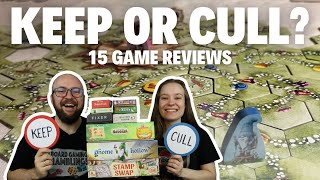
Board Gaming Ramblings gave the most detailed discussion. The hosts agreed that the game is hard to picture at first, and that a group's experience can change sharply from one session to the next. Both hosts described the opening stage as confusing, then said the game became rewarding once the table began to read each other's moves. They still decided it was not a game they would choose to play again, even though they recognized its quality.
Quiet House also appeared in the channel's 2024 awards, where it was one of four nominees for best cooperative game. The award went to Tranquility: The Ascent. The One Stop Co-op Shop reviewer, by contrast, placed Quiet House in the call pile, mainly because the shelf already held several similar titles.
Core Mechanics That Define Quiet House
Cooperative Play
Quiet House is a cooperative game in which players succeed or fail together. The One Stop Co-op Shop reviewer described it as a cooperative deduction game where players move pieces and place them in the correct orientation based on tiles that some players can see and others cannot. Board Gaming Ramblings framed the same idea from the table's perspective: the solution is split across the players, so the group has to build one arrangement that is correct for everyone at once.
Limited Communication
Communication is the central constraint. Players are not allowed to speak about the puzzle, so reviewers treated the game as a problem of information. Some details are visible to one player while others stay hidden from them, and each player holds a part of the solution. Board Gaming Ramblings described the resulting frustration as a repeated pattern: a player finally places a piece in what seems like the perfect position, and another player moves it. The same reviewers also mentioned card effects that restrict which piece a player is allowed to move, which adds another layer of constraint to an already tight conversation.
The Quiet House Experience
Early Confusion and Gradual Clarity
Reviewers consistently described the first stretch of play as the hardest part. The hosts of Board Gaming Ramblings said the game was very hard to visualize in the beginning, because players are moving pieces around a house while different information is spread across the table. The confusion did not last in their second session. Once the group began to understand what each other was attempting, the puzzle became a shared task instead of a series of guesses, and the hosts found the later play much more engaging.
Variance Between Sessions
The hosts also noticed that the outcome of a session depends heavily on how the pieces fall. One session was simple because the same pieces kept appearing and only two relevant pieces were visible to one player. The later session was far more interesting because the group's understanding developed from the ground up. Reviewers take this variance as part of the appeal, though it also means the experience can feel uneven from game to game.
What Makes Quiet House Stand Out
A Compact Cooperative Puzzle
The One Stop Co-op Shop reviewer acknowledged that Quiet House has a practical advantage. It is a smaller and cheaper game than many of the cooperative deduction titles it resembles, so it may have a place in a collection for that reason alone. Reviewers who value a lighter, more affordable entry in the genre tend to view that as a genuine strength, even when the game does not win them over on its own merits.
Shared Discovery
The most memorable moments reviewers described were the points at which everyone at the table seemed to understand the puzzle together. Board Gaming Ramblings said the group reached a point where everybody started to understand what everybody was trying to do, and that this made the game very interesting. Reviewers appear to value that moment of mutual recognition, when the silence that defines the game turns into a sense of shared insight.
Potential Drawbacks
A Crowded Cooperative Deduction Space
The most pointed criticism came from the One Stop Co-op Shop reviewer, who placed Quiet House behind several titles in the same family. Decorum was described as a similar game that is considerably better for that reviewer's taste, especially at two players, and Hanabi and Paint the Roses were also named as stronger choices. This is a comparative judgment rather than a complaint about the design itself. It does suggest that Quiet House has a hard time standing out for players who already own a few cooperative deduction games.
Frustration and Limited Pull
Board Gaming Ramblings admitted that the game was fun but not one they would choose to play again. Their decision to call it was partly a matter of the many games competing for shelf space. The frustration of having a perfect placement undone by another player is also part of the reason the game does not stick. Reviewers who dislike being unable to speak freely during a puzzle are likely to find the same friction tiring over repeated sessions.
If You Enjoy Quiet House
Quiet House suits players who enjoy cooperative puzzles built around hidden information and who do not mind a slow start. Reviewers who enjoy group deduction and the satisfaction of finally reading one another's moves will likely find the most value here. Players who already own several cooperative deduction games may find that Decorum, Hanabi, or Paint the Roses offer a stronger experience for their tastes, as the One Stop Co-op Shop reviewer argued. For a smaller, more affordable option in the same family, Quiet House still has a clear case.
What Reviewers Are Saying
"you're trying to place the pieces in such a way that it's correct for all players but you can't speak so you will be frustrated many times"
— Board Gaming Ramblings
"in the beginning I was like I have no idea what's going on but then like suddenly I understood that basically everybody started to understand what everybody was trying to do so it was very interesting"
— Board Gaming Ramblings
"I already have Decorum, which is kind of a similar game, but I find drastically better for my taste at least, especially at two players, or Hannabi or Paint the Roses."
— One Stop Co-op Shop