/pic6205682.png)
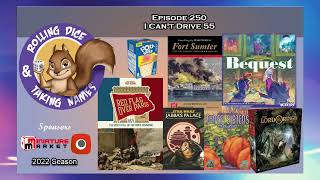
"Red Flag Over Paris", the spiritual successor to Mark Herman's Fort Sumter, is a short, yet challenging, two-player card-driven wargame depicting the two months of intense confrontation between the Communards and the government in Versailles during the 1871 Paris Commune. You will play as one of these factions and fight for control over Paris. But, you will also need to win the hearts and minds of the French population, as the board is divided into two areas–military and political–themselves divided into several dimensions (Political Institutions, Public Opinion, Paris neighborhoods, and the forts on the outskirts of the city). The game forces players to make tough decisions like when to focus on political influence or military dominance and how to optimize limited resources.
On top of controlling the military and political spaces and fulfilling your objectives to score Victory Points, you will have to manage your momentum. Versailles needs to collaborate with the Prussian invader to build up an army that will restore order in the Capital. On the other hand, the Commune needs to build a robust revolutionary momentum to ensure that the population stays mobilized after months of siege and food shortages.
Each card represents either a critical personality or a significant event of the Paris commune. You may use a card for its event, for its operational value (which allows you to place or remove influence cubes in any given area), to buy an event discarded by your opponent, or build your momentum. After up to three rounds, Red Flag Over Paris culminates in a Final Crisis where each player will have to play all the cards they left aside earlier in the game as the last opportunity to place influence before determining the winner.
—description from the publisher
- More in-depth than similar games
- Engaging card play
- Historical learning opportunity
- Tense atmosphere
- Political influence and control
- Paris during a historical conflict
- Fort Sumter
Mechanics (from transcript analysis)
- Area Control — Described as an area control game where players try to take over areas and influence the public.
- Card Play — Utilizes card play mechanics that were well-received and added depth.
Video topics + discussion points
Quotes (from this video)
- to me that was a very simple game easy to learn but kind of recreated what really happened during that time
- if y'all ever seen a GMT rule book They're they're not pretty books with glossy pages and big images and very few words per page they're double column they're they're numbered almost like a contract a legal document that's just how they're formatted
- it's basically the conflict between uh uh basically the US and and that region of the world between China and us trying to influence and control that area
- this is coming from somebody who complained I did a 45 minute history lesson on Cuba Libra when I taught it to you
- I knew nothing about how Castro took over CU I I knew he did it how he did it and why I don't know but playing that game three or four times now I have a I'm not a master by any means but I have a much better understanding of what really happened during that time
- I am learning about stuff that happened during the Vietnam war knew nothing about super excited as I play through this game learning about that
- you do learn as you're playing the game how the forces had to build towards that final battle of waterl you learn the players that took place
- yes I have that one I've never play amazing historical game from Marton Wallace yes I had some Muro stuff in it but I actually learned a lot about that from Lincoln
- we got access and allies coming up talking about jumping to the deep end we'll jump straight into that
References (from this video)

- Spiritual successor to a political war game.
- Short yet challenging.
- Forces tough decisions.
- Looks wonderful.
- Good for new players to card-driven war games.
- confrontation between rebels and the government during the Paris Commune
- Paris, 1871
- Fort Sumter
Mechanics (from transcript analysis)
- Area Control — Players fight for control of the city through military and political spaces.
- card-driven — A two-player card-driven game depicting the confrontation.
- Resource Management — Optimize limited resources such as religious influence or court of public opinion.
Video topics + discussion points
Quotes (from this video)
- we are big fans of the original patchwork
- holiday theme variations is a trend that more games should follow
- this game variation may be the smartest idea i've ever heard
- something like that but not terrible
- players use the numbers and effects on their cards to eliminate the other players and accomplish their own secret agendas
- this game is sure to be hotter than a thermal detonator
- i'm often drawn to games in which the beneficial choices that players make will also benefit their opponents in some way requiring players to find that balance between helping and hindering their score with every single action they take
- from the pictures i've seen it looks like there's quite a bit of variation between the different pages and i'm hoping this means it might have the potential to tell more of a storyline than most rolling rights would
- this is one of my picks for the game of the year replacing my old game of the year which was just half a pack of cards i found in a laundrette parking lot so yeah
- i don't want to feed into the hype but i think the game really is that good
- i picked this game because i really like games with deduction and hidden movement and this one is based on a comic book series so it's really visually interesting on top of being fun to play and a real battle of wits between you and your opponents
- it made for a tense clever puzzle where i was continually balancing the need to push my luck for those big important moves but at the same time having to play conservatively enough that i wasn't losing my forces unnecessarily
- i finally got a chance to check out this card crafting game through the very well implemented steam app and i loved it
- john d claire spot as my top game designer remains secure
- all of the gameplay in ankh including combat is streamlined and designed to be non-random
- there's no fickle dice or unpredictable decks to foil one's omnipotent plans here instead players must compete and win solely by their godly wits alone
- this is an entry-level card-driven game that i think can help draw a lot of new players into card-driven war games plus it looks wonderful
- this is hands down one of the best games we played in 2021
- it's an extremely immersive experience
References (from this video)
- Really a lot of fun
- Great history there
- No longer in collection
- Paris Commune of 1871
- Twilight Struggle
Mechanics (from transcript analysis)
- Area Control — Controlling different areas on the board to score points.
- Card Driven — Uses card playing similar to CDG.
Video topics + discussion points
Quotes (from this video)
- Don't teach your dog how to sit while using a Sean Conry accent.
- I played so many GMT games over the years, I thought I'd finally rank my top 50.
- It's a heavier game, and that's probably why it's not higher up on this list.
- Although the invasion of Italy remains controversial for a number of reasons.
- I know it's a controversial statement because a lot of people will say this is probably the best that he's come up with.
- Why don't scientists trust atoms? They make up everything.
References (from this video)
- tight two-player experience; quick and tense
- distinct thematic split (military vs political)
- interesting endgame via final crisis and discard interactions
- steep learning curve for new players
- must track card colors and discard rules
- political versus military power; urban insurrection
- Paris, 1871; Versailles vs Paris Commune
- asymmetric, card-driven conflict
- Fort Sumter
Mechanics (from transcript analysis)
- area/zone control — centered zones; adjacency and tiered areas affect moves
- asymmetric factions — Versailles government vs Paris Commune with distinct win conditions
- card-driven discard/activate — cards supply events and influence optional activations
Video topics + discussion points
Quotes (from this video)
- Should video games have an easy mode
- it's simple but you know…
- I would want every game to have an easy mode, but I don't think every publisher should include one
References (from this video)
- maintains narrative integrity across a series game
- offers players control over diverse factions
- bots had to be adapted to diverse adjacency and victory conditions
- agency and power within wartime politics
- WWII era, collaboration and resistance dynamics
- narrative-driven Euro-style political game
- Bell of Treason
- Fort Sumpter
Mechanics (from transcript analysis)
- coherence with series mechanics — mechanisms align with the final crisis series’ coherence
Video topics + discussion points
Quotes (from this video)
- necessity is the mother of invention
- the whole point is to get six people around a table and have them argue about this
- bot design is data structures it's all data structures
- rough edges are fine in our games at GMT we like rough edges
- the bot turns are to be as non-intrusive as possible