




Red Letter Yellow Letter Deep Dive
What the Community Thinks About Red Letter Yellow Letter
Red Letter Yellow Letter has earned praise from word game enthusiasts as a refreshingly portable and accessible party game that delivers genuine laughs without overstaying its welcome. Reviewers consistently highlight its ability to engage players of all backgrounds, from dedicated word game fans to casual groups looking for quick entertainment. The game's straightforward premise combined with escalating difficulty creates an experience that feels both accessible and challenging, making it a standout choice for gatherings of any size.
Core Mechanics That Define Red Letter Yellow Letter
Rapid-Fire Word Challenges with Layered Constraints
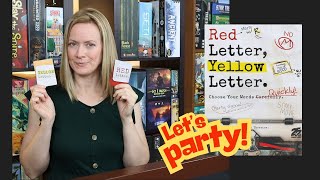
Red Letter Yellow Letter centers on a simple but elegant design: players race to shout out words that satisfy three simultaneous criteria. Each round presents a category (drawn from the "thing" cards) that constrains what topic the word must address. A yellow card specifies which letter the word must start with. A red card introduces a forbidden letter that cannot appear anywhere in the word. This creates a puzzle that gets harder as cards stack, requiring players to think fast and creatively within increasingly specific boundaries.
The first player to successfully call out a valid word wins the card. Rather than having to rotate all cards at once, the winner chooses which single card to claim: category, yellow constraint, or red constraint. This choice immediately shapes the next round's puzzle, keeping the game dynamic and preventing downtime. If the table collectively stalls and no one can think of an answer, players simply reveal a new category card and reset the constraints rather than getting stuck.
Three-Card Victory Structure
Winning requires collecting exactly three of each card type: three category cards, three yellow cards, and three red cards. Once a player has three of any type, they cannot claim more of that type, forcing strategic decisions about which card to take after each successful answer. This prevents a single early victory and extends gameplay, distributing scoring across multiple rounds while keeping sessions brief.
The Red Letter Yellow Letter Experience
Quick, Laugh-Driven Gameplay
The game shines in its pacing and social energy. At roughly 20 minutes per game, Red Letter Yellow Letter respects players' time while delivering genuine entertainment. Reviewers note that the combination of time pressure, verbal competition, and creative problem-solving generates natural humor and excitement. With two to twelve players, the game scales beautifully to party size, where larger groups amplify the chaos and energy.
Word Game for Accessible Skill Levels
One reviewer described it as a really great association-style spelling word connection game that works with just about anyone as long as they have basic spelling ability. The game accommodates varied spelling knowledge gracefully; if a player suggests a word and others dispute whether it's spelled correctly, the table simply validates or rejects it and continues playing. This makes Red Letter Yellow Letter feel inclusive rather than punishing, allowing both strong spellers and casual players to enjoy themselves together.
What Makes Red Letter Yellow Letter Stand Out
Portable and Flexible Deployment
Red Letter Yellow Letter is designed for real life, not just game night. The compact card deck makes it easy to pack into a bag and bring to restaurants, pubs, or casual gatherings where a quick word game activity is needed. This portability, combined with the ability to pull out the game with any group, gives it appeal beyond dedicated gamers.
No Overstaying Welcome
Reviewers emphasize that the game knows when to exit. Because rounds are fast and the game lasts about 20 minutes, it leaves players wanting more rather than growing tired. One reviewer called it the ideal game to pull out when there's 20 minutes to fill, suggesting it occupies a practical niche in social gaming. The constantly shifting category and letter combinations mean each play feels fresh, with different constraint combinations keeping the puzzle aspect varied.
Potential Drawbacks
Dependent on Table Speed and Vocabulary
Success in Red Letter Yellow Letter hinges on players being comfortable with rapid verbal responses and having a decent vocabulary range. Shy players, non-native speakers, or those who prefer deliberate thinking over quick reactions may feel less confident in this environment. The game is inherently loud and competitive, which suits some tables and excludes others.
Skill Variance Can Affect Enjoyment
Because the puzzle is the same for all players simultaneously, players with faster verbal processing or larger vocabularies will naturally win more rounds. Unlike games that level the playing field with catch-up mechanics, Red Letter Yellow Letter remains a meritocratic word contest, which is great for competitive groups but may frustrate players who struggle with verbal speed.
If You Enjoy Red Letter Yellow Letter
Players who love Red Letter Yellow Letter often enjoy other fast-paced word and association games. The emphasis on quick thinking and social energy appeals to party game enthusiasts, while the word puzzle element attracts those who enjoy Scrabble-adjacent titles or verbal challenges. The game's accessibility and brevity make it a natural complement to other portable or lightweight party games suitable for casual gatherings.
What Reviewers Are Saying
"This is a really great association like spelling word connection game. You're constantly switching up the things and the red letters and the yellow letters. It stays for 20 minutes and then at that point you're like, 'Okay, I'm done.' It's a pull out game when you've got 20 minutes. This is a great game for when you have 10 people. This is a game that could be incredibly fun with a large group and you could have a lot of chaos and a lot of laughs."
— Tabletop Tolson
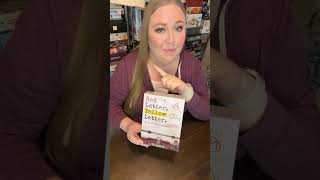
"This is a really great game that you can kind of pull out with just about anyone as long as they have some basic spelling. So you can kind of determine what age kiddo that is in your group and you just pull it out and you start playing."
— Jamie, Tabletoptiktok
"It's a party style light game, so the rules are not meant to be hindrances or cumbersome. It's meant to be fun and fast. I love the aspect where the person who takes the card, play just continues immediately. So they could take the category or they could just take one of these letters and boom, you're still in the same category."
— Jamie, Tabletoptiktok