























Robo Rally Deep Dive
What the Community Thinks About Robo Rally
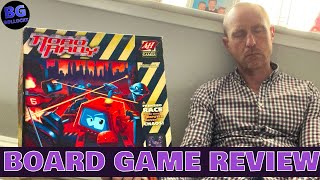
Reviewers treat Robo Rally as a classic programming game whose appeal comes from controlled chaos. Three Minute Board Games frames the premise as a race to reach each flag in order through a death maze of lasers, pit traps, and opponents who are actively working to stop you. The Dice Tower places it among the notable programming titles and points to the same tension: the plan you lock in rarely survives contact with the board. Dave Luzapalooza gives the most affectionate account, describing the robots as a natural fit for the theme and celebrating the moment when an opponent's push undoes a carefully written sequence. The sharpest dissent comes from BoardGameBollocks, which finds the same unpredictability more frustrating than entertaining. Taken together, the commentary agrees on what the game is and disagrees about whether that identity is worth the frustration.
Core Mechanics That Define Robo Rally
Programming Five Cards in Sequence
Each turn, players place all five of their order cards in sequence on their program board before anything moves. Three Minute Board Games stresses that the sequence cannot be changed once it is set, which turns every turn into a bet on how the board will react. Dave Luzapalooza describes the satisfaction of committing to a straight three-space move, only to watch the turn fall apart after a single opposing push removes the rest of the program.
A Fixed Resolution Order That Deals the Damage
Once every robot has moved, the environment acts in a fixed sequence. Three Minute Board Games walks through it: green conveyors move robots first, blue conveyors then move them up to two spaces, spinners rotate robots 90 degrees, and lasers fire last. That order is where much of the chaos comes from, because a robot carried into a laser line by a conveyor can take damage from several sources in a single turn. The same video notes that yellow walls stop movement without causing damage on their own, and that driving into a hole ends the turn and removes the robot until it respawns with some damage. Three Minute Board Games identifies two kinds of damage that come out of this sequence. Haywire goes face down under the current action card and locks it in place, while Spam stays in hand until the player chooses to play it. BoardGameBollocks points out that damage markers on the program board reduce the number of cards a robot is dealt, which means a robot in trouble becomes less able to plan its way out of it. Healing is available, but it takes time to clear the markers.
The Robo Rally Experience
The table experience depends heavily on the group. Noah on The Dice Tower calls the game a blast and describes the appeal of planning a perfect program and then watching it bend as opponents push one another into pits. Tom Vasel, covering the game in a separate episode, says it begins as pure logic and then turns chaotic once the board starts moving robots in ways no single player fully controls. Dave Luzapalooza reports that the strongest moments come when a single push ruins an entire program, and that collapse is presented as the reason to play rather than a flaw in the design.
What Makes Robo Rally Stand Out
A Theme That Fits the Mechanics
The strongest case for Robo Rally rests on its theme. Dave Luzapalooza emphasizes that the robots, lasers, and pits fit together as a physical place to race, and that the core loop of programming and then watching the board react is simple enough for families to pick up. Three Minute Board Games argues that the chaos is the reason the game endures as a classic.
A Line That Keeps Getting Revised
Noah notes that the damage system has been revised across versions, and Tom Vasel says the newest edition is better than the original, so the race structure that defined the earlier games carries forward with refinements to how damage works. Noah points to the Transformers-themed edition from Renegade Studios as the reason the game has climbed back up their own rankings, since it reworks damage into a deck-building system where damage cards go into a player's deck and come back out to cause trouble later, alongside a continued resurgence for the original Robo Rally itself.
Potential Drawbacks
Frustration Instead of Fun for Some Players
The criticism centers on frustration. BoardGameBollocks calls it one of the most frustrating games its reviewer has played, arguing that long boards drag. Players who want deliberate control over outcomes, or who expect a deeper strategic game than sequencing and disruption, are likely to find the game exasperating rather than fun.
Components and Group Size Matter
BoardGameBollocks also argues that grey, thin components do little to make the experience feel exciting. Dave Luzapalooza pushes back on the components, calling them good, but agrees that the group matters: they add that three to four players is the sweet spot where the chaos feels most rewarding, and that smaller groups lose some of the disruption that makes the game work.
If You Enjoy Robo Rally
Robo Rally suits groups who enjoy planning a sequence and then watching it break down, especially players who laugh at reversals instead of getting angry about them. BoardGameBollocks's own comparison points to Galaxy Trucker as a kindred pick: that game shares the same idea of committing to a plan under a ticking clock and then watching chance and other players tear it apart. Fans who already own an older copy and want to see the chaos refreshed should look at the Transformers-themed Robo Rally edition from Renegade Studios that Noah describes, which turns the damage system into a deck-building mechanic. Groups looking for more control or less direct interaction should look elsewhere, since the game is built around opponents disrupting one another's programs.
What Reviewers Are Saying
"to me robo rally is all about the chaos and the more there is the better"
— Three Minute Board Games
"Um that delicious chaos is what this is all about."
— Noah, The Dice Tower
"it's one of the most frustrating games I've ever played"
— BoardGameBollocks