





Saint Malo Deep Dive
What the Community Thinks About Saint Malo
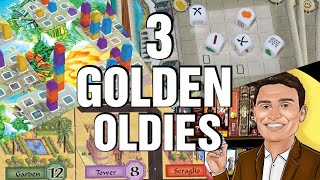
Reviewers consistently describe Saint Malo, the 2012 roll-and-write from alea, as a game that has aged far better than most of its contemporaries. In a retrospective on older titles, Chairman of the Board said the game "still holds up remarkably well" and credited it with laying a strong foundation for the Yahtzee-style roll-and-write genre. The same reviewer noted that many roll-and-write games have arrived in the years since, yet this one remains among the best of them, which the reviewer took as a clear sign of its quality.
The game has also earned a place in several ranking discussions. In a ranking of recent purchases, Chairman of the Board placed Saint Malo at number two, admitting that it was a borderline call and that it might shift up or down later. In a series on mid-ranked titles on BoardGameGeek, The Dice Tower gave it a seven out of ten, describing it as one of the first roll-and-writes that asks players to draw directly on the board. Reviewers who have played it generally place it in the upper tier of the genre, even when they debate its exact rank.
Core Mechanics That Define Saint Malo
Dice Rolling With Yahtzee-Style Re-Rolls
The game opens with a large cluster of dice rolled in a manner reviewers compare directly to Yahtzee. Players select a symbol from the roll, and a strong cluster can grant re-rolls that let them chase the combination they need. The central tension comes from the crossed swords symbol. Accumulating too many swords lets the game work against you and score negative points, and Chairman of the Board singled out this push-your-luck element as one the channel enjoys, noting that the design uses that kind of pressure "to a really high standard." Players can offset the risk by selecting wall symbols, which fortify the town and protect against the threats that would otherwise cost points. Inka and Markus Brand designed the game, and alea published it with this dice engine at its core.
Roll-and-Write Town Building on a Restricted Grid
The second core system is the town itself. Each player works on a restricted grid representing a town square and fills it with the symbols the dice provide. Resources are spent to erect buildings, churches score through set collection, and villagers can add defense, points, or bonuses tied to what a player has already gathered. Walls are central to the design. Completing a section of wall unlocks rewards such as additional money or victory points, and the wall work doubles as the defensive protection the dice selections require. Reviewers describe the result as a puzzle of drafting and placement, where every symbol must be placed with an eye on the scoring that follows. The Dice Tower highlighted the physical satisfaction of this approach, since the player is literally drawing a little Saint Malo on the board.
The Saint Malo Experience
Juggling Competing Goals
The most frequently described feeling is the sense of balancing several demands at once. Chairman of the Board said the channel liked "the way you had to juggle everything" in the game, with several scoring routes available at any moment. Each turn asks the player to weigh defense against churches, villagers against walls, and immediate dice gains against long-term scoring. The reviewer also pointed to the combos that emerge when those systems line up, describing the design as well put together because it rewards players who see those connections early.
Quiet Pressure From the Game Itself
Reviewers also describe a steady undercurrent of pressure. Because the crossed swords can punish overreaching, players are always weighing how far to push the dice before stopping. Chairman of the Board compared this to the pressure found in the designs of Stefan Feld, where something is always lurking in the back of a player's mind, and where players feel they are working to avoid losing points rather than simply chasing them. The result is a game that feels tense without feeling punitive, because the threats are a direct consequence of decisions the player controls.
What Makes Saint Malo Stand Out
Combo juggling across scoring systems. Reviewers consistently highlight that Saint Malo offers several distinct ways to score, and that these paths interact. Churches, villagers, walls, and defense each feed into a shared decision about where to spend the next symbol. Because no single route dominates, players can adapt their plan as the dice roll and as the walls take shape. Chairman of the Board described this as the element that makes the game work so well.
Longevity and staying power. The most consistent praise concerns how well the design has held up. Reviewers note that the game appeared early in a genre that later became crowded, and that it still stands among the strongest examples of that genre. Chairman of the Board framed this as evidence of the game's quality, since many newer titles have not matched its polish after more than a decade. That staying power is what keeps the game recommended for players who are new to roll-and-writes as well as those who have played many of them.
Potential Drawbacks
Genre saturation. The most common caveat is the size of the roll-and-write field. Reviewers observe that many games now use similar dice-selection and grid mechanics, and that Saint Malo's core ideas are no longer novel. Chairman of the Board noted that the game contains "a lot of stuff we've seen before," which is praise for its reliability but also a reminder that newcomers may find familiar ideas. Players who have already explored the genre extensively may find less that feels fresh.
A restricted grid and a borderline rank. The town grid is compact, which reviewers see as a strength for keeping turns focused but also a limit on how much room a player has to recover from a poor roll. Even among reviewers who admire the game, placement is debated. Chairman of the Board admitted to being unsure whether the game belonged in its high position and suggested it might fall later. Players who want heavier, more open-ended decisions may find the design more constrained than they would like.
If You Enjoy Saint Malo
Players drawn to Saint Malo tend to enjoy the shared core of the roll-and-write genre: rolling dice, selecting symbols, and filling a personal grid with a puzzle to solve. The game suits anyone who likes a compact scoring engine where several goals compete for limited resources. Reviewers also point to the appeal of a design that punishes greed in a manageable way, so players who enjoy push-your-luck tension and careful placement will likely find a natural fit. Because the game is light and quick to teach, it works equally well for newer players seeking an entry point into the genre and for experienced players who want a dependable classic.
What Reviewers Are Saying
"Maybe three or four years ago there were so many roll and write style games coming out, and they still are. There really is a huge saturation of them, and in fact this one was one of the earliest and it is still one of the best ones. That really does speak highly of its quality."
— Chairman of the Board
"It works really well, actually. I like the way you had to juggle everything there. There's different things you can go for, some good combos."
— Chairman of the Board
"This is one of the first roll and writes where you're drawing on the board here, building a little thing of Saint Malo. I liked it."
— The Dice Tower