/pic5239705.jpg)
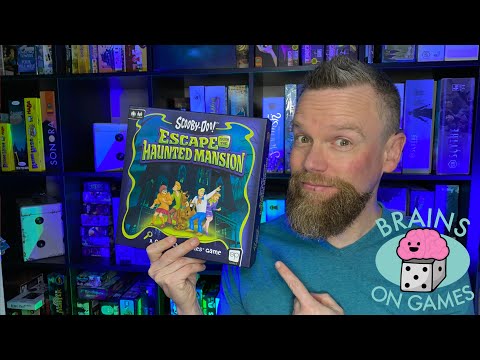
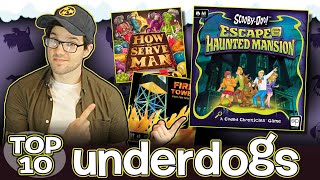
In Scooby-Doo: Escape from the Haunted Mansion, players take on the roles of the teen sleuths and their courageous canine pal to solve a mystery! Work together to decode clues and find your way out of the haunted mansion in this co-operative "Coded Chronicles" game. Can you solve the mystery of Lady Fairmont's ghost with the help of Mystery, Inc.?
In more detail, more than fifty clues are hidden in the pieces and interactive game board to help you discover what happened in Lady Fairmont's haunted mansion! Players share five narrative booklets to be read as everyone works together to fill in the story's missing details. Different parts are kept in secret envelopes to be opened as the crew unlocks the answers.
Scooby-Doo is the first of the "Coded Chronicles" games, the second will be The Shining: Escape from the Overlook Hotel.
-user summary
Step into the roles of Scooby-Doo and the Mystery Inc. gang as you work to solve the mystery in Scooby-Doo: Escape from the Haunted Mansion. Work together to decode over 50 clues and find your way out of the haunted mansion in this cooperative Coded Chronicles game, an officially licensed escape room board game great for Scooby-Doo fans.
More than 50 individual clues are hidden in this game’s interactive game board and pieces to help you discover what happened in Lady Fairmont’s Haunted Mansion! Players will share five narrative booklets, to be read as everyone works together to fill in the story’s missing details. Different parts are kept in secret envelopes to be opened as the crew unlocks the answers, keeping everyone on the edge of their seat. Scooby Doo: Escape from the Haunted Mansion is made for one or more players, ages 12 and up.
About Coded Chronicles: Coded Chronicles is an at-home escape room style game where players work together to unlock clues and solve puzzles by using a unique code revealing mechanic. Each game offers a unique storyline and objective to provide a one-of-a-kind game-play experience.
-description from publisher
Game Components:
5 Narrative Books
13 Map Tiles
60 Clue Cards
8 Secret Envelopes
5 Character Standees
1 Mystery Manual

- cooperative mystery solving with narrative envelopes
- teen sleuths solving a mystery with a dog
- story-driven with secrets in envelopes
Mechanics (from transcript analysis)
- narrative_booklets — five narrative booklets to read
- secrets_in_envelopes — packaged secrets opened to reveal story details
Video topics + discussion points
Quotes (from this video)
- we love breakfast
- ten one minute rounds sounds easy it's not, it's a hectic chaos
- this is a push or luck game so if you take the highest number dice then you move closer to the water
References (from this video)
- Familiar Scooby-Doo IP with strong thematic fit
- Accessible to families and players of various ages
- Vibrant artwork and integration of character abilities
- Encourages observation, pattern recognition, and abstract reasoning
- Replayable structure with multiple clues and map interactions
- Good balance of reading, deduction, and cooperation
- team-based mystery solving; clues, traps, and humor
- Scooby-Doo universe; Mystery Incorporated; haunted mansion setting
- story-driven with Hanna-Barbera cartoon voice
Mechanics (from transcript analysis)
- character abilities — Each Scooby gang member has a unique ability that interacts with map tiles and clues
- Compound Scoring — Scooby Snacks provide hints and affect final scoring
- Cooperative Game — Players work together to solve clues and escape the mansion
- cooperative play — Players work together to solve clues and escape the mansion
- hidden information / envelopes — Secret envelopes with content to be opened at specific times, adding surprise and spoilers
- Hint System — Scooby Snacks provide hints and affect final scoring
- pattern decoding / code-building — Four-digit codes assembled from map tiles, character numbers, and items to access clue text
- reading-driven narration — Storytext and clue text require reading aloud and comprehension
- scoring by hints used — Ending score based on hints used rather than time to escape
Video topics + discussion points
Quotes (from this video)
- a cooperative game so younger kids can definitely pitch in
- Escape from the Haunted Mansion is an escape room game
- it's a game that is going to give you some clues and you're going to try and figure out how to escape from that mansion
- the artwork on the cards is great
- the story is definitely told in the voice of the old Hanna-Barbera cartoons
- you've got to have a good eye for detail
- you're mainly exercising your abstract reasoning skills when you're playing this game
References (from this video)
- spooky season
Mechanics (from transcript analysis)
Video topics + discussion points
Quotes (from this video)
- The highlight of the weekend was a 20-point game of Ziya: Legends of the Drift System that took a big chunk out of our Saturday, but it was a lot of fun.
- This was the third annual board game weekend we've enjoyed together, and I hope we can keep a good thing going next fall.
References (from this video)

- Enjoyable
- Scooby-Doo
- Haunted Mansion
- escape room style
- The Shining
Mechanics (from transcript analysis)
- Escape room — Sort of an escape room style game.
- Puzzle — You'll say, 'Oh, if I put these two numbers together.' Cuz each of the characters will have different things. Fred sets traps and and Scooby-Doo eats things. That's stuff like that. And you put these numbers together and combo your way through.
Video topics + discussion points
Quotes (from this video)
- I know it has its own little like um uh you know sub cult of people who enjoy it.
- I don't particularly like it because I think it has a very strong rich get richer.
- If you start winning an Outpost you were going to continue winning because if your engine gets going faster than mine there's not much I can do about it.
- But yeah this one does not This one is one I wanted to like a lot more than I did.
- it's a good back and forth two-player game.
- I like the theme of it a lot. Seems like most music games I play aren't very good.
- I I find this one amusing.
- It almost feels like you could play it randomly and have the same amount of fun, but it's a nice way to pass some time.
- It's a great little filler.
- I don't think a lot of people have played this one.
- It was replaced by Nobody is Perfect, too, because they didn't get it right the first time.
- This is what a lot of people were talking about.
- It was one of those games that I saw a little bit of buzz and I was like, "Ooh, I'll have to play that sometime." and then never heard anything else about it.
- I think that's just a really solid two-player game from Catalia.
References (from this video)
- Clever system design
- Puzzles ramp up in difficulty
- Hidden envelopes add intrigue
- Cost-effective compared to live escape rooms
- Allows for multiple players to have distinct roles
- Hint system is available
- Neat lookup table system
- One and done game
- Some puzzles can be frustrating or seem unfair (leading to Scooby Snack consumption)
- Potential for component damage by players (historical anecdote from host's experience)
- One instance of a puzzle being incorrectly implemented (missing components/clues)
- Relies on player following instructions precisely to avoid penalties
- Scooby-Doo mystery solving
- Haunted Mansion
- Sherlock Holmes Consulting Detective
- The Goonies: Escape with One-Eyed Willy's Treasure
- The Shining: Escaping the Overlook Hotel
- Exit: The Game series
- Secret Monkey Island
- 1313: Dead End Drive
Mechanics (from transcript analysis)
- Deduction — Players must deduce correct sequences, identify favored animals based on clues, and combine information to progress.
- Deduction (Elimination) — The animal clue puzzle involves eliminating possibilities based on given criteria to identify the correct animals.
- Lookup Tables — Players use numbered clues to reference specific entries in character-specific books for narrative progression and puzzle solutions.
- Player roles — Each player controls a character with a unique specialty (research, investigation, eating, etc.) that is crucial for interacting with the game world.
- Puzzle solving — The game is fundamentally about solving various types of puzzles, including logic puzzles, spatial reasoning, and code-breaking.
- Set Collection — Players need to collect specific items or clues (like pieces of a skeleton key) to overcome obstacles.
- Set Collection (Key Assembly) — Pieces for a skeleton key need to be found and assembled correctly to unlock doors.
Video topics + discussion points
Quotes (from this video)
- I was in the most shiftless and lazy uh let me see uh my name is dandy so she'll sound like that and then this one Velma um the only other sort of cartoony voice I know how to do is this one so this is what the Velma will sound like oh how close was I pretty accurate
- It's a lookup table system that'll remind you maybe a little bit of Sherlock Holmes.
- The puzzles are more interesting than I thought they would be; they definitely stumped me in a couple places and not because I thought that they were unfair but more because I thought I was dumb, which is I mean that's great for a puzzle.
- But you know when you get it and you get that aha moment it's like ah hooray that's pretty cool.
References (from this video)
Mechanics (from transcript analysis)
Video topics + discussion points
Quotes (from this video)
- i really liked this game i thought it was a lot of fun
- it's nostalgic it's just like an episode of scooby-doo
- you win together you lose together
- the puzzles are also great in this game
- this game is only played once so once you've played through it you kind of get the gist of it
- it's a cooperative game so you never have to worry about battling against each other
- we couldn't stop playing this game it was so much fun
- there's a rich narrative here too
- reminds me of an escape room almost where you're moving through all these rooms solving these clues
References (from this video)
- nostalgic Scooby-Doo flavor and strong narrative
- cooperative play with team-based win/lose
- rich, varied puzzles that remain challenging
- accessible setup and engaging theme
- encourages social play and supports multiple players
- escape-room-like pacing and satisfying aha moments
- not for players who are not into storytelling
- limited replay value; once you've played through it, not many surprises on replay
- not a competitive game; may not appeal to players seeking competition
- mystery solving with Scooby-Doo characters
- haunted mansion
- narrative-driven, clue-based progression with an aha moment; uses narrative booklets
Mechanics (from transcript analysis)
- character-to-location matching — match these Scooby-Doo characters to map locations to trigger events
- clue-driven puzzles — solve clues using character actions (investigate, smell, use, etc.)
- Cooperative Game — players work together rather than competing to escape the mansion
- cooperative play — players work together rather than competing to escape the mansion
- Deduction — solve clues using character actions (investigate, smell, use, etc.)
- health resource management — Scooby snacks serve as health points; losing them risks failure
- Resource Management — Scooby snacks serve as health points; losing them risks failure
- setup with narrative booklets and envelopes — setup includes distributing narrative booklets, map tiles, clue tiles, and secret envelopes
Video topics + discussion points
Quotes (from this video)
- i really liked this game i thought it was a lot of fun
- it's nostalgic it's just like an episode of scooby-doo
- you win together you lose together
- the puzzles are also great in this game
- this game is only played once so once you've played through it you kind of get the gist of it
- it's a cooperative game so you never have to worry about battling against each other
- we couldn't stop playing this game it was so much fun
- there's a rich narrative here too
- reminds me of an escape room almost where you're moving through all these rooms solving these clues
References (from this video)

- solving a mystery with the Scooby-Doo gang
- haunted mansion
- narrative-driven exploration using read-aloud passages
Mechanics (from transcript analysis)
- Cooperative Game — All players collectively decide actions for characters; there are no individual turns.
- cooperative play — All players collectively decide actions for characters; there are no individual turns.
- Deduction — Hints can be consulted in the back of the rulebook to help with puzzles, progressing through rooms and codes.
- End Game Bonuses — Final scoring is determined by solving the mystery and the number of scooby snacks remaining.
- End-game scoring — Final scoring is determined by solving the mystery and the number of scooby snacks remaining.
- hints and spoilers via rulebook — Hints can be consulted in the back of the rulebook to help with puzzles, progressing through rooms and codes.
- item cards and inventory — Blue-border item cards are carried by characters and used to solve puzzles; items persist until discarded.
- map tiles and clue cards — Map tiles are placed and turned; clue cards are revealed in response to passages and numbers.
- movement between connected rooms — Characters can be moved between rooms that are connected by unlocked doors.
- narrative books and passages — Players read numbered passages aloud to drive gameplay and triggers events.
- Narrative Choice — Players read numbered passages aloud to drive gameplay and triggers events.
- Pattern Recognition — Puzzles use numerical sequences; digits from map tiles and items form four- or two-digit codes that unlock passages or reveal cards.
- puzzle solving with digits — Puzzles use numerical sequences; digits from map tiles and items form four- or two-digit codes that unlock passages or reveal cards.
- reset and replay options — After finishing, players can reset using a publisher-provided link.
- scooby snacks as a resource — Scooby snacks are scratched off in response to hints and can influence final scoring.
- Score-and-Reset — After finishing, players can reset using a publisher-provided link.
- secret envelopes — Secret envelopes are opened to reveal contents that aid puzzle solving.
- two-chapter structure — The game is divided into two chapters, with a potential pause point after the first chapter.
Video topics + discussion points
Quotes (from this video)
- no one player will control a particular character and there aren't turns for players to take either instead you'll all work together as a group and decide what you want a character to do next
- once the game tells you that you've escaped you win
- scooby-doo escape from the haunted mansion is part of a series called coded chronicles you can check out the op dot games for more titles in the series and follow them for additional adventures to be released in the future
References (from this video)
- Reusable scenarios with different setups
- Good fit for two players
- Thematic flavor ties to Scooby-Doo
- Can be less challenging for some players
- Some setups may rely on reading/storybook elements
- Array
- Scooby-Doo universe set in a haunted mansion
- Cooperative puzzle-adventure with a playful mystery theme
Mechanics (from transcript analysis)
- Cooperative Game — Players work together to explore rooms and complete scenarios.
- cooperative play — Players work together to explore rooms and complete scenarios.
- Story/scenario-based play — Scenarios provide varied setups and replayability without component destruction.
Video topics + discussion points
Quotes (from this video)
- i actually prefer it two players
- two players it's almost too easy
- it's an escape room style game
- you don't know what your partner is programming
References (from this video)
- IP familiarity and fun theming
- accessible puzzle mechanics
- solvability may be obvious to fans
- themed mystery adventure
- mystery mansion caper with the Scooby-Doo gang
- lighthearted mystery with pop culture IP
Mechanics (from transcript analysis)
- cooperative puzzle-solving — Players work together to unravel clues and escape
Video topics + discussion points
Quotes (from this video)
- yelling is cathartic, it's good for you
- my asian parents won't be too disappointed
- it's the warm-up, but you're doing great
References (from this video)
- nostalgic Scooby-Doo theming with strong thematic cues
- easy to teach, accessible family weight
- two-chapter structure provides a self-contained mystery when time is limited
- one-time play experience; spoilers after solving
- replayability is limited unless playing with a fresh group or new variants
- mystery solving with the Mystery Inc. crew
- Scooby-Doo universe, haunted mansion investigation
- episodic mystery with clue discovery and puzzle solving
Mechanics (from transcript analysis)
- character abilities — each Mystery Ink character has a unique action or ability that helps progress clues.
- clue cards and investigation — collect and cross-reference clues across rooms to advance the mystery.
- Cooperative Game — players work together as the Mystery Inc. team to solve clues and identify the culprit.
- cooperative play — players work together as the Mystery Inc. team to solve clues and identify the culprit.
- Deduction — collect and cross-reference clues across rooms to advance the mystery.
- puzzle solving and chapter progression — players solve puzzles that unlock new information and move toward the reveal.
Video topics + discussion points
Quotes (from this video)
- this game feels like you got dropped right into an episode of Scooby-Doo
- nostalgia as soon as we opened the box
- thematic alignment with classic horror monsters
- immersive it feels less like a game... more like an experience to be had