Game Info
Year
2020
Players
1-2
Age
12+
Playtime
30 min
Complexity
2.4/5
Collection
Ratings
Creator Score
Mechanic profile
Not enough video data yet
Vibe profile
Not enough video data yet
Description
Players compete for control of four flotillas on an ocean world by diving for resources and building structures through a shared resource mechanic
Featured Videos


Ask a Rules Question
All mentions
Browse transcript mentions, sentiments, pros/cons, mechanics, topics, quotes, and references.
Total mentions: 5
This page: 5
Sentiment:
pos 4 ·
mix 0 ·
neu 0 ·
neg 0
Showing 1–5 of 5
Video ZwCeBLeO6iE
Getting Games Discussion at 36:35
video_pk 90899 · mention_pk 243378

Click to watch at 36:35 · YouTube ↗
Pros
none
Cons
none
Thematic elements
Comparison games
none
Mechanics (from transcript analysis)
Mechanics unknown.
Video topics + discussion points
No key topics recorded for this video.
Quotes (from this video)
No quotes stored for this video.
References (from this video)
No references stored for this video.
Video 4LijCXvWXZk
Meeple University Top 10 List at 22:49 sentiment: positive
video_pk 90718 · mention_pk 242669

Click to watch at 22:49 · YouTube ↗
Overall sentiment (raw)
positive
Pros
- Best game played this year
- Directly affects the other player
- Juicy
- So many different layers
- Really, really good game
- Next level up from Seven Wonders Duel
Cons
- Restriction of being designed for two players
Thematic elements
- Building and resource management on the sea
- Flotilla universe
Comparison games
- Flotilla
- Seven Wonders Duel
Mechanics (from transcript analysis)
- Area Control — Positioning ships to influence opponent's building choices.
- Engine Building — Buildings give bonuses, and the goal is to keep going without gathering resources.
- Resource Management — Gather resources and use them to build buildings.
- Set Collection — Implied through gathering resources and building.
- Tile Placement — A two-player tile placement game.
- two-player — Strictly a two-player game.
Video topics + discussion points
No key topics recorded for this video.
Quotes (from this video)
- our top 10 games of 2020
- it's the games we associate with this year
- all the games i really liked were mid-weight games
- i haven't seen any party games in 2020
- i'm not a stagnant object i vary from time to time
- i was super surprised when i played the crew and i love it love it love it
- it's such a simple idea taking trick taking you know traditional style essentially traditional trick taking and turning it into a cooperative puzzle
- it is the most innovative thing that I've seen in gaming this year
- oh my gosh that game oh i blew my mind
- there is nothing innovative in this game
- it is just a perfect interlocking of things that already exist to make something that is really satisfying
- what is your top ten from the comment sections below
- it is subjective because this is what we personally like
References (from this video)
No references stored for this video.
Video C4_d-wRnqrE
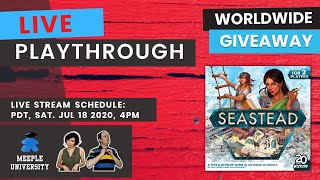
Playthrough at 2:36 sentiment: positive
video_pk 78609 · mention_pk 191476
Click to watch at 2:36 · YouTube ↗
Overall sentiment (raw)
positive
Pros
- Meaty two-player game with tight decisions
- Rich strategic depth and endgame potential
- Aesthetically strong with ocean theme
- Clear scoring through docks and ships
Cons
- Complex rule set and order of operations may be challenging
- Streaming camera angles can affect visibility
- Pricing/availability details discussed but not definite
Thematic elements
- competition for space/resources and victory points
- A flooded world with flotillas; building on floating platforms
Comparison games
- Flotilla
- Toy Story Obstacles
Mechanics (from transcript analysis)
- building structures — pay resources to build a building on a flotilla; buildings have effects and space-based bonuses
- Diving for resources — take a dive card; both players gain something; you split the card halves and choose which to keep
- End Game Bonuses — endgame can be triggered by flotilla fullness, or other conditions; rounds continue until triggers; round counting matters
- endgame triggers — endgame can be triggered by flotilla fullness, or other conditions; rounds continue until triggers; round counting matters
- I Cut, You Choose — take a dive card; both players gain something; you split the card halves and choose which to keep
- Location actions and swaps — locations allow actions including swapping resources and unlocking bonuses; affects future turns
- shipyards and ships — shipyards produce ships; ships occupy spaces and unlock bonuses; moving ships influences scoring
- specialists — academy builds allow selecting a specialist card with abilities; used as if you own that card; may require resources
Video topics + discussion points
No key topics recorded for this video.
Quotes (from this video)
- "this week's game seastead on tabletop simulator"
- "two-player game"
- "i really like the choices in this game; i really do enjoy this game"
- "meaty two-player game"
References (from this video)
No references stored for this video.
Video 5hH2km-B76s
Maple University Playthrough at 2:41 sentiment: positive
video_pk 78608 · mention_pk 191475

Click to watch at 2:41 · YouTube ↗
Overall sentiment (raw)
positive
Pros
none
Cons
none
Thematic elements
Comparison games
none
Mechanics (from transcript analysis)
Mechanics unknown.
Video topics + discussion points
No key topics recorded for this video.
Quotes (from this video)
- this is the new hot release from hobby world international
- money money is victory points money is victory points we never spend it
- this game looks awesome indeed
- balancing your sales cards with your purchase cards because it's leftover resources
References (from this video)
No references stored for this video.
Video 7-UsVvEVIMY
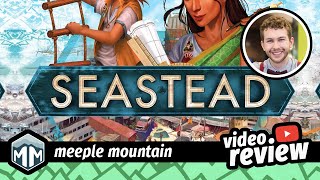
Meeple Mountain Review at 0:12 sentiment: positive
video_pk 40636 · mention_pk 123179
Click to watch at 0:12 · YouTube ↗
Overall sentiment (raw)
positive
Pros
- Accessible and easy to teach
- Tight two-player design with meaningful interaction
- Deep strategic options and rewarding synergies
- Compact box with substantial depth
- Modular depth with optional decks for replayability
Cons
- Two-player only design may limit group play
- Depth can be intimidating for newcomers without guidance
- Resource and dive card draws can introduce luck.
Thematic elements
- Resource management, competition and cooperation to become the savior of humanity, with short-term tactics and long-term scoring planning.
- A flooded future where humanity builds and lives on four flotillas, diving for resources and artifacts to survive and shape the future.
- Competitive-cooperative two-player dynamic where players strive to outpace each other while enabling mutual progress, with modular depth through optional decks.
Comparison games
none
Mechanics (from transcript analysis)
- Academies and Specialist Cards — Academies give access to specialist cards with unique abilities; specialists can be flipped for reuse or kept face up for their VP value.
- building — Spend matching resources to build structures on flotillas; you choose from leftmost available buildings such as shipyards, academies, or ports and each grants distinct bonuses.
- Deck Building — Provide ships that grant discounts on building and can grant a free resource to you when your opponent builds nearby; adds strategic placement and timing.
- Deck Modularity — B-side specialist cards and decree cards add optional complexity, increasing depth and variability between games.
- Diving — On your turn you flip the top card of the dive deck and orient it to split resources between you and your opponent; some cards lock flotillas and influence future costs.
- End Game Bonuses — End can be triggered by fully developed flotillas, a single building left on a player board, a depth card being revealed, or depletion of cleanup tokens.
- endgame triggers — End can be triggered by fully developed flotillas, a single building left on a player board, a depth card being revealed, or depletion of cleanup tokens.
- I Cut, You Choose — On your turn you flip the top card of the dive deck and orient it to split resources between you and your opponent; some cards lock flotillas and influence future costs.
- Multi-Use Cards — Academies give access to specialist cards with unique abilities; specialists can be flipped for reuse or kept face up for their VP value.
- Ports and Docks — Ports allow you to place docks which grant end-game bonuses and influence final scoring; docking choices affect endgame strategy and point potential.
- Shipyards — Provide ships that grant discounts on building and can grant a free resource to you when your opponent builds nearby; adds strategic placement and timing.
Video topics + discussion points
No key topics recorded for this video.
Quotes (from this video)
- I love how accessible it is, how easy it is to teach.
- Two-player games have earned a special place in my heart because the game design just shines through in a two-player game.
- If I were to give it a rating I would say this is an 8 out of 10 in the two player game category.
References (from this video)
No references stored for this video.
Transcript Navigation
Showing 1–5 of 5