


Seven Bridges Deep Dive
What the Community Thinks About Seven Bridges
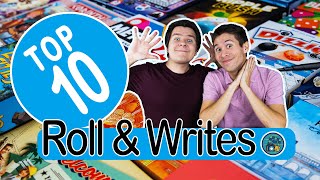
Reviewers agree on the central appeal of Seven Bridges, which is that its scoring grows out of a real place. The Kovray hosts, Ilya and Tyler, said there is so much possibility for scoring in the game and that this is what makes it really exciting. When the same pair later ranked their favorite roll-and-write games, Seven Bridges landed at number ten, and they said its scores run high, which is part of why it sits at ten and not higher.
Getting Games approached the game from a different angle. The host played a prototype at Origins and called it a neat game of drawing things out. The host said it seemed largely finished at that stage and was watching for tweaks before the planned Kickstarter campaign. The praise for the big totals and the complaints about the tallying come from the same reviewers, and the core idea itself drew praise, with the host calling it a neat game of drawing things out.
Core Mechanics That Define Seven Bridges
Dice Drafting With Half-Symbol Paths
The Kovray hosts treat the dice draft as central to the experience. Players draft from a shared pool, and the goals are printed along the side of the sheet, so each pick has to account for what the other players are taking. Ilya and Tyler said this keeps the game from feeling solitary even though each player keeps a personal sheet. Some dice show only a half symbol, and the hosts said these are the piece they enjoy most, because players have to use them strategically to build paths around the city, perhaps across all seven bridges. The group starts from the same spot, which one player chooses, and from there each sheet develops along its own routes.
Route Building Across a Real City Map
The map is the mechanic as much as the setting. Getting Games described the source material as a famous math problem about whether one person could cross all seven bridges of Königsberg without crossing any one of them twice. In the game, players draw routes through the city, and the shapes must be drawn exactly as they are oriented on the map. Kovray noted that the half paths proved surprisingly effective, which suggests that small geometric details carry real weight when planning a route.
The Seven Bridges Experience
Satisfaction From Big Totals
Reviewers describe the finish as a real feeling of accomplishment. Kovray said the large numbers are exciting to earn and that players feel very accomplished when they finish. One scoring condition asks players to count the buildings they reached along their route, and the hosts said those counts can climb into the 30s, 40s and 50s, with 60 or 70 possible. Coloring and counting every one of them looks redundant on paper, yet the hosts said it feels good, because the tally shows the player visited a lot of the city in a short span.
Tedium at the Scoring Stage
The same scoring that rewards players also creates friction. One of the hosts said the game is very tedious to go through when it is time to score, and that this tedium was the reason it was not going to make their top 10. Reviewers still call it a fun game in which a player can gather many short point sources and feel good about each one. The result is enjoyment with a chore attached to the finish.
What Makes Seven Bridges Stand Out
A Map Built From a Real City
Kovray praises the fact that the board reproduces an actual city. Kovray pointed out that Alhambra also layers a board over a real setting, but said Seven Bridges goes further because it uses the exact outline of the city and its real buildings, which they likened to the blueprint of a community. The hosts also said the most appealing version of the idea is a game about the routes and bridges a person travels in their day-to-day life.
Shared Start, Different Routes
The second standout is the way shared rules lead to different maps. Everyone starts from the same point, yet the choice of starting spot and each dice pick produce sheets that look different by the end. Kovray also noted that the colored pencils included in the game can be used to help score or simply to make the paths more vivid, which adds a creative layer to a game about efficient planning.
Potential Drawbacks
Scoring Takes a While
This is the criticism that comes up most clearly. One of the hosts said the scoring is very tedious, and that this is why the game did not make their top 10 list. Kovray praised the feeling of finishing a big total, but the same reviewers said reaching that finish takes real patience. Counting every building on a route is also, by the hosts' own description, redundant on paper, so the scoring phase asks players to repeat work they have already done on the map. Players who dislike long tallies should expect to spend a noticeable part of the session on scoring.
Scores High Enough to Cap the Ranking
The high totals are both an appeal and a limit. The hosts said the scores run really high, and that this is part of why the game sits at ten rather than higher on their list. Because the totals come from many small counts, the final figure reflects a long run of tallying rather than a single decisive moment, and that is the same tally the hosts found tedious. The satisfaction of a big number arrives only after the longest part of the scoring is done.
If You Enjoy Seven Bridges
Players who enjoy Seven Bridges' real-map scoring will find a comparable layered-board experience in Alhambra, which reviewers themselves brought up as a point of comparison. Alhambra uses a 6x6 grid and a shared dice pass, so it shares some of the same tension between personal sheets and what the other players are taking. Players who enjoy drawing a shared map and filling it with shapes will find similar satisfaction in Cartographers, which Kovray ranked in the same top 10 list and described as a game in which you draw whatever shape comes up and fill it with houses, trees and other features.
What Reviewers Are Saying
"This is the exact outline of the city, same buildings like it'd be like if we were here in Edmonton it'd be like the blueprint of our community."
— Kovray
"One of the scoring conditions is you have to count all the buildings that you've encountered on your path and you can get upwards to 50, 60, even like 70 buildings, which is it seems a little bit redundant coloring all of them in and counting all of them, but it feels good to me because it's just like yes, I did all of this in a short span."
— Kovray
"It's just a neat game of like drawing things out there are seven different scoring conditions there are seven bridges you get to count the number of scoring conditions equal to the number of bridges you crossed overall it had some neat stuff going on."
— Getting Games