


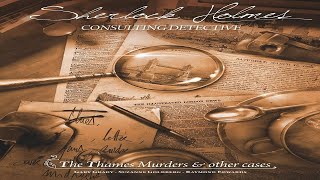
















Sherlock Holmes Consulting Detective: Carlton House & Queen's Park Deep Dive
What the Community Thinks About Sherlock Holmes Consulting Detective: Carlton House & Queen's Park
Reviewers consistently treat Sherlock Holmes Consulting Detective as one of the defining deduction games on the tabletop. The Carlton House & Queen's Park expansion sits within a larger family of case files that players work through, and reviewers tend to discuss the line as a whole. Stonemaier Games calls it a classic detective mystery game and places it among the genre's most important titles. The praise centers on the feeling of cooperating with the other players to crack a case faster than Holmes himself.
The community agrees on the core appeal but disagrees on how the game should be played. Shelfside frames it as a "no Johnny" game, meaning it rewards a single correct line of reasoning rather than self-expression. Players who want a competitive scoreboard tend to find that scoreboard hard to win against Holmes. Players who care more about the story treat that same scoreboard as optional. Ryan and Bethany Board Game Reviews describe their own group abandoning the goal of beating Holmes altogether and playing as Watson and his companions to explore the town. Reviewers who share that approach generally describe a richer, more relaxed session.
Core Mechanics That Define Sherlock Holmes Consulting Detective: Carlton House & Queen's Park
Deduction
Deduction is the engine of the game. Reviewers describe a case book in which the players receive a crime and a small amount of initial information, then follow leads by visiting locations, interviewing witnesses, and reading the newspaper clues that accumulate over the course of the investigation. BoardGameGeek describes the game as a deduction mystery solving experience in which players chase down leads and look for clues to solve famous cases. Gaming with Edo & Jessica highlights the newspaper itself as the key clue source, a large spread that players can work through to find the details that matter. The deduction is not a pure logic puzzle, because the clues are rarely laid out cleanly. Reviewers note that many leads turn out to be dead ends, and sorting the useful information from the noise is where much of the satisfaction comes from.
Scoring Against Holmes
The game also measures performance through a scoring system that pits the players against Sherlock Holmes. Shelfside explains that the more closely a player reasons like Sherlock, the higher the score. Chairman of the Board notes that the scoring system is the reason the game feels like a competition, even though Holmes is "ridiculously good" at it and players cannot realistically match him. Reviewers see the score as a way to structure the investigation rather than as the reason to play. Several reviewers mention answering the questions printed at the end of each case as an alternative measure of success, which lets groups set their own target.
The Sherlock Holmes Consulting Detective: Carlton House & Queen's Park Experience
A Leisurely, Unhurried Evening
Many reviewers describe the game as the opposite of a frantic session. Chairman of the Board frames it as an evening activity in which players set aside time, take their time with each lead, and enjoy the slow build of a case. That pace is a deliberate part of the design. Without a timer forcing decisions, players can read the newspaper entries carefully, revisit earlier clues, and reason through the connections without pressure. Reviewers who favor quieter, thoughtful games tend to rate this atmosphere highly.
Shared Cleverness Around the Table
The second dominant feeling is the satisfaction of solving a puzzle together. BoardGameGeek emphasizes that people enjoy feeling clever while working together to crack a case, and that the Sherlock Holmes brand gives the experience a familiar and widely loved anchor. Reviewers also note that the game works for solo players, and Gaming with Edo & Jessica describes enjoying it alone by following every lead rather than chasing a high score. The shared experience remains the strongest pull, particularly for groups that talk through each clue together.
What Makes Sherlock Holmes Consulting Detective: Carlton House & Queen's Park Stand Out
The Newspaper as a Clue Source
Reviewers repeatedly single out the newspaper as the game's most memorable component. Clues are embedded in articles, advertisements, and reports, which gives the investigation a grounded, period feel. Gaming with Edo & Jessica describes the newspaper as the element that makes each case feel like a real investigation. The format also gives players a reason to read closely, because the important detail is often hidden in something that looks irrelevant on first pass.
Campaign Length and Replayability
Reviewers praise the game's structure as a campaign of cases rather than a single scenario. Ryan and Bethany Board Game Reviews describes the base box as a series of ten crimes, and reviewers note that the game also contains secondary mysteries that players can solve beyond the main objective. BoardGameGeek points out that the concept can continue indefinitely as long as new cases are available, and that players can draw on Holmes stories or invent their own. That open-endedness is a key reason reviewers consider it a lasting title.
Potential Drawbacks
Limited Room for Self-Expression
Shelfside raises the most pointed criticism. The game offers one correct path through each case, so players who want to express a personal style or try unconventional approaches may find the experience narrow. The reasoning is strong, but reviewers who enjoy open-ended play may feel constrained by the single intended solution. Groups that prefer varied tactics over a single line of deduction tend to be less satisfied with this design.
A Scoreboard That Is Hard to Win
The competitive framing is a recurring source of frustration. Holmes is an extremely strong opponent, and Stonemaier Games notes that beating him better and faster is arguably not possible within the game. Ryan and Bethany Board Game Reviews reached the same conclusion after their first play and shifted their goal to exploration. Players who expect a winnable challenge may feel discouraged, while those who accept the story-first approach tend to enjoy the game more. Reviewers agree that the score works best as a reference point rather than a measure of success.
If You Enjoy Sherlock Holmes Consulting Detective: Carlton House & Queen's Park
Players who enjoy the case-solving loop will find several neighbors in the same space. Stonemaier Games compares the title with Micro Macro Crime City, which shares the detective focus but places all the information on a large shared map, making it faster and more visual. The same reviewer also points to Here Lies, a murder mystery in which players work together to piece together a scenario through character-specific clues. For players who enjoy escape room style puzzles, BoardGameGeek identifies this game as an early precursor to the modern escape room genre. The comparison games Detective from Portal Games and Tales of Arabian Knights also reward careful reading and deduction, making them natural next steps for players who want more narrative investigation.
What Reviewers Are Saying
"You are actually cooperatively working to try to solve a mystery better and faster than Sherlock Holmes, which I don't think is even possible in the game."
— Stonemaier Games
"This is the furthest thing from a frantic game. This is the kind of game where you just want to put the whole evening aside, take your time and just try to solve this murder mystery."
— Chairman of the Board
"There are a lot of dead ends and red herrings, and finding some of those and having some of those fun moments is definitely worth it."
— Gaming with Edo & Jessica