


St Patrick Deep Dive
What the Community Thinks About St Patrick
St Patrick is a trick-taking card game for two to four players, and reviewers describe it as a game built around a push-your-luck tension layered on top of familiar trick-taking play. Over several rounds, players compete to keep the most life points by recovering relics while trying to avoid snake bites. The Watch It Played reviewer, who covered the game when it was announced, said the push-your-luck element was the reason they were eager to try it, even though they had not yet seen how it played.
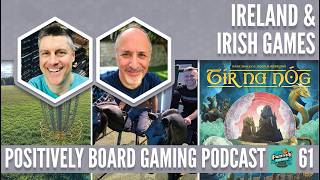
Grant Lyon, reviewing the game as part of a roundup of new editions, framed St Patrick as a blend of older card games. In Grant Lyon's telling, it takes the fun of Hearts, the bidding assessment of Oh Hell, and the fairness of Duplicate Bridge, and Grant Lyon recommended it to anyone who enjoys trick-taking. Grant Lyon also noted that the game was first released as Salvage and has been re-released under its current name, and admitted that the St Patrick title could not be explained beyond the green color and the saint on the cover. The Positively Board Game hosts remembered it as a small trick-taking game with a clever hook involving snake tokens, though neither host could recall the details of that hook, and they invited viewers to fill in the gap.
Core Mechanics That Define St Patrick
Trick-Taking With Bids as Insurance
Trick-taking is the foundation of St Patrick. In the general mechanic, one player leads a card each round and the others follow in turn, usually matching the led suit if possible, and the highest card of the led suit or of a trump suit wins the trick. Grant Lyon explained how St Patrick layers a bidding system on top of this structure. Each player predicts how many tricks they will win in a hand, and damage is only taken for tricks won beyond that bid. That makes the bid function as an insurance policy, protecting a player from taking damage if they win fewer tricks than they predicted. The catch is that if everyone's combined bids add up to the total damage that can be absorbed, everyone loses the amount they bid, so aggressive overbidding across the table can backfire for the whole group.
Push-Your-Luck Relic Recovery and the Snake Hunt
Each round moves through three phases: dealing cards, recovering relics, and hunting snakes. Reviewers highlighted the relic phase as the source of the game's tension. Players gather relics before the snake hunt, but the Watch It Played reviewer pointed out that if players are greedy, the relics they collected can turn into curses, and each player then loses as many life points as the number of relics they collected. That creates a pressing decision about when to stop gathering, and it is the feature that gives the trick-taking play its edge. Reviewers linked this directly to the game's humor, since the snake-hunt phase carries an Indiana Jones style adventure tone.
The St Patrick Experience
Greedy Tension in Every Round
Reviewers describe the St Patrick experience as a constant weighing of risk against reward. Because the relics and the snake hunt are connected, every round asks players to decide whether one more relic is worth the chance of a costly curse. The Watch It Played reviewer framed this as the appeal of push-your-luck games in general, while admitting that such games have not always worked out for them. For players who enjoy that tension, St Patrick is presented as a trick-taking game where the bidding and the relic gathering keep pressure on the table from start to finish.
Playful, Irreverent Theme
Reviewers also describe a light, humorous tone. The Watch It Played review leaned into the snake bite theme, and the Grant Lyon review noted that the title itself is unexplained beyond its green color and the saint on the cover, so the theme is carried mostly by the art and the snake bite humor. The Positively Board Game hosts remembered the snake theme even though they could not recall the mechanics that go with it. The result is a game that feels approachable and good-natured, with a theme that adds personality to what is otherwise a fairly standard set of trick-taking decisions.
What Makes St Patrick Stand Out
An Elimination Ending Where Points Still Decide
Grant Lyon described an ending that differs from a typical trick-taking game. Everyone starts with a set number of points and takes damage over the course of play. When the first player is eliminated, the game does not end in a scramble for the table. Instead, whoever has the most points at that moment still wins. That structure gives the game a clear finish while keeping the scoring tied to the same bidding decisions that drive the rest of the game.
A Hybrid Design Built From Familiar Games
Reviewers see St Patrick as a deliberate combination of established card games. Grant Lyon's description of it as a mix of Hearts, Oh Hell, and Duplicate Bridge points to a design that rewards players who already know those games, since the trick-taking foundation and the bidding logic will feel familiar. The Positively Board Game hosts described it as a small trick-taking game, which suggests that the design is compact enough to suit a quick game night. Reviewers frame this combination as the game's main selling point for trick-taking fans.
Potential Drawbacks
Greed Punishment Can Feel Harsh
The most common concern in the discussion is the penalty for greed. The Watch It Played reviewer said that they love push-your-luck games but tend to lose them, and that the greedy approach has repeatedly failed them in the past. A system where the relics you collect can become curses that cost you life points means that a single overly ambitious round can swing the game sharply. Players who dislike losing a large chunk of progress to one bad decision may find that this part of the design requires patience.
Reviewers Have Only Limited Hands-On Information
Most of the commentary in these videos comes from announcements or from memory, not from extended play sessions. The Watch It Played review was written before the game's release, and the Positively Board Game hosts could not recall the details of the snake hook. The Grant Lyon review repeats the design summary as it was described to Grant Lyon, without hands-on play. Prospective players should keep in mind that the community's assessment of how the game plays in practice is still thin, and that the most specific praise comes from the design summaries rather than from long-term table experience.
If You Enjoy St Patrick
Reviewers suggest that St Patrick will appeal most to people who already enjoy trick-taking games, especially those who like the bidding and prediction side of games like Oh Hell. Players who enjoyed the mix of Hearts and Duplicate Bridge in Grant Lyon's description may also find the design familiar and comfortable. Anyone who likes the push-your-luck tension of a game where greed carries a real cost, along with a lighthearted theme, should find something to enjoy here. The Positively Board Game hosts also pointed to Brian Boru, High King of Ireland, as a clever trick-taking game with area control, and to Irish-themed tile placement and drafting games for players who want more Irish flavor from their tabletop choices.
What Reviewers Are Saying
"You only take damage for the amount of tricks you win more than what you bid, more than you predict, and your, your, your bid, your prediction, is an insurance policy for you."
— Grant Lyon
"I'm a greedy gamer and I refuse to learn my lesson, so push your look games just don't work for me. I love them, but I lose."
— Watch It Played
"I wish I could remember the hook of it because I recall it having a really clever hook involving, I think, snake tokens or something."
— Positively Board Game