



Star Trek: Super-Skill Pinball Deep Dive
What the Community Thinks About Star Trek: Super-Skill Pinball
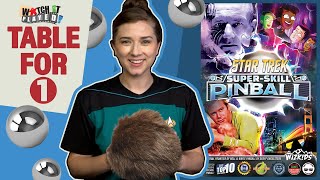
Coverage of Star Trek: Super-Skill Pinball comes from two directions: fans who are drawn in by the franchise, and players who already know the Super Skill Pinball system underneath. The Watch It Played news segment focused on the announcement itself, mostly for its Star Trek branding, and described the set as a range of four tables from an introductory Starfleet Academy board built around the Kobayashi Maru to an all-out Borg Attack board. Table for One took the hands-on route and filmed a full solo session on the Trouble with Tribbles table, which gives the clearest picture of how the game plays from one roll to the next.
The Dice Tower hosts came to the game through a ranking of Star Trek board games, and both said they like it a lot. They noted that the Super Skill Pinball line is essentially solo play and credited the series for feeling good on the table. The disagreement is less about whether the game works and more about how far it goes with the franchise. Table for One enjoyed the Tribble chaos but was disappointed when a tilt ended a round early, while the Dice Tower hosts felt the game is not the most Star Trek themed of the titles they covered, even though the designers themed it well. The overall picture is of a satisfying roll-and-write pinball game with a Star Trek layer that reviewers appreciate most when the Tribbles are doing something unexpected.
Core Mechanics That Define Star Trek: Super-Skill Pinball
The Roll-and-Write Pinball Board
Designed by Jeff Engelstein and published by WizKids, Super-Skill Pinball turns a pinball table into a roll-and-write board. Each round the player rolls two dice and uses one of them to mark a box on the board, while the other die can be sent through the Klingon spinner, where unused dice score as the ball passes through. Table for One's host explained that the player decides where each die lands, so the dice act as a plan rather than a result. After the pet area is filled, a skill shot becomes available, and it can replace a die roll the player does not like. The Watch It Played segment described the series as a sequel line built on Engelstein's earlier pinball design, which helps explain why the core flow feels familiar to players who know the format.
The Tribble Track
The second core system is the Tribble track, which works as the game's track advancement mechanic. Filling the scoop boxes lets the player add or subtract that many Tribbles from the track and earn the same number of points. Rolling doubles forces Tribbles onto the track in the amount of the doubled value, while the hiss, purr, and bonus areas can multiply later scoring or allow the track itself to be scored. If the track runs out of room, the ball is lost and the round ends, so the track works as both a scoring engine and a countdown. Table for One's host described it as a balancing act, saying the player has to find the sweet spot with the Tribbles, scoring as high as possible without overflowing the track.
The Star Trek: Super-Skill Pinball Experience
Tribble Growth as the Source of Tension
Table for One's host treated the Tribbles as the main source of tension, and the most vivid moments come when a double roll adds a fresh wave of them. The host kept a physical Tribble on the table for company, and the mood shifts with every roll as the track fills up. Each new roll becomes a question of whether to add Tribbles for a bigger bonus or subtract them to stay safe, which keeps the experience lively even when the score is modest. The theme lands well here because the Tribbles feel like a living problem rather than a number on a track.
Solo Play and the Tilt Gamble
Solo play sets the rhythm of the game. Without opponents, the host explained that Tribbles can be cleared to a friendly planet, which turns what would be a harmful move in multiplayer into a release valve. Tilt is the risk that shapes the pace. The host explained that if the two dice differ by less than four, the ball tilts and the round ends, so a late-round nudge that changes a die can either save a round or lose it. Table for One's host called one tilt a missed opportunity that cost a large Tribble bonus. The Dice Tower hosts also framed the Super Skill Pinball line as essentially solo games, which fits short, intense rounds where every decision matters.
What Makes Star Trek: Super-Skill Pinball Stand Out
Star Trek Theming Built Into the Mechanics
The most consistent praise is that the theme is built into the mechanics rather than pasted on top of a generic table. Klingon spinners, transporter bounces, and Tribble tracks do real work in the scoring and the choices the player makes. The Dice Tower hosts said the designers did a good job theming the Super Skill Pinball boards, and they named the holiday editions as favorites within the line as well. Watch It Played said the announcement caught attention simply because of the first two words in the title, which suggests the franchise connection is the main hook for many players.
Four Distinct Tables in One Box
The game includes four tables, Starfleet Academy, Borg Attack, Star Trek: Lower Decks, and the Trouble with Tribbles table, so each board changes the feel of play. Watch It Played described the range from an introductory board built around the Kobayashi Maru to an all-out defense of the quadrant on the Borg Attack board. Table for One's session on the Tribble board shows how the same core system can feel very different on a different layout. For players who want variety in a single box, the spread of tables is the feature reviewers point to most often.
Potential Drawbacks
Punishing Tribble Growth and Abrupt Round Endings
The Tribble system is the source of both the fun and the frustration. Table for One's host said the Tribbles got a little out of control, and the second round ended far sooner than the first after an attempt to game the track too hard. Doubles can add Tribbles faster than a player can remove them, and a tilt can end a round before a planned bonus is scored. The host's disappointment at losing a near-perfect track is a good reminder that the swings in this game can be sharp, and that a single bad roll can undo a good setup.
Physical Pinball Hardware and Theme Limits
The Dice Tower hosts identified the main physical issue as marble erasing on the pinball machine they used, and they said the problems came from that machine rather than from the boards, which they called solid. The distinction matters: the trouble lies in the mechanism that carries the ball, not in the printed game. The hosts also said the game is not the most Star Trek themed title they covered, because it is still a pinball game with a Star Trek layer on top, even though they felt the designers did a good job with the theme.
If You Enjoy Star Trek: Super-Skill Pinball
Reviewers mostly compare this game to the rest of its own family. The Dice Tower hosts placed it within the Super Skill Pinball series by Jeff Engelstein and named it among their favorites in the line, alongside the holiday editions. Watch It Played framed the four tables as a progression from the Kobayashi Maru challenge at Starfleet Academy to the all-out defense of Borg Attack. Table for One listed Star Trek: Lower Decks as one of the four boards in the box. Players who already know the base Super Skill Pinball system will recognize the flipper and dice logic, with the Tribble track and Klingon spinner adding the Star Trek flavor. Direct comparisons to other Star Trek board games were limited in these videos, so the base series is the most useful point of reference.
What Reviewers Are Saying
"we will be gaining tribles and losing tribles throughout the game hopefully scoring us some points"
— Paula, Table for One
"the trouble with tribles you think you got rid of them and then they reproduce"
— Paula, Table for One
"Everything feels good in those."
— The Dice Tower