/pic4194059.jpg)

THE GAMEPLAY
Street Masters is a 1-4 player cooperative miniatures board game inspired by classic fighting video games. Featuring over 65 highly detailed miniatures, unique decks for fighters & enemies, custom dice, and lightning-fast gameplay, Street Masters lets players match up powerful fighters against villainous organizations in a wide array of exciting scenarios. Designed by Adam Sadler and Brady Sadler, the game offers modular and elegant gameplay set in a unique and exciting world of brutal combat.
THE STORY
Warriors from around the world, known for their legendary fighting abilities and skills, receive mysterious invitations to participate in a martial arts tournament. During the tournament, the organization surrounding it reveals their true identity — The Kingdom — and their purpose to recruit fighters to join their militia or enslave those against them. While several of these warriors made it out in time, many were never heard from again.
Five years later, a government project called "Street Masters" initiates in order to counter-act the war against The Kingdom, now having divided and seized control over the world by several of its factions. Those who join the Street Masters project must work together to take down each faction, crippling parts of The Kingdom before they're able to launch their end game.
This page includes videos and mentions from the whole Street Masters family. Drill into a specific game below.
/pic4194059.jpg)
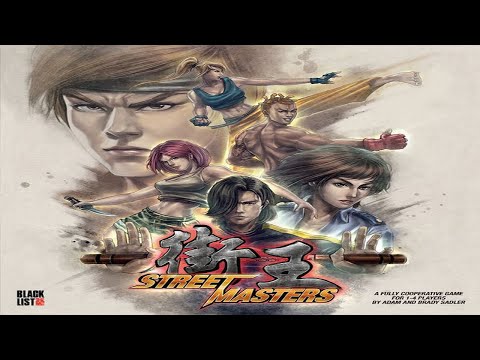

- So much fun
- Feels like a neat beat'em up
- Clean and streamlined flow
- Variety of characters
- Can be played solo
- Lots of different combinations/replayability
- Concise arena board
- All-in-one box for storage
- Heroes feel distinct
- A bit long for some tastes
- Can feel repetitive if playing with a full group of new players due to downtime
- A lot of upkeep/things easy to forget
- Only playing one card a turn can feel odd initially
- beat'em up
- Mortal Kombat
- Soul Calibur
- Arkham Horror LCG
- Smash Up
- Enchanters
- Battlecon
- Joan of Arc
- Gloomhaven
Mechanics (from transcript analysis)
- Boss deck — Players draw from a boss deck, which dictates the boss's actions and introduces challenges.
- Card Play — Players play one card per turn, with options to use tactics and exhaust abilities for further actions.
- Combat — The core gameplay involves engaging in combat with bosses and minions, utilizing various attacks and defenses.
- cooperative play — Players work together to defeat the boss and overcome challenges.
- hero abilities — Each hero has unique abilities, including combo effects, that differentiate their playstyle.
- minions — In addition to the boss, minions can appear on the board, adding to the complexity and distractions during combat.
- Scenario/Stage Decks — Stages have their own unique decks and rules, influencing gameplay.
- Solo Play — The game can be played by a single player, offering an alternative way to experience the content.
Video topics + discussion points
Quotes (from this video)
- this game is so much fun
- it could have been extremely clunky like especially for a kickstarter game
- i spread that out across the players which i really really like
- i had just as much fun doing this again because it was with different people
- it's hard to play this and not compare it to another game that we really like battlecon
- there's almost unlimited replayability
- this is story mode for a fighter
- i love that the arena is one board yes it's not some convoluted you know map where you're running all over
- i love that this is a kickstarter that came with like five expansions and they made a specific box that houses everything right by itself
- nines across the board
References (from this video)

- Cooperative play that leverages a familiar arcade vibe
- IP with broad appeal can draw backers
- Potential for tight, action-packed sessions
- Theme may not feel sufficiently distinctive or novel
- Unclear if it will see broad table time among players
- arcade fighter aesthetic adapted to a cooperative board game
- 90s arcade fighting game-inspired world with a cooperative slant
- scenario-driven co-op campaigns with episodic missions
- Mortal Kombat
- Street Fighter
Mechanics (from transcript analysis)
- action cards / hand management — Players use action cards to perform moves, manage resources, and execute combos.
- Cooperative Game — Players work together to complete scenarios and defeat opponents.
- cooperative play — Players work together to complete scenarios and defeat opponents.
- Scenario / Mission / Campaign Game — Campaign structure with missions that progress and unlocks.
- scenario-based campaign — Campaign structure with missions that progress and unlocks.
Video topics + discussion points
Quotes (from this video)
- it's doing really well on Kickstarter
- the IP has drawn a lot of people in
- Co-op draws me in a little bit
- I'm pretty middle of the road on the theme
- I don't know if it's doing enough different and have a theme enough that it's ever going to hit the table
- we're passing on that
- two-player only kind of gives some of those old vibes
- it's a firsttime Creator
- I prefer to wait on you know those First Time Creations until we know what they've been able to produce in the past
- if it's a good game it'll probably have a second campaign or it will show up at retail
- it's so beautiful on the table
- I definitely want to play the John M Trail first to make sure that it's a game for us
- solo game where you are essentially going out fishing
References (from this video)

- They ran out of money and there's a bunch of their stuff they haven't completed
- Way oversold, way over-promised
- The miniatures company that way oversold
Mechanics (from transcript analysis)
Video topics + discussion points
Quotes (from this video)
- Horizon Zero Dawn board game? Yes.
- No, but not but not good. Not for me.
- I did the allin of street masters from uh ninja ninja or what was the name of that?
- Black Studios. Yeah. And that was like um they're the ones that blacklist blacklist and then they're the ones that did it's two five four or five feet of boxes of street masters or they they flat out like that's the one that like they they ran out of money and there's a bunch of their stuff they haven't completed that was like that the miniatures company that like way oversold like way over overpromised.
- I can't find your Dark Souls card game review. Is it on BG?
- That's I have some hope that there's a Dark Souls game that is good. Worth a damn out there. So, I heard that was okay. Maybe in a couple of years.
- 14,467 comments on the Stellaris Infinite Legacy board game.
- Oh my god.
- It's just it's three years late.
- Adventures in Neverland by Blackbox Games.
- I hate those guys.
- Never never made a damn thing.
- the whole Peterson games thing going on which is just insanity with
- that that that that post of oh we thought we could make our games in the US. We didn't listen to anybody.
- Oh god. It was just Yeah. You know, it's just he was talking about like, oh, we we all of a sudden realized that oh, the manufacturing cost for everything was five times greater at the very least as what like Chinese manufacturers would do.
- The tonedeafness of this post is mind-boggling, blaming everyone and everything else but the people running the business.
- Why would you buy a warehouse and machinery without comparing it to the cost to manufacture in China?
- I'm not even close to being an entrepreneur, but that would be my first step before I sunk my money into something like this.
- what's your game with Madera? I mean just flat out lying like through multiple things like making fabricated pictures of production lines and things like that of games being made. Seriously?
- And then they then they finally realized that they they didn't have like anything
- Um we finally rechieved the the level of quality we're looking for and coordinating with our various suppliers we've approved the production samples and the games are being made and assembly will be completed in the middle of June 2022 and then like a year and a half later says So, here are the We're still working on getting the rulebook files together and it's just like what, you know, just
- So, one day ago on the Dire Alliance horror, which I back just for the miniatures because the miniatures look [ __ ] cool.
- But he says, 'Before confidence in your company and future campaigns can be secured, can you address these genuine concerns? Number One, the Saddler brothers said you use you use the name Max Lei, an anagram of Alex Lim, while claiming to be an intern at Blacklist Games. If not you, who is that? And what was his role in the company? If so, why did you hide your involvement?'
- Number two, EasyHip called you out for lying to Dan Spisano when you said they were unable to ship his contract, claiming he hadn't provided his full address. Easy Ship said it was because you had failed to pay their warehouse fees. Is this true? You also claimed in an update that 75% of the Contra games had shipped. They hadn't, as confirmed by later updates. Yet, to date, only one person I know has said they received theirs. Why did you claim they even shipped when you had outstanding warehouse fees?'
- 'Four, why did you walk away from your previous company, Artistic Justice Games, and the unfulfilled fairy tale games miniatures campaign without a word? Here's a link to that campaign. The comment section is very telling. Since you're here to make things right, does that include the fairy tale campaign.'
- 'Six. Is it true that Kickstarter forcibly cancelled your myth and goal Kickstarter due to the you having too many unfulfilled projects open? If so, is your suggested name change for blacklist attempt to get around that restriction?'
- And then in your January update, you claimed you would be making monthly updates from there on out. It is now April and you have we've had no further updates. Are you willing to concede that this we're just never getting these games?'
- And then they did the basically the Fantasy Miniatures 2, which raised 1.4 million, and then they they put together, but they never delivered on the first one before when they launched that second.
- I don't think it's one in 10. It's probably Yeah, it's probably less than that. But it's like what I could pick. Just like the ones that basically just don't deliver anything. Like just take the money.
References (from this video)
- Really good fun solo game.
- Taps into nostalgic feelings.
- Sheer amount of variety is insane.
- Not particularly complex.
- Rules could be written better.
- Heard there have been some issues with the production quality on the new version from Steam Forge Games.
- Street brawling, action-hero combat
- Urban environments reminiscent of 80s/90s action movies and games
- Apex Legends
- Sentinels of the Multiverse
- Streets of Rage
- Golden Axe
- Street Fighter
Mechanics (from transcript analysis)
- asymmetric characters — Everyone feels asymmetric.
- Deck-driven actions — Everybody's got their own little deck.
- scenario-based play — Here's your map, here's your scenario, here's your adversary.
- Skirmish miniatures — This is like my solo skirmish miniatures on a map beat them up game.
Video topics + discussion points
Quotes (from this video)
- I can chop and change between which ones I like and don't like at any particular time. and it just felt better to just go and carpet bomb about 25 solo games that I do really enjoy.
- It's got a cool little dice system, but it's the it's the fact that the game feels like it's evolving as you play each one
- But if you want just a nice light storybook game that you can pull out every now and again that feels a little bit different each time you play it, then Lands of Gowzer is a solid one.
- But I think in terms of gameplay and challenge and theme, the solo mode for comban EV is, I think, the best of the Lord ones.
- Basically, I just assume that all the like, you know, ranking stuff at the end of every Lord solo is blank, doesn't exist, and I just play the game, have fun, try a new strategy.
- And honestly, if you can get it, it's definitely worth it because I would rather play this solo than four or five player any day.
- It's like, oh, for crying out loud, I like solo modes and games, but not every single game needs one, people.
- regardless of whether you prefer to play by yourself or play with other people, it's still only a game.
References (from this video)
- Still tons of fun.
- Nice to play again after many years.
- Core gameplay is always fun.
- Recommended if you like fun action brawler games.
- Stuff just isn't balanced.
- Can be silly at certain player counts or with certain characters.
- Easily defeated the boss without taking much damage in one playthrough.
Mechanics (from transcript analysis)
- Action brawler — this little fun action brawler game.
Video topics + discussion points
Quotes (from this video)
- Welcome to Shelf Life, the monthly series where I look at games I covered about six or seven months ago and let you know whether they're still in my collection.
- This is a solo cooperative adventure game, very much influenced by Arkham Horror, uh, but it's got a cyberpunk theme.
- I think if you went to Great Western Trail, you should trail elsewhere.
- And yeah, this is the best Assassin's Creed has been.
- And hey, this is my only keep for the month.
- This is sort of like a worker placement game. It's kind of crisis management like Pandemic, but then you also like go on dates and have uh friendships with some of the characters.
- Street Masters can be amazing. It can also be pretty rough.
- I think it's probably the best attempt I've seen at it.
- So, this was a lighter month than pretty much any of the ones this year.
- Almost 60% of you called it correctly that I kept one hit heroes out of all the rest.
References (from this video)
- Fun beat 'em up theme.
- Modular system offers variety.
- Player characters feel powerful once their tactics are deployed.
- Dice system has positive outcomes and exploding crits.
- Sadler Brothers design philosophy of not having bad dice results.
- Not every scenario or boss is well-balanced.
- Certain hero combinations can break the game.
- Drama surrounding the Sadler Brothers and Blacklist.
- Beat 'em up.
- Marvel Champions
- Cthulhu Death May Die
- Sensible to the Multiverse
- Alter Quest
- Freedom 5
- Malice Adventures
Mechanics (from transcript analysis)
- Dice rolling with special effects — There's like not really a bad result on your dice. Like even if you miss, you get free defense uh tokens to help you survive later. And there's exploding crits. You can get these crazy huge attacks.
- Hero specific tactics/abilities — Player characters, they have each of these uh talents or tactics, which are ongoing cards.
- Modular board/scenarios — You pick a boss, you pick an arena, you pick your characters.
Video topics + discussion points
Quotes (from this video)
- this is up there with my top games of all time. Like it's probably in the number three or number four slot
- the bosses are super unique. Uh they each have their own special rules and conditions.
- the characters are insanely diverse and they just keep on going.
- It's great. It's just uh it can be mean.
- it's one of those games, you know, most games that offer all those modes don't work that well, and this one is great with everyone.
- I'm completely enamored with the with this one.
- It just does everything in my opinion. It does everything right. uh for me in a boss battler
- Sentinels of the Multiverse is my number one.
- The bosses are crazy varied.
- this for me is the best DC game ever made, the best Marvel game ever made because it doesn't have the IP
- It is a little awkward for certain player counts.
- it's famous for having a lot of effects to track.
- It's just like nothing else does this.
- Aon Trespass Odyssey is easily my number one.
- there's way more mitigation. It's a cleaner, tighter boss fight.
- the inverted paradigm system that they included where when you are taking damage, you get stronger. When you're when the boss is taking damage, they get stronger.
- there's never a moment where you're like not about to get, you know, rocked for fighting against an enemy you've already fought before.
- the enemies in this game are extremely creative and varied.
References (from this video)
- So much fun
- Great for solo play
- High replayability due to modular system
- Tactical and dice-rolling focused
- Takes up a lot of table space
- Rules can be complex initially
- Heroic combat against enemies and bosses
- Urban/Street fighting
- Tactical combat
- Contra board game
- Streets of Rage
- Double Dragon
Mechanics (from transcript analysis)
- Deck Building — Players control a hero deck and use it to perform actions.
- Dice Rolling — Features fun dice rolling during combat.
- Grid Movement — Players move around a stage to defeat enemies and bosses.
- Modular Board — Uses a modular system with different baddies, bosses, heroes, locations, and loot for high replayability.
Video topics + discussion points
Quotes (from this video)
- I always get excited about your list and I get weary about my wallet when talking about your list.
- it's gorgeous. Like the the cards are beautiful. The card art is amazing. Um the dice are even more beautiful.
- And you don't really have to know how to play. Um, kids can play as long as they can, you know, use their fingers or something to hit hit the disc.
- This one I could probably
- So, my number three, we have Legendary, a Marvel deck building game.
- This one has great replayability as well. You can have um mix and match.
- So, this number two is Marvel Champions.
- I just love the comic book theme. Like like the uh the overall theme of it is is very fun.
- My number one is a gentle rain.
- So, this is a solo must. Like, if you're a solo player, I do recommend you give this a try.
- This is the game for me that I just immediately pull out. I don't have to think too too hard.
- It scratches the right itches of like cozy kind of game. Like this is a very cozy experience.
References (from this video)

Mechanics (from transcript analysis)
Video topics + discussion points
Quotes (from this video)
- I love Spirit Island. One of my top games of all time. Amazing design, but it's a game that will often have a boring ending...
- if you make your game fun enough, like it's just a blast to play, you can forgive a lot.
- Pandemic has a lot of problems with this. Alpha player will creep in.
- I do think some games like you can design against alpha player without like totally hiding everything.
- The biggest one is like the more your game is a puzzle and there are sudden must-win like moves that need to be made.
- The only way the only reason it was uh beneficial was because of the asymmetry. If we both could do the same thing, it would just be kind of annoying to sit there and have a discussion on strategy past, you know, a couple minutes.
- I love the idea that this is a new starting point. We're going to be going they yes yes they want me to keep buying more stuff but we're going to go through what seasons essentially
- I mean Arkham is my favorite Arkham is my favorite game that I tell people not to buy.
References (from this video)
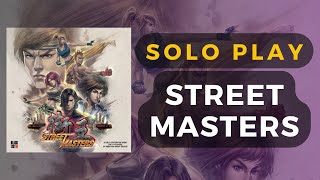
- Really, really, really enjoying Street Masters.
- Really glad that I now have the base game.
- Lots to explore now.
- Loot gained from defeating minions was very helpful.
- Gear gave enemies a lot of good defense tokens, making them invincible at first.
- Host forgot about gaining loot.
- Potentially made major mistakes during the playthrough.
- Close to death multiple times.
- Game is very tough.
- fighter combat
Mechanics (from transcript analysis)
- Area Control — The host mentions interacting with and picking up objectives, and enemies moving towards objectives.
- Boss battles — The primary objective is to defeat a specific boss character, Dimmitri.
- Combat — The core gameplay involves attacking enemies and bosses.
- Deck Building — The host mentions drawing cards from their hand and shuffling cards back into their deck after a mulligan.
- Dice Rolling — The host frequently describes rolling dice for attacks and defense tokens.
- Hand Management — The host discusses mulliganing their starting hand and deciding which cards to play or discard.
- loot — The host acquires loot cards like 'Smoke Bombs', 'Energy Drink', and 'Throwing Daggers' which provide abilities or resources.
- minions — Various enemy units like Drago, Boris, and Anastasia are present and need to be dealt with.
Video topics + discussion points
Quotes (from this video)
- Hopefully, I'm saying that correctly. But basically, this is my fighter, 20 health, requires six power to charge up, and its main attack action is a punch.
- So, the point of this game is to defeat Dimmitri.
- So, I think I will probably put Gathering Storm back in. Draw them from the sky as well. And then uh we'll draw two more. Draw them from the sky and shock wave.
- Now thirsty Kevlar is a gear says if Dimmitri has less than five, he gains three random. He does have less than five defense tokens, so he'll gain three, which is pretty crazy.
- But the loots that I totally forgot about that I gain when I defeat the minions were definitely very helpful.
- Um, but yeah, really, really, really enjoying Street Masters.
- Thank you, Todd, for sending me a copy.
References (from this video)
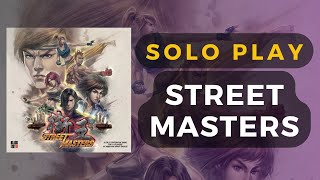
- Enjoyable setup with Brotherhood and Gone Ballistic.
- Allows exploration of the deck.
- Good for learning new characters.
- Reusing cards and having resources to bring them back is a liked aspect.
- Likes the deck.
- Might have stacked up on defense tokens due to playing with classic rules.
- Did not remember to perform an action correctly on a previous turn.
Mechanics (from transcript analysis)
- attack — An action attack to gain each defense token the target uses to block this attack.
- Boss activation — The boss moves towards the nearest objective and picks it up.
- Critical hits — Special hits that may allow for re-rolls or extra effects.
- Defense tokens — Tokens used to block attacks.
- Discard Defense Token — After an attack, you may discard one defense token to play one strike card.
- Discard Pile Interaction — Returning strike cards from the discard pile to hand.
- event cards — Cards that introduce special effects or damage.
- Gear cards — Gear cards stay out once played.
- loot — Players can move to loot spaces to gain items.
- minions — Minions can be added to the threat area and have effects on adjacent fighters.
- objectives — Players draw objective cards and there are green and blue objectives.
- Power Resource — Discarding power to choose a strike card from the discard pile or play a strike card.
- Power Up — Takes eight power to power up.
Video topics + discussion points
Quotes (from this video)
- I did not remember to do that before but that's okay.
- Um, but yeah, this was this was a fun one.
- I like playing this setup of the Brotherhood and Gone Ballistic.
- So, whenever I'm playing a new deck, I like to do this setup to kind of learn the best way to use Gabriel.
- And it looks like it's a lot of like reusing cards and having the resources to bring them back.
- Let me know if I made any mistakes.
- I'm not an expert in this game. I just enjoy playing it.
- So, um definitely feel free to kindly put it in a comment if if you notice any uh mistakes I made.
References (from this video)
- Engaging loot and improvisation system that adds variety to each turn
- Dynamic boss encounters with escalating stage cards
- Clear flavor of martial-arts themed combat and character progression
- Rule recall and memory can be challenging during play; potential for mistakes
- Fast escalation by enemies can feel overwhelming in solo play
- combat-focused progression with loot, defenses, and improvised effects
- Urban fantasy street-brawling arena with martial-arts fighters and boss monsters
- procedural boss encounters and loot-driven storytelling during solo play
Mechanics (from transcript analysis)
- Boss Battler — Minions and bosses spawn with set stats and special abilities; players must prioritize targets and manage multiple threats.
- combat rolls — Dice are rolled for attacks and defenses; criticals can alter outcomes and grant bonuses like extra hits or guards.
- Deck Manipulation — Resolve the improvised effect of each card you control; cards may grant extra draws, power, or direct damage.
- defense_tokens — Gaining and spending defense tokens to block or mitigate damage; multiple token types exist (kick, grapple, punch, etc.).
- Improvise — Resolve the improvised effect of each card you control; cards may grant extra draws, power, or direct damage.
- loot cards — Loot cards grant ongoing benefits or direct effects (e.g., heal, direct damage, or stronger attacks) when used or discarded.
- minion/enemy cards — Minions and bosses spawn with set stats and special abilities; players must prioritize targets and manage multiple threats.
- Power economy — Power is accumulated and spent to activate moves, draw loot, or trigger card effects; managing power is central to offense and defense.
- stage cards / boss behavior — Stage turns add boss movement and new active objectives; objectives can be flipped to active/complete, dictating map control and threat progression.
- threat/react phases — Threat phase draws and resolves enemy actions; react phase allows responses to threats before enemy turns.
Video topics + discussion points
Quotes (from this video)
- Street Masters Tide of the Dragon expansion.
- I'm finding it to be a very interesting game.
- Gosh. I hope I'm playing right.
- Kung Fu T. During your turn, discard this card to play a card.
- I'm still learning Street Masters, so forgive me for any mistakes.
References (from this video)
- Art style evokes a Street Fighter vibe and looks appealing
- Minis with good detail
- Standalone expansion adds content and is usable on its own
- Cooperative design supports solo-friendly play and multiplayer
- Box is hefty and not very portable
- Overall complexity may be heavy for newcomers
- Requires sorting and organizing a lot of cards and components
- Cinematic beat-em-up teamwork in a cooperative setting
- Urban martial arts / street-fighting gangs in a stylized world
- Character-driven ensemble with fighter backstories and evolving epilogue/story milestones
Mechanics (from transcript analysis)
- Combat: Dice — Combat resolution relies on dice rolls as part of attacks and defenses
- Cooperative Game — Players collaborate to achieve common objectives against the game challenges
- cooperative play — Players collaborate to achieve common objectives against the game challenges
- Deck-driven actions — Each fighter uses a customized deck to determine actions and abilities
- Dice-based combat — Combat resolution relies on dice rolls as part of attacks and defenses
- Modular Board — The game uses a map with various stage and deck components to drive scenarios
- Modular board and decks — The game uses a map with various stage and deck components to drive scenarios
Video topics + discussion points
Quotes (from this video)
- this is a prettyy hefty box not the most portable
- I like the art in this I'm not really sure if there's has been any controversy about art I feel like the art is always up for debate when it comes to games but I like it really gives you that like Street Fighter type of vibe which I think is kind of the goal
- this is a standalone expansion
- I think this would probably keep me busy for a while
- two covers in this I wonder if that was intentional
References (from this video)
- Isabella's deck feels dynamic and appealing.
- Thematic flavor and variety of enemy minions and boss.
- Tense, cinematic combat with multiple threats.
- Rule clarifications needed (e.g., how boss defense tokens are gained when retreating).
- High difficulty and risk; near the end the player is low on health.
- Complex turn sequence can be confusing and may require reference cards.
- Array
- Sky High stage in a city-fighting fantasy setting
- First-person, solo narration focused on combat and deck interaction
Mechanics (from transcript analysis)
- Attack dice resolution — Attacks are resolved by rolling a number of dice to determine hits and effects
- Boss Battler — Boss and minions activate, move and attack; a boss drives stage progression
- Combat: Damage Based — The game uses defense tokens to limit damage and grant shields
- Deck Manipulation — Players discard top cards of their deck to modify attacks or trigger bonuses; draw new cards
- Deck top-card manipulation — Players discard top cards of their deck to modify attacks or trigger bonuses; draw new cards
- Defense tokens — The game uses defense tokens to limit damage and grant shields
- Enemies and boss mechanics — Boss and minions activate, move and attack; a boss drives stage progression
- Events — Stage-specific events and collective objectives influence win/lose conditions
- Loot and power resources — Loot cards grant coins/power and can be spent for effects
- Movement — Fighters move across a grid-based stage using move actions and distance tokens
- Offbeat cards and damage — Offbeat cards trigger special effects and may cause damage to the active fighter
- Stage events and objectives — Stage-specific events and collective objectives influence win/lose conditions
- Traps and defeated minions — Defeated minions attach trap cards to the fighter, triggering penalties on adjacents
- Turn structure: Player, React, Enemy — Turns alternate between player actions, reaction phase, enemy activation, and stage progression
Video topics + discussion points
Quotes (from this video)
- I love how arrow Isabella is, and maybe that's why I'm drawn to her deck.
- I really like Isabella's deck. Um, might be my favorite one so far.
- What a tongue twister.
- This felt pretty intense.
- I only have one health left, which is crazy.
- I lost the game. But this felt pretty intense.
- Street Masters Tide of the Dragon using Isabella against the Fire Cloud Gang.
References (from this video)
- Dice-based combat with clear, tangible feedback (hits, damage, and tokens) creates crunchy, tactical moments.
- Token and tactic systems introduce potential depth and modularity in play, with various combinations to explore.
- Loot and stage/objective cards add variability and sense of progression during a session.
- Solo playthrough feels limiting; the author suggests two-handed (co-op) play may better showcase the depth.
- The session escalates quickly with multiple high-threat enemies, risking a quick loss near the exit.
- Some complexity and strategic depth feel underexplored in a single run; may require multiple sessions to fully appreciate.
- Array
- Urban crime/fighting in a modern city
- solo playthrough with campaign-style objectives and boss encounters
- Rise of the Kingdom
Mechanics (from transcript analysis)
- Combat: Dice — Attacks are resolved by rolling a pool of attack dice, with hits and special results affecting enemy defense tokens and damage.
- Dice-based combat — Attacks are resolved by rolling a pool of attack dice, with hits and special results affecting enemy defense tokens and damage.
- Engagement and movement — Fighters move to engage enemies; positioning affects who is attacked and what actions are available.
- Loot and equipment integration — Loot tokens grant immediate effects or long-term benefits; some loot can be spent to deal damage or modify actions.
- Objective carrying and elimination — Enemies can carry objectives; taking damage forces token discard or placement of the objective on the board.
- Stage and objective cards with payout effects — Stage cards introduce objectives (kickback, protection money) and trigger payout effects based on objective status.
- Tactics and card actions — Tactics are cards that provide special interactions; players place tokens on tactics and resolve card actions during turns.
- Threat/React/Stage phase structure — The game progresses through threat phase (enemy card draws), react phase (enemy moves/attacks), and stage effects.
- Token economy (defense and grapple tokens) — Players gain and spend defense and grapple tokens to modify outcomes, defend, or trigger card effects.
- Variable Phase Order — The game progresses through threat phase (enemy card draws), react phase (enemy moves/attacks), and stage effects.
Video topics + discussion points
Quotes (from this video)
- I do like her.
- I feel like I didn't really get to experience the full strategy with her deck, especially with the tokens and the different tactics you could have out with tokens on it.
- This might be my last one for a bit because I feel like it's a bit repetitive when I'm using the same two stages that I only have right now.
- Not really my style.
- This game would do a lot better solo; two-handed is not my style.
- I might just change up the fighters or do the story mode to make it more interesting.
References (from this video)
Mechanics (from transcript analysis)
Video topics + discussion points
Quotes (from this video)
- The bosses are also quite varied in their activations and they have multiple forms and different ways to defeat them.
- You can stun lock the bosses and do kind of silly things.
- components and the storage solution. It's just really nice miniatures, nice components, and they all go in the box extremely well.
- simple stamina card system that gives you cool card combos and gives your characters different attacks to try out.
- emergent storyline, crazy events that can happen, upgrades and penalties, and the amazing enemy activation system
- incredible modularity. You’ve got the different bosses, each with their own unique deck and mechanics.
References (from this video)

- Similar feeling to Sentinels of the Multiverse
- Takes homage to Street Fighter and Streets of Rage
- Great asymmetric character abilities
- True solo play works well
- Can multi-hand easily
- Excellent theme execution
- Hooked from first game
- Hard to find (Kickstarter only, US publisher distribution)
- Complex rules for thematic games
- Not quite as good as Sentinels
- Beat-em-up arcade style
- Street fighting
- Thematic
- Sentinels of the Multiverse
Mechanics (from transcript analysis)
- Cooperative skirmish — All players work together against enemies on a skirmish map
- Loot System — Defeated enemies drop loot items
- Scenario Objectives — Different objectives like reach weapons, get cash, protect hostages
- Unique Character Decks — Each character has their own unique deck of cards
Video topics + discussion points
Quotes (from this video)
- we're basically saying that at some point during the first game of it we knew that this was a game we were gonna love and it stayed that way
- man i loved everything about ascension it was great
- you kind of had to play this game very tactically you cannot play this game strategically it's physically impossible
- everything in this game looks absolutely beautiful i could i could have that board as a poster on my wall
- it's just so many options you get in this
- not enough people give whistle mountain any credit at all
- pandemic was just really really good when that came out
- i love a good thematic game
- this is gonna be one i like isn't it
- street masters has really done me a good one here
- being effectively like a twilight imperium for star trek sounds cool
- i really really dig cargo noir
References (from this video)
- thematic immersion with fighting game references
- excellent solo mode
- simple but effective mechanics
- creates great table presence
- hard to find
- mostly played solo
- limited multiplayer support
- fighting game
- Street Fighter
- arcade
- action
- Street Rage
- Double Dragon
- Street Fighter
Mechanics (from transcript analysis)
Video topics + discussion points
Quotes (from this video)
- There is a difference between how great a game is and how much my personal enjoyment like my drive my passion for getting the game out is
- should you really be really focusing on it in terms of a top 100
- these games are awesome
- I just want to talk about these top 50 games which I can do in about five videos Max
- a game might be rated at a really high level in the past and then drop for me
- just a simple role selection drafting game
References (from this video)

- Strong thematic execution
- Tactical depth with meaningful decisions
- High production values (miniatures and art)
- Flexible replay value via arcade/story modes
- Balanced mix of luck and strategy
- Dice-based system may feel luck-influenced to some players
- Possible learning curve for new players
- Vigilantes, martial arts mastery, and team-based boss battles
- Urban street-fighting in a modern city with street gangs and vigilantism
- Campaign and arcade modes driving story through bosses, allies, and rivals
- Brook City
Mechanics (from transcript analysis)
- AI opponent with adaptive tactics — Enemies disengage to use range and require strategic targeting
- Boss scaling per turn — Boss grows stronger each turn; time pressure encourages urgency
- Card-driven combat — Front-of-card play builds combo cards across rounds; more cards increase combo power
- Defense-first strategy — Blocking/defense icons generate charge tokens for powerful attacks
- Environment-based loot — Players can exploit the surroundings for gear and advantages
- Team coordination / communication — Players coordinate actions to maximize effects; miscommunication leads to failure
- Two modes: arcade and story — Arcade for one-shot scenarios; Story for campaign with persistent perks/penalties
Video topics + discussion points
Quotes (from this video)
- dripping in theme and it's extremely
- well executed with the mechanics and
- Street masters scores an eight point five out of ten
- you really do feel like you're kicking ass
- not a brainless dice chucker and the luck factor in this one is not too punishing