/pic8302192.jpg)
Game Info
Collection
Your Tier
Loading…
Mechanic profile
Not enough video data yet
Vibe profile
Not enough video data yet
Description
The solo+ Apocalyptic Mystery TTRPG
When an anomaly appeared at the Earth's core, the Substratum Protocol was initiated and scientists were rushed at all costs to the hastily built Fracture Observatory. You are the best and brightest scientists we have left.
You are the Substratum Expedition Team.
- From the back of the book
Featured Videos

Ask a Rules Question
All mentions
Browse transcript mentions, sentiments, pros/cons, mechanics, topics, quotes, and references.
Total mentions: 1
This page: 1
Sentiment:
pos 0 ·
mix 1 ·
neu 0 ·
neg 0
Showing 1–1 of 1
Video _8p1UyvwmhI
The Dungeon Dive Review at 0:29 sentiment: mixed
video_pk 86407 · mention_pk 294130
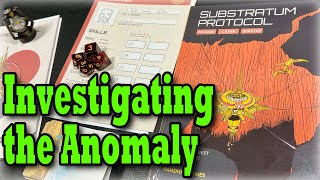
Click to watch at 0:29 · YouTube ↗
Overall sentiment (raw)
mixed
Pros
- Strong, intuitive conflict-resolution system with card costs and two-skill checks
- High player agency and narrative pivot points through card spending
- Fast, one-shot friendly play with a clear end goal
- Rich world-building via embedded lore and field journals
- Useful optional tools (Roll and Play Sci-Fi Toolkit) to augment encounters
Cons
- Limited number of random encounters; reliance on optional tools for variety
- Few built-in procedures for generating complications, especially for solo play
- Travel and sector advancement rules feel under-defined; lack a mechanic for gauging when to advance
Thematic elements
- Apocalyptic mystery and scientific expedition, balancing curiosity with existential risk
- Depths of the Earth, from surface fracture openings to the anomaly in the core
- Investigative, player-driven discovery with an embedded field journal as narrative engine
Comparison games
none
Mechanics (from transcript analysis)
- Clue printing mechanic — Clues are printed upside down to be revealed through narrative progress and player decisions.
- Complications and sector travel — Sectors include potential complications; players seek to generate or avoid complications as they progress through depth.
- Conflict resolution via card deck — Draw two cards and compare with skill-based dice; outcomes depend on card totals, with higher totals enabling better results; spent cards can be used to augment actions.
- Deduction — Clues are printed upside down to be revealed through narrative progress and player decisions.
- End Game Bonuses — A definitive end goal is triggered by the last hypothesis; endgame shift occurs with a montage that concludes the story.
- Endgame montage and final hypothesis — A definitive end goal is triggered by the last hypothesis; endgame shift occurs with a montage that concludes the story.
- Exo-suit resource system — Cards spent to repair, heal, boost actions, or enhance sensor/communication capabilities via exosuit features.
- Field journal and bestiary as narrative tools — Notes, clues, flora/fauna entries, and clues are tracked to shape the narrative and unlock new insights.
- NPC team management and stress — Solo play includes NPCs with their own dice; stress can lead to death requiring healing to continue.
- Skill-based dice pool — Characters roll dice (D4-D10) tied to six core skills; dice decrease as used, simulating fatigue and resource management.
Video topics + discussion points
No key topics recorded for this video.
Quotes (from this video)
- The conflict resolution is fantastic; you always roll two skills, compare to cards, and spend those cards to do cool things.
- I think substratum protocol is pretty cool; it's very quick with a fantastic conflict resolution system.
- I would love to see more games use that conflict-resolution system.
- There are not enough random encounters or complication generation procedures in the base rules.
References (from this video)
No references stored for this video.
Transcript Navigation
Showing 1–1 of 1