



Sugarworks Deep Dive
What the Community Thinks About Sugarworks
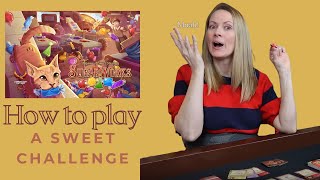
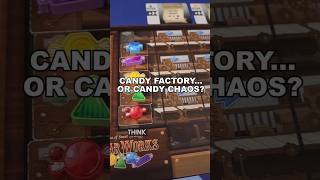
Reviewers describe Sugarworks as a chaotic candy factory puzzle for one to four players that runs about 30 to 45 minutes. Meeple University frames the premise as a Willy Wonka style factory where players adjust conveyors and coax unruly candy into the right packages while filling as many orders as they can. Tabletop Tolson, through host Kimberly, gives a more procedural walkthrough and calls the game straightforward, while pointing to the B-side board, advanced play, and order-card variety as reasons it stays versatile. Good Time Society covers the game only briefly inside a live show, but its take is consistent with the other two: the tile placement is the highlight.
The reviewers agree on the core identity. Sugarworks is a light puzzle where the conveyor system is the main event and the candy's unpredictable movement drives the table's reactions. They differ mostly in emphasis. Meeple University leans into the comedic chaos, Tabletop Tolson focuses on turn structure and setup, and Good Time Society zeroes in on how the tiles change the belt. Several reviewers also note that the game is currently crowdfunded, which shapes how most people are encountering it.
Core Mechanics That Define Sugarworks
Conveyor Tile Placement and Candy Collisions
Reviewers agree this is the heart of the game. Tabletop Tolson describes it directly: that is the heart of the game, the candy bonking on the conveyor belt. On a turn, a player can place a conveyor tile onto the board, and the tile's arrows decide where candy goes next. Kimberly lists the variety, including tiles that move candy up, skip a space, send it backward, push it down and to the right, or make it lost if it enters. Tiles can also be played over an earlier placement to reset a candy's direction, which means a player's plan can be undone by the next person on the belt.
When the conveyors activate, candy moves twice per round in a fixed priority that runs from red through purple. The collision rules printed on the player aid card determine what happens when one candy strikes another. A candy striking a red moves that red candy forward, while a candy striking yellow moves that yellow candy diagonally up and forward. Because the outcome depends on the color struck, players can engineer collisions on purpose.
Order Cards as Recipes
The second defining system is the order card. Each turn, players take, swap, or toss orders, and making a candy means discarding an order and placing that candy on an output conveyor. Good Time Society describes the game in these terms, saying players are trying to capture the candy they want for the recipes. Orders can be scored during play or at the end, and some trigger when a specific event happens. Kimberly gives the example of a red-candy order that pays out immediately when red candy falls into a crate or off the belt. Public orders such as "most scored reds" award points to the top two players at game end, which keeps the shared board relevant to scoring.
The Sugarworks Experience
Delightful Chaos
Meeple University describes the factory as chaotic but cute, and that tone runs through the reviews. Candy ricochets off other candy and off the conveyors in ways no single player fully controls, so a careful setup can be scrambled within a single round. The reviewers treat this as the fun. The lighthearted delivery in Meeple University's review reflects a game that wants the table to laugh when the belt goes wrong.
Tense Planning Under Pressure
Beneath the comedy is a planning tension. Kimberly's walkthrough shows players weighing their options every turn: discarding an order that can no longer be scored, taking a red order because red candy is likely to reach the lost space, or moving an output conveyor so a rival's option looks less attractive. The reviewers describe a satisfying loop: plan carefully, watch the belt, and feel the rush when a collision lands the way you wanted.
What Makes Sugarworks Stand Out
Tile Placement That Players Can Exploit
Good Time Society calls the tile placement one of their favorite things about the game, and Meeple University explains why it has depth. Collisions are chaotic, but players can plan them, making the randomness something to exploit rather than only endure.
Orders That Reward Timing
Kimberly highlights the in-game trigger orders as a standout. Because some orders pay out when a particular event happens during play, players are rewarded for reading the belt and choosing their orders with timing in mind. Setup also varies: a die roll decides which side of the selected order cards is in play, and the B-side board and advanced play add variety for repeat sessions.
Potential Drawbacks
Availability Through Crowdfunding
Good Time Society notes that the game is out on Kickstarter, and Meeple University directs viewers to find it through crowdfunding. Kimberly adds that the expansion content mentioned is tied to backer rewards, and the advanced play is bundled with that content. Reviewers present this as a practical consideration rather than a design flaw, but it means the full set of options is currently tied to backing the project.
Chaos Can Override Careful Planning
Meeple University describes the candy flying basically everywhere except where you want it to go, and frames that unpredictability as the point. The same trait means a well-built turn can be undone by the next collision, and players who prefer tight control over the board may find the randomness frustrating. Kimberly describes the game as straightforward, so the swings may feel more pronounced for players coming in with expectations of a more deterministic puzzle.
If You Enjoy Sugarworks
None of the three reviewers compares Sugarworks directly to another board game. Recommendations therefore rest on the mechanics the reviewers describe. Players who enjoy Sugarworks's conveyor tile placement will find similar satisfaction in other games where placing a piece changes the path that opponents must live with. Players drawn to its order cards and trigger-based scoring should look for games where objectives can pay out mid-game and where end-game scoring rewards the shared board.
What Reviewers Are Saying
"That is the heart of the game: the candy bonking on the conveyor belt. You're going to see right here on your player aid card how to bonk."
— Kimberly, Tabletop Tolson
"Sometimes candy lands neatly in crates, sometimes straight into each other, causing bonk collisions that send them flying diagonally, sideways, up, down, basically everywhere except where you want them to go. Unless you deliberately make it part of your ploy for your order cards."
— Meeple University
"So you can manipulate the conveyor belt by placing tiles. So it's got a little tile placement back there. It's one of our favorite things."
— Good Time Society