/pic6019321.jpg)
/pic5152378.png)
/pic573097.jpg)
/pic1222742.jpg)
/pic6019321.jpg)
/pic923048.jpg)
/pic2045253.jpg)
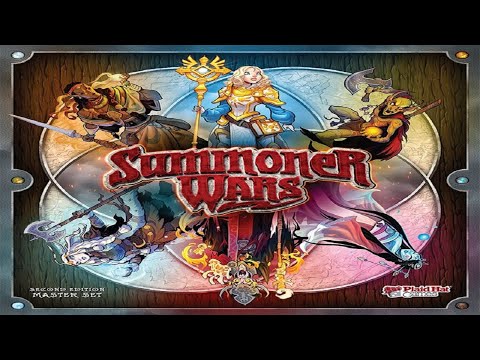







Summoner Wars (Second Edition) Deep Dive
What the Community Thinks About Summoner Wars (Second Edition)
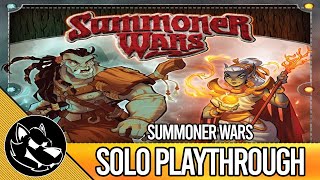
Summoner Wars (Second Edition) earned immediate recognition across the board gaming community as a masterclass in asymmetric two-player design. Channels like The Cardboard Herald, No Rolls Barred, and Rolls in the Family praise it as one of the finest tactical card games available, with several ranking it among their all-time favorite two-player titles. The Second Edition marked not just a revival of a classic but a thoughtful reimagining that tightens the experience and balances its factions with purpose.
Core Mechanics That Define Summoner Wars (Second Edition)
Summoning Units and Managing Magic
At its heart, Summoner Wars is about battlefield presence and resource control. Each turn, you spend magic to summon units from your hand onto a grid-based battlefield. Magic is the lifeblood of the game, earned by destroying enemy units and by discarding cards during the magic phase to bank power for later. This creates constant tension between deploying forces now and saving for bigger plays. Published by Plaid Hat Games, the design cleverly avoids deck-reshuffling, so managing your discard pile becomes a hidden strategic layer that shifts throughout each match.
Dice-Based Combat on a Grid
Combat blends positioning and luck. When you attack, you roll dice equal to the unit's strength, counting only the relevant symbols (swords for melee, bows for ranged). Melee requires adjacency, while ranged attacks reach across clear spaces. What makes this elegant is the magic symbol on the dice, which does not deal damage but instead triggers special unit abilities. This dual-symbol system rewards building armies with complementary powers, not just strong stats, turning the combat phase into a puzzle of how to maximize your faction's unique strengths.
The Summoner Wars (Second Edition) Experience
Asymmetric Factions Create Unique Matchups
The Second Edition ships with several factions out of the box, and expansion factions add dramatically different playstyles. Some excel at spawning cheap hordes, others focus on bringing units back from the dead, and still others can turn enemy units against their owners. Every matchup feels like its own puzzle: a faction strong against one opponent might struggle against another, which keeps rematches fresh and encourages experimentation. Players frequently revisit favorite matchups specifically to learn them deeply, discovering new lines of play each session.
Chess-Like Positioning Meets Card Play
The grid-based movement turns combat into a spatial challenge. Summoners hold central defensive positions, but advancing too slowly invites your opponent to claim territory, while moving too aggressively exposes your Summoner to counterattack. This creates a natural ebb and flow as players advance, consolidate, and retreat to defend. The best moments come when a player spots an overlooked path that bypasses defenses, or when a devastating event card flips the board state, and these moments emerge organically from the design rather than as random swings.
What Makes Summoner Wars (Second Edition) Stand Out
Production Quality Married to Functional Design
The Second Edition refined its art toward a lighter, more characterful style that strips away the self-serious tone of the original, which paradoxically makes the tactical depth feel more approachable. Tokens are physical and satisfying to place, the cards are readable, and the board layout is intuitive. Unlike many tactical games that hide information or demand complex record-keeping, Summoner Wars keeps its bookkeeping minimal so you can focus on the actual puzzle of deployment and positioning.
Quick Play Time with Big Decisions
A typical game runs about 30 to 45 minutes, remarkable for how many meaningful choices players make. Each turn resolves quickly because the mechanical overhead is low: you are not managing dozens of tokens or cross-referencing charts. This pace means you can play several games in one sitting, and the expanding roster of factions offers many unique pairings to explore. That accessibility without dumbing down the decision space is rare in tactical card games.
Potential Drawbacks
The First Edition Can Feel Outdated
If you own the original Summoner Wars, the Second Edition may diminish your interest in older decks. The designers made deliberate balance changes, particularly to ranged combat and unit health, and the updated magic system is a quality-of-life improvement. This can create a collection split for fans who invested in the original, since the two editions are mechanically incompatible by design, which at least avoids half-measures.
Faction Learning Curve and Balance Perception
While asymmetry is a strength, new players may struggle to tell whether they lost because of poor decisions or an unfavorable matchup. Some factions clearly favor aggressive early plays, while others reward careful setup and late-game explosions. Introducing newcomers often works best when pairing them with experienced players who understand their faction, or accepting that a first game may feel lopsided before both players develop their understanding.
If You Enjoy Summoner Wars (Second Edition)
If Summoner Wars resonates with you, consider Race for the Galaxy for a different kind of asymmetry built around simultaneous role selection and tableau building. For denser dice-driven tactics, Mage Knight offers a heavier puzzle where deck-building and positioning both matter. 7 Wonders Duel delivers another exceptional two-player game with deep asymmetry and brilliant drafting tension. And BattleCON scratches the same head-to-head, faction-versus-faction itch with simultaneous card selection and read-your-opponent mind games.
What Reviewers Are Saying
"It is a beautifully crafted two-player tactical game in which each player has an asymmetric deck, and unlike traditional card games you put them into spaces on a board, manipulate them around, create cover for yourself, and try to press on your opponent in order to win by defeating their Summoner."
— The Cardboard Herald
"What makes Summoner Wars immensely satisfying and replayable is that every faction is ludicrously overpowered in their own way, making each matchup a unique puzzle. One faction lets you spawn hordes of weak units for free, one lets you hurt yourself to bring your creatures back to life."
— No Rolls Barred
"That tension of pacing, I really like it. It's like, okay, I want to play things, but also, do I push it and try to get their Summoner quick? Because gosh, if that doesn't work I'm going to be wrecked, since I'm going to be out of magic."
— Rolls in the Family