/pic4574571.jpg)
/pic1900075.jpg)
/pic4574571.jpg)















Sushi Roll Deep Dive
What the Community Thinks About Sushi Roll
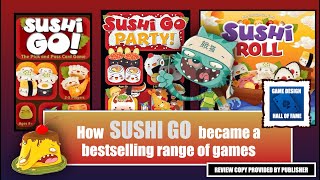
Sushi Roll has earned genuine affection from board game reviewers and communities worldwide. It sits at the intersection of accessibility and engagement, appealing equally to families discovering board games for the first time and experienced gamers who appreciate clever design. The Dice Tower's Tom Vassel named it his favorite of the Sushi Go family, while Actualol praised it as one of the most successful family board games on the market. The game builds on years of success from the original Sushi Go card game, bringing fresh energy through a reimagined dice mechanic.
Core Mechanics That Define Sushi Roll
The Dice Draft and Pass System
The heart of Sushi Roll lies in its dice-drafting mechanism, where players draw dice from a common bag and place them on a conveyor-belt tray that physically travels between players. Each turn, players roll their dice hoping to get the sushi they need, then select one die to keep and pass the rest along. The tactile experience of rolling becomes central to the game's identity. As players receive dice from a neighbor, they roll them before making their next selection, creating a constant rhythm of hope and decision-making across all three rounds. Crucially, you can see the dice on the belt before they reach you, giving genuine strategic foresight the card game lacked.
Set Collection and Scoring Diversity
Like its card-game predecessor from designer Phil Walker-Harding, Sushi Roll employs versatile set-collection scoring. Individual nigiri dice are worth a point on their own, but three sashimi earn ten points while a single sashimi scores nothing. Tempura rewards pairs, while the high-value maki rolls compete for majority scoring at the end of each round. Puddings, memorably, are scored only at the end across all three rounds: the player with the most gains points and the player with the fewest loses them. Published by Gamewright, this diverse scoring creates constant tension around which sets to prioritize.
The Sushi Roll Experience
Breezy, Tactile Gameplay
The addition of physical dice rolling transforms Sushi Go from a card-drafting exercise into something more visceral and memorable. Reviewers consistently praise how rolling the dice brings excitement to each turn, making it feel like an informed gamble rather than pure control. The conveyor belt itself creates a nostalgic, breezy atmosphere that mirrors the theme perfectly. The experience is tactile and sensory in ways the card game cannot match: the weight of the dice, the anticipation as they tumble, and the satisfaction of securing the exact die you needed.
Accessible Magic with Menus and Chopsticks
Sushi Roll's genius lies in giving players meaningful tools to exert agency despite the randomness. Players can spend menu tokens to re-roll dice on their tray, pursuing that elusive sashimi or the final tempura they need. Chopsticks tokens allow swapping a die from your tray with one from an opponent's, introducing a subtle mean streak that creates hilarious table moments. The game captures everything that was great about Sushi Go while adding complexity in the form of player choice, not rule density. Non-gamers can jump in within minutes, yet experienced players find genuine decisions every round.
What Makes Sushi Roll Stand Out
Solving the Original's Information Problem
While reviewers deeply respect the original Sushi Go, many believe Sushi Roll improves on it by solving a key issue: information asymmetry. In the card game, you never know what is coming until it is nearly too late. In Sushi Roll, you can see the dice sitting on the belt before they reach you, which encourages informed gambles and better planning. The Dice Tower's Tom Vassel noted that adding the visible dice gives you more to consider and the thrill of rolling and hoping to get what you need, making it more fun at the table for him than Sushi Go.
A Family Game That Earns Its Keep
Sushi Roll deserves recognition as one of the most successful family board games on the market. Phil Walker-Harding designed it not as a light afterthought but as a genuine reimagining, asking how Sushi Go would function with dice instead of cards. The result is a game with simple rules, quick gameplay, and quality production that brings families together. Reviewers report introducing it to non-gaming relatives who then bought their own copy and played it regularly, a testament to its universal appeal.
Potential Drawbacks
Bulkier Package, Lighter Strategy
The plastic components and dice-rolling mechanism mean Sushi Roll is a bulkier product than the elegant tin of the original Sushi Go, and the higher price reflects that physicality. More significantly, the rolling element makes the game less strategically dense than some might hope. While there are decisions to make, luck plays a genuine role, since you are rolling dice and hoping for what you need. Reviewers note that if you loved the original for its tight tactical depth, Sushi Roll does not deepen that experience so much as widen it, trading some control for more table fun.
Not as Slight as It Appears, but Still Light
The game looks deceptively simple, and it is light in the best way, with straightforward rules and brisk play. However, players should not expect profound strategic depth or meaningful long-term decisions. The real value lies in its social function and the satisfying moment-to-moment experience rather than in navigating complex decision trees. If you are seeking a brain-burning puzzle or a game that rewards extensive planning, this is not it, but if you want a game that brings people to the table smiling, Sushi Roll excels.
If You Enjoy Sushi Roll
Fans of Sushi Roll should absolutely explore the original Sushi Go and its expanded variant Sushi Go Party, both from Gamewright. If you love set collection with a re-roll element, Las Vegas delivers similar dice-drafting tension and table interaction. For more from Phil Walker-Harding's catalog, Imhotep offers tight, satisfying decisions with chunky components, and Gizmos provides tactile engine-building that rewards strategic sequencing.
What Reviewers Are Saying
"Sushi Roll is my favorite out of Sushi Go, Sushi Go Party, all those kind of things. Roll is my favorite, and it's not a difficult game. It's one of the most fun, because you reach into a bag, you roll a bunch of dice, you put them on your little conveyor belt, and you can steal dice from other people."
— The Dice Tower
"Adding that tactile event of rolling the dice and being able to draft seems like it would be more fun. I remember playing Sushi Go and not really enjoying it, so I may have turned my nose up at Sushi Roll. I'd be open to trying it now."
— The Dice Tower
"It's got simple rules, quick gameplay, quality production, and just low-key fun. Sushi Roll deserves to be one of the most successful family board games on the market. Don't expect more depth than Sushi Go, but if you love the original or you're looking for a great family game, you can't go wrong with this one."
— Actualol