/pic5988903.jpg)

/pic5988903.jpg)
















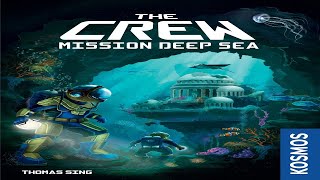


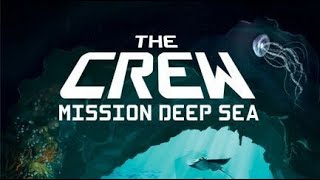

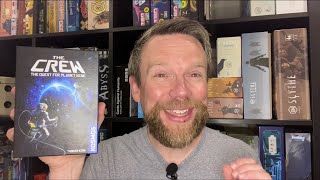













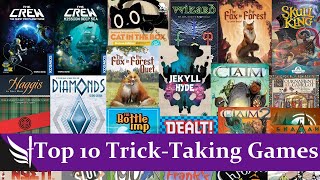
The Crew: Mission Deep Sea Deep Dive
What the Community Thinks About The Crew: Mission Deep Sea
The board game community has embraced The Crew: Mission Deep Sea as an exceptional cooperative trick-taking game. Reviewers consistently praise it as a worthy successor and often improvement over the original The Crew. Meeple University, Rolls in the Family, and BoardGameCo all highlight how this game elevates the cooperative trick-taking experience. Even those who initially questioned whether they needed a sequel found themselves pleasantly surprised by the depth of gameplay variations. The game resonates with both casual players and serious board gamers, making it accessible while still offering meaningful strategic challenges.
Core Mechanics That Define The Crew: Mission Deep Sea
Cooperative Trick-Taking
At its heart, The Crew: Mission Deep Sea is a trick-taking game played entirely in cooperation. Players work together without hidden hands, dealing cards face down but revealing them as the game progresses. The core trick-taking rules remain straightforward: players follow suit if possible, with the highest card of the led suit or the trump (submarine cards) winning the trick. What makes this cooperative is that every player must work toward a shared goal, making the entire team either win or lose together. This fundamental shift from competitive to cooperative trick-taking creates an entirely different puzzle-solving experience compared to traditional trick-taking games.
Mission-Based Objectives
The innovation that truly sets Mission Deep Sea apart from its predecessor is the objective card system. Rather than asking players to simply win specific number cards, the game includes a deck of varied challenge cards. These objectives range from straightforward tasks like "win exactly two blue cards" to more complex constraints such as "do not lead any pink cards" or "win the first two tricks consecutively." Players collectively choose which objectives to attempt based on the difficulty level set for each mission, creating branching narrative paths and tremendous replay value. Reviewers note that even when replaying the same mission difficulty, the randomly drawn objective cards ensure that no two games feel identical, keeping the puzzle fresh each time players sit down to the table.
The Crew: Mission Deep Sea Experience
Accessible Yet Deeply Engaging Gameplay
Despite the cooperative puzzle-solving, The Crew: Mission Deep Sea plays quickly and remains easy to teach. Reviewers emphasize that games typically take only 20 minutes or less per mission, encouraging "just one more hand" moments that extend sessions into hours of play. The rules are genuinely simple; learning trick-taking basics takes mere minutes, allowing new players to jump in immediately. Yet beneath this accessible surface lies genuine strategic depth. BoardGameCo notes that missions can appear deceptively easy on paper until players realize the intricate timing and coordination required. The game scales beautifully across player counts from two to five, with difficulty adjusting accordingly, removing the imbalance the original Crew had between different player counts.
Limited Communication Creates Tension
The intentional restriction on what players can communicate drives the cooperative experience. Before playing, each player may give one clue about their hand, indicating whether a card shown is their highest, lowest, or only card of that suit. After that, players must work mostly in silence, piecing together what others likely hold based on what cards have been played. This forced restraint creates palpable tension at the table and makes each successful mission feel genuinely earned. The Dice Tower notes that this limitation keeps the game interesting and prevents dominant players from running the table. The quiet concentration alternating with moments of realization and celebration defines the emotional arc of each hand.
What Makes The Crew: Mission Deep Sea Stand Out
Thematic Integration With Mechanical Innovation
The game brilliantly marries theme with mechanics. The narrative of searching for the lost continent of Mu deep in the abyss grounds every objective in story context. Mission descriptions create thematic resonance that makes abstract goals feel purposeful. 3 Minute Board Games notes that the challenge cards create objectives that feel like genuine discoveries as your crew descends deeper, and the escalating difficulty mirrors the growing peril of exploring unknown depths. This integration of story and mechanism makes the cooperative puzzle solving feel narratively earned rather than arbitrary.
Superior Design Iteration Over The Original
The most significant advancement is the objective card system. While the original Crew asked players to win or avoid specific numbered cards, Mission Deep Sea's varied mission deck creates tactical diversity. Rolls in the Family emphasizes that this solves a critical problem: the ability to pass on an objective card if you know you cannot complete it. In the original game, some missions felt unwinnable from the start, creating frustration. The pass mechanic respects player agency while the difficulty scaling ensures appropriate challenge. The Dice Tower also praises the lifeline mechanic that allows players to pass a card once per game, providing a safety valve without breaking cooperative challenge. These refinements prove that the design team listened to feedback and genuinely improved the formula.
Potential Drawbacks
Requires Specific Group Dynamics
The success of The Crew: Mission Deep Sea depends heavily on table culture. Meeple University notes that players must be comfortable with potential failure and accepting when teammates make mistakes. The game demands that players avoid dominant individuals controlling the table and dictating other players' decisions, since communication is restricted by design. Groups where one person naturally takes over may struggle with the intended experience. Additionally, 3 Minute Board Games highlights that the limited communication requirement means some rounds become quite quiet, which may not appeal to all social gaming groups. The cooperative puzzle-solving also demands players who care about collective problem-solving rather than individual victory.
Mechanical Familiarity With Trick-Taking Matters
The Dice Tower and Rolls in the Family both note that players unfamiliar with trick-taking games may struggle initially with the core mechanics. Understanding suit following, trump behavior, and basic trick-taking strategy is essential to enjoying the cooperative puzzle. While the rules themselves are simple, the tactics embedded in trick-taking gameplay have subtleties that newcomers won't immediately grasp. Groups used to only modern Euro-games might need time to adjust to the genre conventions underlying this cooperative experience.
If You Enjoy The Crew: Mission Deep Sea
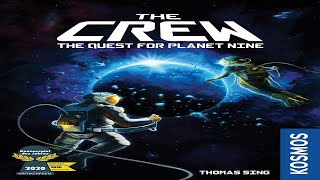
Reviewers frequently recommend The Lord of the Rings Trick-Taking Games (including The Two Towers and The Return of the King) as natural companions, since they follow similar cooperative trick-taking principles with different thematic settings. For lighter cooperative experiences, Hanabi offers similar puzzle-solving through restricted information and communication. If you want more trick-taking depth without cooperation, Scout provides excellent competitive alternatives with its own mechanical twists. The Dice Tower mentions Diamonds as another engaging trick-taking option. For those seeking cooperative games with similar escalating difficulty campaigns, The Crew: The Quest for Planet Nine (the original) remains a solid predecessor.
What Reviewers Are Saying
"The Crew: Mission Deep Sea is just the same game but better. Everything I loved in the Crew is still here, the short play time, the simple rules, the excellent co-op play and the escalating difficulty."
— 3 Minute Board Games
"This game really delivers such a fun cooperative experience trying to kind of solve the puzzle of each hand. If you're a fan of trick-taking games and have somehow missed the fact that we are in the golden era of trick-taking, it feels like there's so many great ones coming out."
— Rolls in the Family
"I really enjoy this a lot. I think they've kind of refined those edges. This one is a better game than the original. The objectives make each game feel different and interesting and how they scale up is great."
— The Dice Tower